Story code: ST-000587
Part 1: The Five-Minute Warning
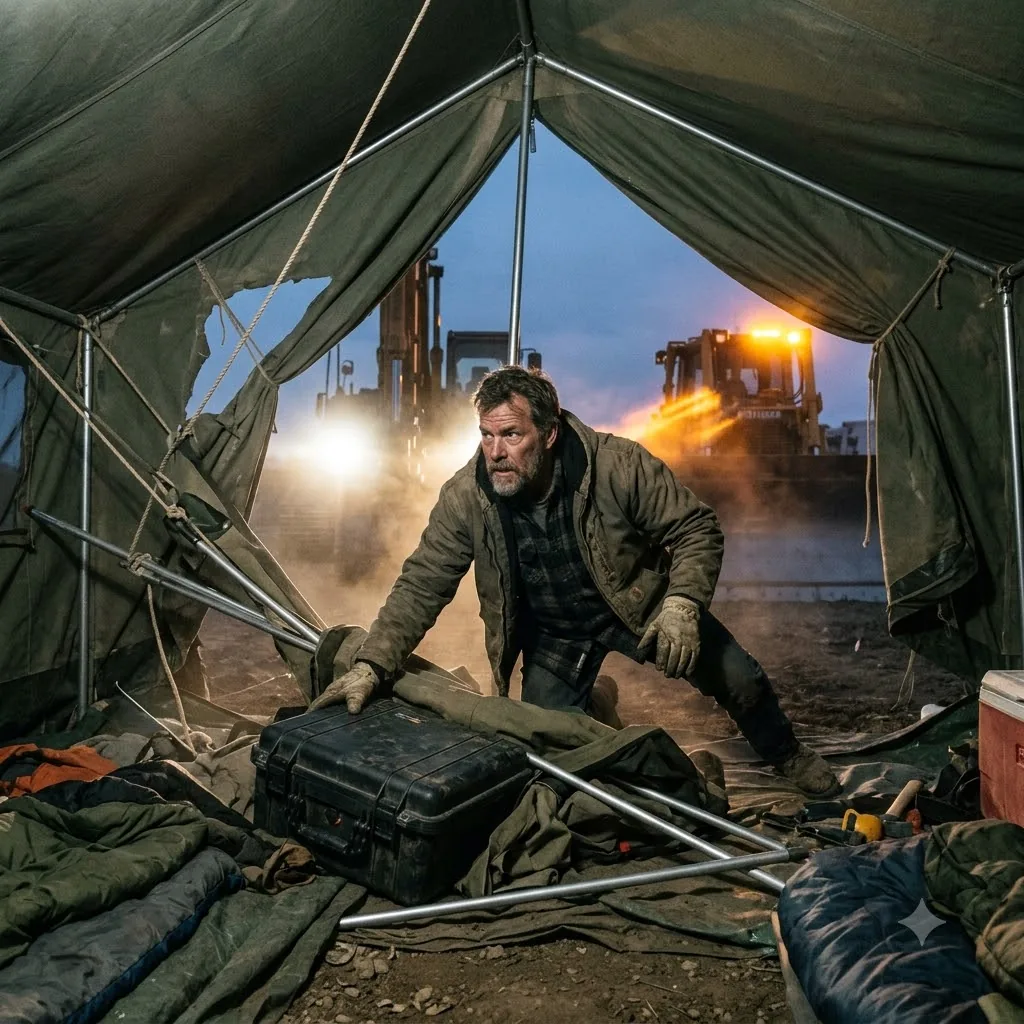
The rumble of a twenty-ton diesel engine vibrated through the thin nylon floor before amber strobe lights slashed across the canvas. Elias jerked awake. The ground trembled under his foam mat, a mechanical shudder knocking his flashlight against a plastic bin. Outside, a heavy air horn blasted three times, followed by the metallic crunch of a front-end loader driving straight over a shopping cart.
A voice amplified by a bullhorn cut through the freezing dawn air. It announced an emergency sanitation sweep for the downtown summit corridor, granting exactly five minutes to vacate.
Elias did not look out the mesh window. He did not grab his boots, his winter coat, or his backpack. He lunged directly for the center of the tent, throwing off a pile of sleeping bags to uncover the shape beneath.
It was a wide, flat rectangle, heavy enough to warp the plastic pallet it rested on. Elias gripped the thick moving blankets wrapped around it and pulled. The object barely shifted. His fingers slipped against the coarse fabric, his breath pluming in the cold as the diesel roar outside grew deafening. Another crunch echoed down the alley, accompanied by snapping aluminum poles and a shout of protest instantly drowned out by a revving engine.
They were moving too fast. A standard city sweep usually involved a slow procession, giving everyone an hour to drag belongings onto the sidewalk. This was a demolition. The summit organizers wanted the underpass sterilized before sunrise, and the crews were treating the encampment like a landfill.
Elias planted his bare feet against the frozen dirt showing through the floor tarp and hauled with all his strength. The flat rectangle slid three inches. It felt like dragging a slab of solid iron. He dropped to his knees, shoving his shoulder against the edge of the bundled mass, driving it forward.
Shadows danced violently across the tent walls. The spinning amber lights cast elongated silhouettes of massive steel buckets with serrated teeth, rising and falling like mechanical jaws. Dust and the acrid stench of unburned diesel fumes began to choke the small space. Elias coughed, pressing his face against his shoulder as he pushed again.
The rectangle cleared the sleeping mat, catching on a loose corner of the tarp. Elias frantically tore the plastic out of the way, scraping his knuckles on the frozen ground. The object had to get out. Everything else could be replaced, but if the front-end loaders crushed the blanketed slab, there was nothing left.
A hydraulic hiss sounded terrifyingly close. The loader had bypassed the tents at the edge of the lot and was driving straight down the center line, compressing everything in its path. Elias heard the distinctive tear of ripstop nylon, followed by the shattering of a glass lantern.
He scrambled to the front of his tent and unzipped the flap. The cold hit him like a physical blow. Three massive yellow machines were advancing side by side. Workers in reflective vests flanked them, tossing loose bags and debris directly into the path of the treads. There was no negotiation happening, no warnings beyond the continuous blare of the bullhorn repeating the five-minute mandate. They were already three minutes in.
Elias grabbed the nylon webbing he had rigged around the heavy rectangle. He wrapped the strap around his forearms, ignoring the friction burn, and pulled backward toward the open flap. The dead weight resisted, digging into the earth. He strained, the muscles in his back screaming, until the corner of the object finally breached the threshold.
The amber strobes hit the bundled shape, illuminating the thick ropes tying the blankets together. Elias kept pulling. He got half of the heavy slab out into the frosty air. The roaring loader was now less than twenty feet away. Its massive steel bucket was lowered to the ground, scraping sparks off the concrete as it shoved a wall of shattered pallets and twisted metal frames forward.
Elias dug his heels into the gravel. He needed to get the object up the small embankment to the chain-link fence, the only place the machines could not reach. He heaved again, moving it another foot. The bucket of the loader slammed into the tent directly beside his, ripping the structure from its stakes and burying it beneath a mound of dirt and debris.
The machine pivoted, its massive tread tracks biting into the earth. The hydraulic arm swung toward Elias’s shelter.
Elias abandoned the strap and threw his entire body over the heavy flat rectangle, shielding it with his own back as the steel bucket eclipsed the strobe lights above him. The shadow fell hard and total. The loader’s teeth caught the top of his tent, the fabric screaming as it tore. The structural poles snapped with a violent crack, collapsing inward.
Right as the crushing weight of the machinery descended, a sound erupted that did not belong in the alley. It was not a police siren, not a construction horn, and not a diesel engine. It was a high-pitched, oscillating electronic wail, echoing out from the concrete building situated just beyond the chain-link fence. It was a standardized, continuous tone, unmistakable in its specific, localized urgency. A school lockdown alarm.
The siren shrieked through the morning air just as the ceiling of the tent fell onto Elias.
The rumble of a twenty-ton diesel engine vibrated through the thin nylon floor before amber strobe lights slashed across the canvas. Elias jerked awake. The ground trembled under his foam mat, a mechanical shudder knocking his flashlight against a plastic bin. Outside, a heavy air horn blasted three times, followed by the metallic crunch of a front-end loader driving straight over a shopping cart.
A voice amplified by a bullhorn cut through the freezing dawn air. It announced an emergency sanitation sweep for the downtown summit corridor, granting exactly five minutes to vacate.
Elias did not look out the mesh window. He did not grab his boots, his winter coat, or his backpack. He lunged directly for the center of the tent, throwing off a pile of sleeping bags to uncover the shape beneath.
It was a wide, flat rectangle, heavy enough to warp the plastic pallet it rested on. Elias gripped the thick moving blankets wrapped around it and pulled. The object barely shifted. His fingers slipped against the coarse fabric, his breath pluming in the cold as the diesel roar outside grew deafening. Another crunch echoed down the alley, accompanied by snapping aluminum poles and a shout of protest instantly drowned out by a revving engine.
They were moving too fast. A standard city sweep usually involved a slow procession, giving everyone an hour to drag belongings onto the sidewalk. This was a demolition. The summit organizers wanted the underpass sterilized before sunrise, and the crews were treating the encampment like a landfill.
Elias planted his bare feet against the frozen dirt showing through the floor tarp and hauled with all his strength. The flat rectangle slid three inches. It felt like dragging a slab of solid iron. He dropped to his knees, shoving his shoulder against the edge of the bundled mass, driving it forward.
Shadows danced violently across the tent walls. The spinning amber lights cast elongated silhouettes of massive steel buckets with serrated teeth, rising and falling like mechanical jaws. Dust and the acrid stench of unburned diesel fumes began to choke the small space. Elias coughed, pressing his face against his shoulder as he pushed again.
The rectangle cleared the sleeping mat, catching on a loose corner of the tarp. Elias frantically tore the plastic out of the way, scraping his knuckles on the frozen ground. The object had to get out. Everything else could be replaced, but if the front-end loaders crushed the blanketed slab, there was nothing left.
A hydraulic hiss sounded terrifyingly close. The loader had bypassed the tents at the edge of the lot and was driving straight down the center line, compressing everything in its path. Elias heard the distinctive tear of ripstop nylon, followed by the shattering of a glass lantern.
He scrambled to the front of his tent and unzipped the flap. The cold hit him like a physical blow. Three massive yellow machines were advancing side by side. Workers in reflective vests flanked them, tossing loose bags and debris directly into the path of the treads. There was no negotiation happening, no warnings beyond the continuous blare of the bullhorn repeating the five-minute mandate. They were already three minutes in.
Elias grabbed the nylon webbing he had rigged around the heavy rectangle. He wrapped the strap around his forearms, ignoring the friction burn, and pulled backward toward the open flap. The dead weight resisted, digging into the earth. He strained, the muscles in his back screaming, until the corner of the object finally breached the threshold.
The amber strobes hit the bundled shape, illuminating the thick ropes tying the blankets together. Elias kept pulling. He got half of the heavy slab out into the frosty air. The roaring loader was now less than twenty feet away. Its massive steel bucket was lowered to the ground, scraping sparks off the concrete as it shoved a wall of shattered pallets and twisted metal frames forward.
Elias dug his heels into the gravel. He needed to get the object up the small embankment to the chain-link fence, the only place the machines could not reach. He heaved again, moving it another foot. The bucket of the loader slammed into the tent directly beside his, ripping the structure from its stakes and burying it beneath a mound of dirt and debris.
The machine pivoted, its massive tread tracks biting into the earth. The hydraulic arm swung toward Elias’s shelter.
Elias abandoned the strap and threw his entire body over the heavy flat rectangle, shielding it with his own back as the steel bucket eclipsed the strobe lights above him. The shadow fell hard and total. The loader’s teeth caught the top of his tent, the fabric screaming as it tore. The structural poles snapped with a violent crack, collapsing inward.
Right as the crushing weight of the machinery descended, a sound erupted that did not belong in the alley. It was not a police siren, not a construction horn, and not a diesel engine. It was a high-pitched, oscillating electronic wail, echoing out from the concrete building situated just beyond the chain-link fence. It was a standardized, continuous tone, unmistakable in its specific, localized urgency. A school lockdown alarm.
The siren shrieked through the morning air just as the ceiling of the tent fell onto Elias.