Story code: ST-000610
Part 1: The Invoice
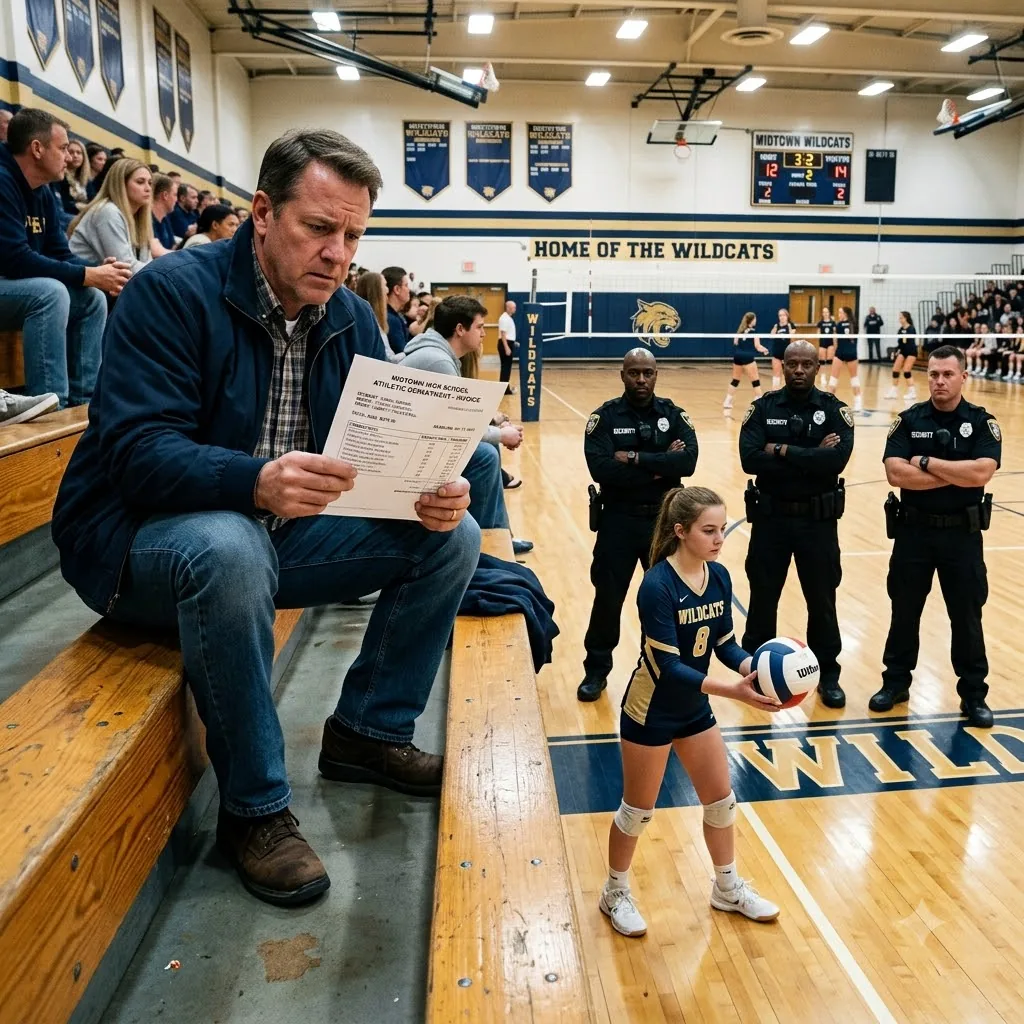
Marcus stared at the heavy-stock paper resting on his right knee, a $400 invoice from a private corrections firm handed to him before the first volleyball even hit the court. The gymnasium air felt heavy and damp, trapped in a suffocating silence by the fifty adults occupying the opposing bleachers in matching, unbranded black shirts. Down on the polished hardwood, two men in tactical vests stood near the scorer’s table, their hands resting near utility belts as their eyes remained dead-locked on Marcus’s sixteen-year-old daughter.
The paper on his knee bore the logo of a company that transported inmates, not one that monitored high school athletics. The itemized line at the center of the page read pre-emptive behavioral containment, followed by the bold figure of four hundred dollars. The man who had shoved it into Marcus’s chest at the gymnasium doors had worn a laminated badge and a smirk, demanding a credit card on file before Marcus was even allowed to find a seat. Marcus had refused to hand over his card, but the man had simply forced the paper into Marcus’s hand and tapped the body camera mounted to his chest. Now, the paper felt like a cinder block weighing down his leg.
Across the court, the fifty parents in black shirts sat shoulder to shoulder. They did not cheer for their own team during the hitting lines. They did not hold signs. They simply stared, presenting a unified, silent wall of hostility. The matching shirts were devoid of any team mascot or school colors, serving only as a uniform of intimidation. Every time Marcus’s daughter, Maya, stepped up to the net to spike a ball, fifty pairs of eyes tracked her approach. When her hand struck the leather, the echo cracked like a gunshot through the unusually quiet gym. Not a single person in the black-shirted crowd flinched. They just watched her, their silence heavy and deliberate, a synchronized effort to drain the oxygen from the room.
The guards by the table were a different kind of threat. They were not standard security hired by the school district to break up locker room fights. They wore drab olive cargo pants tucked into combat boots, and their vests bulged with heavy zip-tie restraints. They ignored the other eleven girls on Maya’s team. When the opposing team’s captain launched a stray ball into the stands, the guards did not even blink. Their focus was absolute and singular. When Maya jogged to the sideline to grab her water bottle, the taller guard took two steps forward, closing the distance to the boundary line. He rested his thumb over the microphone pinned to his shoulder. He did not speak into it, but the gesture was a clear signal.
Marcus gripped the edge of the aluminum bleacher. The metal dug into his palms. He watched his daughter uncap her water bottle, her hands trembling just enough to spill a few drops onto her shoes. She was trying so hard to keep her expression neutral, to pretend this was just another Tuesday night conference game. She wiped the sweat from her forehead and forced a smile at her setter, but the smile did not reach her eyes. Maya knew exactly what was happening. She knew why the gym was silent, why the parents were dressed like a funeral procession, and why the men with the zip-ties were measuring her every breath. Marcus wanted to storm the court, to grab her by the wrist and pull her out the double doors and into the safety of their car.
But doing so would spring the trap. That was the entire purpose of the invoice sitting on his knee. The behavioral containment fee was a provocation. If Marcus lost his temper, if he shouted at the guards or confronted the wall of black shirts, they would have the excuse they needed. The guards would step in, citing the threat level he presented. They would remove him, and Maya would be left alone on the court with them. The extortion was brilliant in its cruelty. They were charging him for the privilege of watching them terrorize his child, daring him to default on his composure.
The buzzer on the wall blared, signaling the end of warm-ups. The harsh electronic noise made Marcus jump, the $400 invoice fluttering off his knee and landing face-up on the sticky floorboards. He reached down to grab it, his fingers brushing the heavy stock just as a low, collective scrape of shoes echoed from the opposite bleachers. Marcus snapped his head up. The fifty parents in the matching black shirts had all stood up in unison. They did not speak, nor did they move toward the exits. They simply stood, their arms crossed over their chests, forming a solid, looming barricade of fabric. Down on the court, the referee blew his whistle, signaling the girls to take their starting positions. Maya walked toward the net, taking her spot in the middle front row. As soon as her foot crossed the painted boundary line, the taller guard unclipped a pair of heavy plastic restraints from his vest and stepped directly onto the playing surface, his hand raised toward her.
Marcus stared at the heavy-stock paper resting on his right knee, a $400 invoice from a private corrections firm handed to him before the first volleyball even hit the court. The gymnasium air felt heavy and damp, trapped in a suffocating silence by the fifty adults occupying the opposing bleachers in matching, unbranded black shirts. Down on the polished hardwood, two men in tactical vests stood near the scorer’s table, their hands resting near utility belts as their eyes remained dead-locked on Marcus’s sixteen-year-old daughter.
The paper on his knee bore the logo of a company that transported inmates, not one that monitored high school athletics. The itemized line at the center of the page read pre-emptive behavioral containment, followed by the bold figure of four hundred dollars. The man who had shoved it into Marcus’s chest at the gymnasium doors had worn a laminated badge and a smirk, demanding a credit card on file before Marcus was even allowed to find a seat. Marcus had refused to hand over his card, but the man had simply forced the paper into Marcus’s hand and tapped the body camera mounted to his chest. Now, the paper felt like a cinder block weighing down his leg.
Across the court, the fifty parents in black shirts sat shoulder to shoulder. They did not cheer for their own team during the hitting lines. They did not hold signs. They simply stared, presenting a unified, silent wall of hostility. The matching shirts were devoid of any team mascot or school colors, serving only as a uniform of intimidation. Every time Marcus’s daughter, Maya, stepped up to the net to spike a ball, fifty pairs of eyes tracked her approach. When her hand struck the leather, the echo cracked like a gunshot through the unusually quiet gym. Not a single person in the black-shirted crowd flinched. They just watched her, their silence heavy and deliberate, a synchronized effort to drain the oxygen from the room.
The guards by the table were a different kind of threat. They were not standard security hired by the school district to break up locker room fights. They wore drab olive cargo pants tucked into combat boots, and their vests bulged with heavy zip-tie restraints. They ignored the other eleven girls on Maya’s team. When the opposing team’s captain launched a stray ball into the stands, the guards did not even blink. Their focus was absolute and singular. When Maya jogged to the sideline to grab her water bottle, the taller guard took two steps forward, closing the distance to the boundary line. He rested his thumb over the microphone pinned to his shoulder. He did not speak into it, but the gesture was a clear signal.
Marcus gripped the edge of the aluminum bleacher. The metal dug into his palms. He watched his daughter uncap her water bottle, her hands trembling just enough to spill a few drops onto her shoes. She was trying so hard to keep her expression neutral, to pretend this was just another Tuesday night conference game. She wiped the sweat from her forehead and forced a smile at her setter, but the smile did not reach her eyes. Maya knew exactly what was happening. She knew why the gym was silent, why the parents were dressed like a funeral procession, and why the men with the zip-ties were measuring her every breath. Marcus wanted to storm the court, to grab her by the wrist and pull her out the double doors and into the safety of their car.
But doing so would spring the trap. That was the entire purpose of the invoice sitting on his knee. The behavioral containment fee was a provocation. If Marcus lost his temper, if he shouted at the guards or confronted the wall of black shirts, they would have the excuse they needed. The guards would step in, citing the threat level he presented. They would remove him, and Maya would be left alone on the court with them. The extortion was brilliant in its cruelty. They were charging him for the privilege of watching them terrorize his child, daring him to default on his composure.
The buzzer on the wall blared, signaling the end of warm-ups. The harsh electronic noise made Marcus jump, the $400 invoice fluttering off his knee and landing face-up on the sticky floorboards. He reached down to grab it, his fingers brushing the heavy stock just as a low, collective scrape of shoes echoed from the opposite bleachers. Marcus snapped his head up. The fifty parents in the matching black shirts had all stood up in unison. They did not speak, nor did they move toward the exits. They simply stood, their arms crossed over their chests, forming a solid, looming barricade of fabric. Down on the court, the referee blew his whistle, signaling the girls to take their starting positions. Maya walked toward the net, taking her spot in the middle front row. As soon as her foot crossed the painted boundary line, the taller guard unclipped a pair of heavy plastic restraints from his vest and stepped directly onto the playing surface, his hand raised toward her.