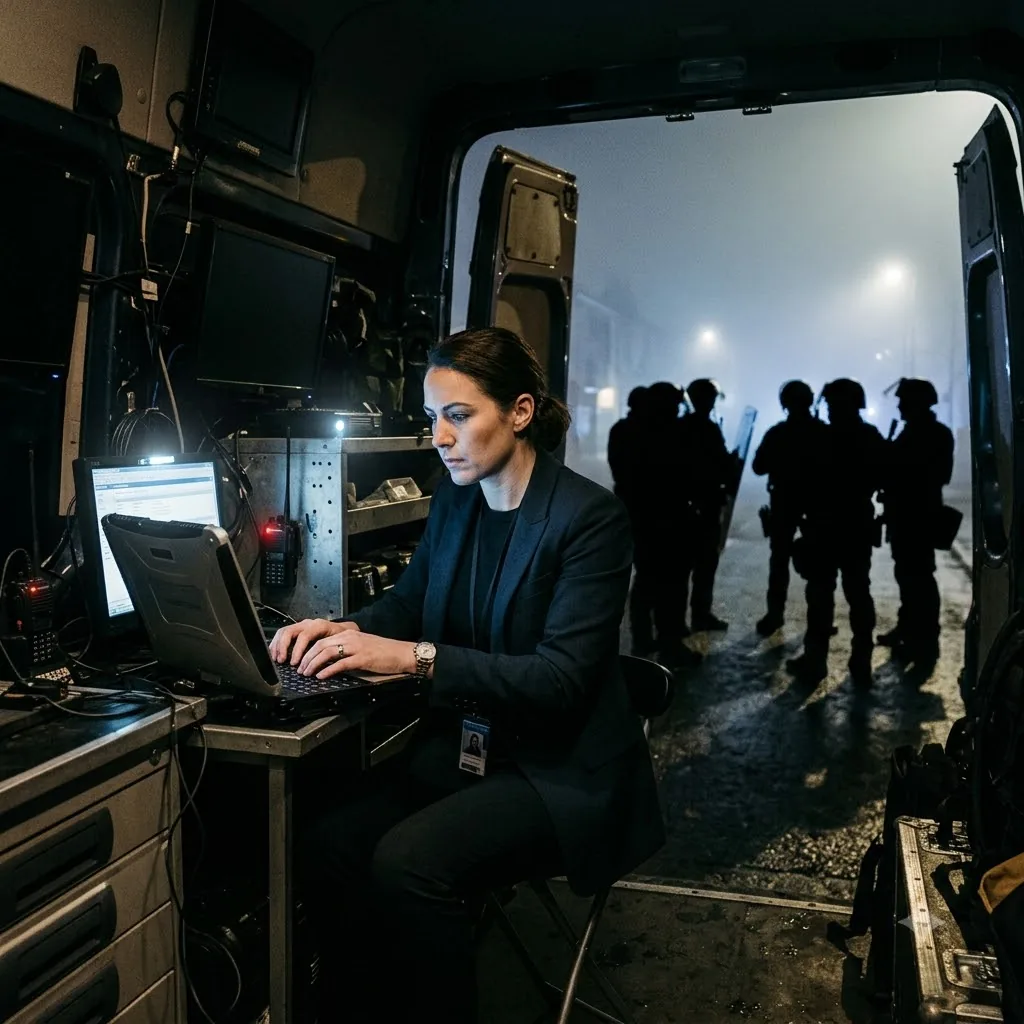
Story code: ST-000611
Part 4: The Wreckage
The tiny red indicator light on the transmitter box seemed to pulse in the quiet of the VIP tent. Mayor Holden stared at it, the color completely drained from his pristine features. For a long, agonizing second, the only sound in the enclosure was the soft, rhythmic hum of the forced-air heating and the faint clinking of silverware from the banquet hall beyond the velvet curtains.
“You’re bluffing,” Holden breathed, though his hands had begun to tremble.
“Channel 8, Channel 5, the municipal radio feed,” Sarah said, her voice steady and perfectly level. “They wanted a clean room test before the keynote. The line has been open since I walked through those drapes.”
Holden lunged. He scrambled across the plush carpet, his manicured hands grasping desperately for the black transmitter box. Sarah didn’t fight him. She simply let her fingers open. The plastic box dropped to the floor with a dull thud. Holden fell to his knees, his midnight-blue suit wrinkling against the floorboards, frantically pressing his thumb against the mute button.
It was far too late. The damage had already been broadcast at the speed of light.
Sarah reached up to her collarbone and unpinned the lapel microphone. She let the thin black wire fall to the carpet beside him. Then, she reached down to her belt. Her fingers found the heavy brass clip of her executive city badge-the single piece of plastic that granted her access to the van, the servers, and the illusion of control. She unclipped it and tossed it onto the catering table.
The badge landed dead-center in Holden’s porcelain cup. Brown espresso splashed violently over the rim, staining the crisp white tablecloth and spraying across the cuffs of Holden’s immaculate shirt.
Sarah didn’t say another word. She turned her back on the most powerful man in the city, parted the heavy velvet curtains, and walked out.
The atmosphere in the Glass Pavilion had entirely fractured. The string quartet had stopped playing, their bows resting awkwardly on their laps. The waiters had abandoned the silver chafing dishes and were huddled in tight groups, staring down at glowing phone screens.
The audio-visual technician was standing exactly where Sarah had left him, his tablet clutched to his chest. His jaw was slack. As Sarah passed him, she could hear the chaotic, overlapping voices bleeding out from his headset. Producers and news directors were screaming.
“Director,” the tech stammered, his eyes wide with a mixture of awe and absolute terror. “The press pool… they put it straight over the PA outside to test the levels. Everyone heard it. Everyone.”
Sarah gave him a single, curt nod. She kept walking. Her boots left muddy, toxic streaks across the immaculate carpet.
She pushed open the heavy brass doors and stepped back out into the freezing pre-dawn air. The contrast was a physical blow. The wind hit her instantly, carrying the bitter, acrid stench of the dissipating CS gas. But the plaza had changed. The shrieking sirens had abruptly cut off.
At Barricade South, the blinding LED lights of the local news cameras were no longer pointed at the ruined tents. The reporter in the bright red trench coat was practically screaming into her microphone, holding an earpiece tight against her head.
“We are attempting to confirm the audio we just received,” the reporter shouted, her professional composure completely shattered. “If you are just joining us, a hot mic feed from inside the Progressive Coalition Breakfast appears to have caught Mayor Holden explicitly threatening an employee and ordering the suppression of… yes, I’m being told we are playing the audio again now.”
Sarah bypassed the barricade entirely. She stepped over a line of trampled yellow police tape and walked directly into the wreckage of the encampment.
The riot officers were frozen in place. The brutal, mechanical efficiency that had leveled the plaza only thirty minutes ago was gone. Cops stood around in small, confused clusters. Some were urgently talking into their shoulder radios; others were staring toward the Glass Pavilion.
Riggs was standing near the remains of the north fountain, his heavy armored helmet tucked under his arm. He was listening intently to his earpiece, his face contorted in a dark scowl. “Vanguard unit, hold your positions,” his voice barked over the tactical frequency, sounding tight and uncertain. “I said hold positions. Nobody processes another arrest until command figures out what the hell is happening.”
He saw Sarah walking through the mud. For a second, his hand twitched toward his belt. But he didn’t move to stop her. She was a ghost now. She possessed no clearance, no authority, and no protection.
Sarah walked until she reached the center of the devastated plaza. She stopped beside a splintered piece of plywood, the remnants of the medical tent where Julian had been dragged away into the smoke. The ground was littered with torn gauze and shattered plastic water bottles.
She stood alone in the ruins she had helped architect, the cold wind biting through her wool overcoat. Slowly, her shaking right hand slipped into her fleece-lined pocket. She pulled out the crumpled, deeply creased sheet of paper.
She stared down at the Memorial Oncology invoice. The thick red circle around the $240,000 balance seemed to burn against the white page.
The terror of that number crashed over her like a physical weight. By noon, her insurance would be canceled. Her pension was gone. Her career was obliterated. She had absolutely no idea how she was going to keep David alive when the bank accounts drained next week. The sheer panic made her chest seize, stealing the breath from her lungs.
But as she stood shivering in the toxic, tear-gassed air, she realized something else. The violent nausea that had gripped her all morning had completely vanished.
The insurmountable debt remained, but the suffocating weight of the lie was gone. She folded the medical bill, slipped it back into her pocket, and began the long, cold walk toward the hospital.