Story code: ST-000614
Part 2: The Assessment
Marcus did not yell. After three exhausting years of dodging screaming homeowners in the municipal chambers, Elias found his neighbor’s utter silence to be far more terrifying. The retired mechanic sat perfectly still on the concrete step, his heavy hands resting on his knees.
“Marcus,” Elias started, hating how loud and polished his own voice sounded in the quiet, shadowed street. “Did you put this in my door?”
“You were going to go inside,” Marcus said, his voice scraping like dry gravel. He didn’t look at Elias. His eyes remained locked on the sprawling, manicured lawn of Elias’s property. “You were going to go inside, lock that heavy deadbolt, pour yourself a drink, and turn off your phone. I know how election nights work. I couldn’t let you just shut the door. Not tonight.”
Elias swallowed the defensive political rhetoric that automatically rose in his throat. He looked down at his overcoat pocket. “What is this, Marcus?”
“Read it. You wrote it, didn’t you?”
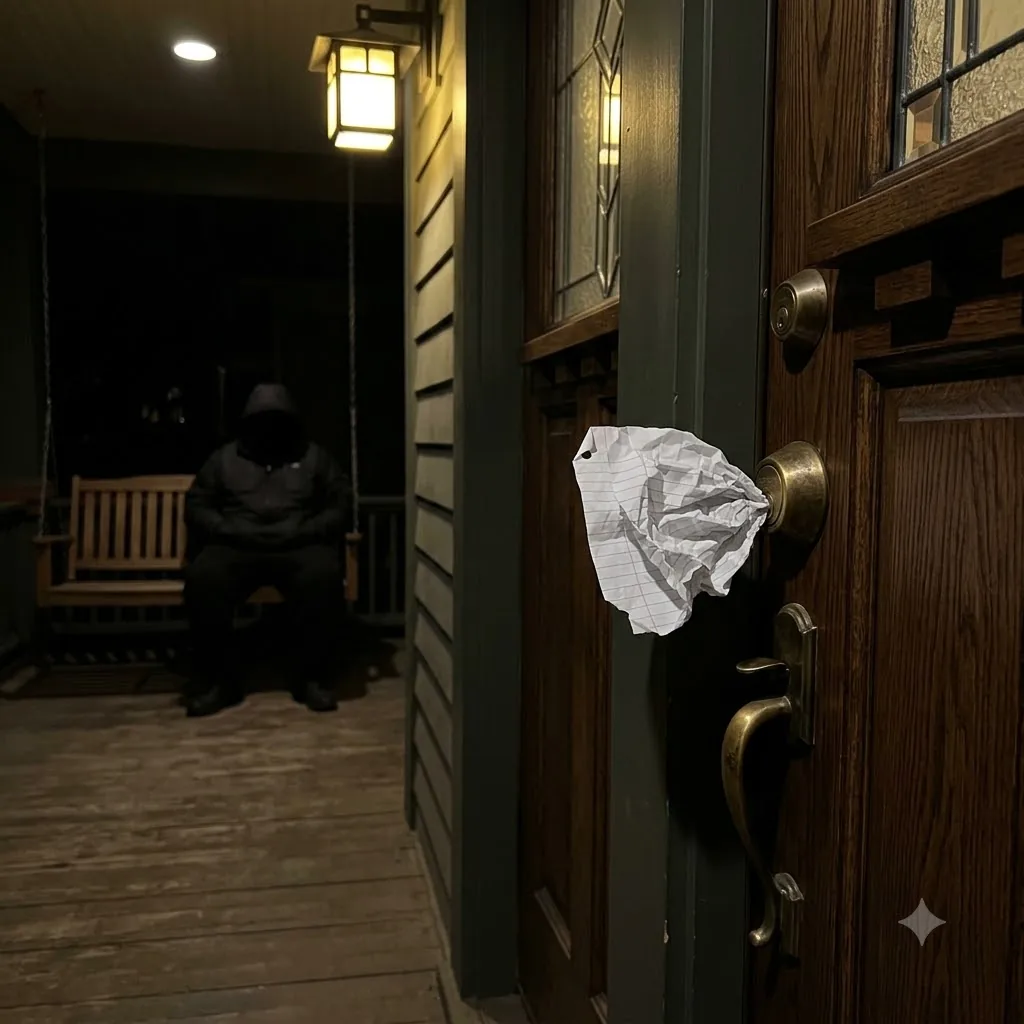
Elias pulled the violently crushed wad of cardstock from his pocket. He set his heavy briefcase down on the damp grass and used both hands to flatten the paper against his thigh. The amber glow of the corner streetlamp cast long, distorted shadows across the page, but the bold, municipal letterhead of the County Assessor’s Office was unmistakable.
He smoothed out the deep creases, his eyes darting across the smeared ink. It was a Notice of Reclassification and Tax Assessment.
*Pursuant to City Ordinance 114-B-Comprehensive Density Rezoning…*
Elias felt a cold, sudden weight drop in his stomach. Ordinance 114-B was his bill. It was the exact legislation he had just pushed through the council three hours ago.
His eyes jumped down to the tabulated numbers at the bottom of the page. Marcus’s lot, a modest quarter-acre holding a sagging 1950s bungalow, had previously been assessed at a residential value of two hundred and fifty thousand dollars. But under Elias’s new ordinance, the entire block of Elmwood Avenue was immediately reclassified from single-family residential to high-density multi-family. The land under Marcus’s feet was no longer valued for the small house that sat on it. It was now legally valued for its maximum developmental potential-a four-story, eight-unit complex.
The new assessed value was 1.4 million dollars.
Elias’s breath hitched. He quickly calculated the municipal property tax rate in his head. The new annual tax bill for the sagging bungalow was just over twenty-eight thousand dollars.
“Marcus,” Elias whispered, the crisp confidence of his political persona fracturing entirely. “This… this is an automated trigger. The assessor’s office must have pre-printed these pending the vote. It’s a systemic recalibration.”
“My pension is twenty-two thousand a year, Elias,” Marcus said, finally turning to look up at him. The profound exhaustion in the older man’s eyes was absolute. “My house is paid off. I buy my groceries. I pay my heating bill. I watch the neighborhood dogs. And now, because you wanted to stick it to the rich folks on the hill, the city is demanding I pay them twenty-eight thousand dollars a year just to keep sleeping in my own bed.”
“No, no, we can fix this,” Elias said, his mind racing through the labyrinth of municipal tax codes. “There are exemptions. Hardship deferments. We just have to file the paperwork-”
“I called the county hotline an hour ago. Sat on hold for forty minutes,” Marcus interrupted, his voice void of any anger, which only made it cut deeper. “The girl on the phone was very polite. She said the new density bracket doesn’t qualify for the senior fixed-income exemption. Your ordinance stripped it out to prevent wealthy investors from hiding assets in trusts.”
Elias froze. He remembered the committee meeting where they had drafted that exact clause. His progressive coalition had cheered him for closing a notorious tax loophole used by predatory landlords. He had championed it on television just last week, calling it a necessary step for housing equity. He had completely, utterly missed the collateral damage. He had weaponized the tax code against the exact working-class residents he had built his entire political brand on protecting.
If Elias went to the press and admitted his flagship legislation had a fatal flaw that was actively bankrupting low-income seniors, the conservative preservationists he had just defeated would instantly mobilize a recall campaign. The media would crucify him for reckless governance. His flawless political trajectory-the whispers of a mayoral run next year-would evaporate overnight. To save Marcus, he would have to publicly humiliate himself and gut his own life’s work.
But if he did nothing, if he maintained the pristine integrity of his political victory, Marcus would lose his home in a matter of months.
Marcus reached down to the stack of mail beside his boot and picked up a glossy, neon-yellow postcard. He held it out between two calloused fingers.
Elias hesitated, then took it.
*WE BUY HOMES FOR CASH! CLOSE IN 10 DAYS!*
In the bottom corner was the sleek, minimalist logo of Apex Holdings. Elias felt his chest tighten. Apex was the massive corporate developer that had secretly bankrolled the opposition against his rezoning plan, claiming it would destroy neighborhood character. Now, Elias realized with sickening clarity, Apex hadn’t been fighting the bill because they hated it. They had been fighting it to drive down the property values right up until the moment it passed, so they could swoop in and harvest the ensuing chaos. They had mailed these cash-offer postcards on the exact same day the city mailed the tax assessments.
“They called me, too,” Marcus said quietly. “Ten minutes after the vote was certified on the local news. Offered me all cash. Said they’d take the tax burden off my hands.”
“Marcus, you cannot sell to them,” Elias pleaded, the panic finally bleeding into his voice. “They’ll bulldoze your house. They’ll pave over the whole lot. That’s exactly what we’ve been fighting against.”
“Who’s *we*, Elias?” Marcus asked, standing up slowly. His knees popped in the cold air. “You get to keep your beautiful house. You can afford the new taxes. I can’t. Apex sent over a digital contract. It’s sitting in my email right now.”
Marcus turned and put his hand on his worn front doorknob, looking back at Elias over his shoulder.
“I’m signing it on Friday morning,” Marcus said, the finality in his voice ringing like a gavel in the empty street. “Unless you stand up at your victory press conference tomorrow at noon, look the cameras in the eye, and tell the whole city your zoning plan is a fraud.”