Story code: ST-000614
Part 4: Localized Casualties
The silence that followed Marcus’s words was absolute, broken only by the distant, hollow roar of an airplane carving through the night sky. Elias stared at his neighbor’s hand resting on the battered aluminum handle of the storm door. The panic that had been fluttering in Elias’s chest suddenly calcified into something hard, ugly, and fundamentally self-preserving. The savior narrative he had worn for two years-the progressive champion fighting for the little guy-was disintegrating, leaving only the naked machinery of his own ambition.
And stripped of that moral armor, Elias snapped.
“You’re asking me to commit political suicide,” Elias said, his voice dropping the pleading tone and adopting a rigid, defensive edge. He took a half-step back, putting physical distance between himself and the reality of the old man’s porch. “I can’t repeal it, Marcus. Do you have any idea the war we fought to get this passed? The years of town halls, the protests, the negotiations? We are short forty thousand housing units in this metro area alone. Young families are sleeping in their cars because we’ve spent half a century prioritizing suburban aesthetics over human beings.”
Marcus didn’t move. He didn’t argue. He just watched Elias from the doorway, his eyes heavy with a profound, terrifying pity.
“This is a systemic transition,” Elias continued, his voice rising to fill the empty street, instinctively falling back on the polished rhetoric he used on reporters. “Yes, the transition is painful. Yes, there are localized casualties. But if I stand up tomorrow and gut my own ordinance, the conservative block wins. The preservationists who want to keep this city frozen in amber will use the failure to sweep the midterms. The city stagnates for another decade. I cannot throw away the future of a million people just to save one street.”
Elias was breathing hard now, his chest rising and falling beneath his tailored overcoat. He waited for Marcus to yell back, to call him a hypocrite, to threaten to go to the local news. He desperately wanted Marcus to attack him, because an attack was something Elias knew how to defend against.
Instead, Marcus just slowly shook his head.
“‘Localized casualties,'” Marcus said softly, quoting the phrase. The retired mechanic looked down at the neon-yellow Apex postcard still pinched in his fingers. “That’s what my father’s house is to you. A casualty.”
“Marcus, I didn’t say that-”
“I told you the terms, Councilman,” Marcus interrupted, his raspy voice entirely devoid of malice. It was just impossibly tired. “Noon tomorrow. You look the cameras in the eye and tell them the truth about what your law does to the working class. If you don’t, I sign the corporate contract, and I start packing boxes.”
Marcus pulled open the aluminum storm door. It squeaked loudly on its hinges.
“Goodnight, Elias.”
The heavy wooden inner door shut with a solid, echoing thud. A second later, the sharp, metallic snap of a deadbolt sliding into place echoed across the porch. Then, the amber porch light clicked off, plunging the patchy front lawn into deep shadow.
Elias stood frozen at the bottom of the concrete steps for a long time. The night air bit at his face, but he didn’t move to pull up his collar. He looked down at the crushed municipal tax assessment still clutched in his right hand. The smeared black ink of the 1.4 million dollar valuation mocked him, a glaring mathematical proof of his own catastrophic hubris.
He turned and walked slowly back down the sidewalk toward his own property. The soles of his dress shoes dragged slightly against the pavement. He stopped at the edge of his perfectly manicured lawn and looked up at his restored 1920s Craftsman. It looked beautiful in the moonlight. It was completely secure. His own property taxes would go up, but with his city council salary and his wife’s corporate income, they would easily absorb the hit. They wouldn’t have to move. They would stay right here, enjoying the new cafes and transit lines that the density ordinance would inevitably bring, while the older, poorer residents who had built the neighborhood were quietly purged by the invisible hand of the municipal tax code.
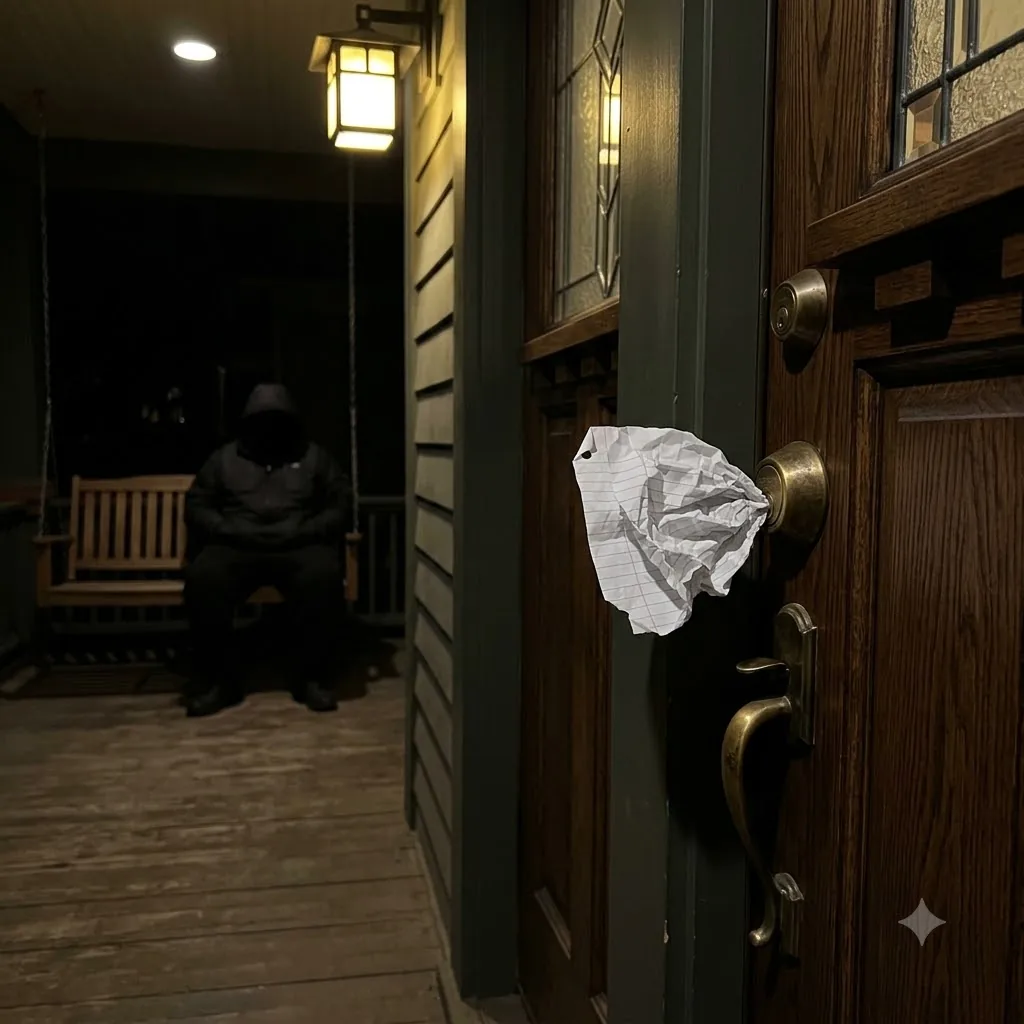
Elias walked up his porch steps. He reached into his pocket and pulled out his keys. He looked at the brass keyhole, still slightly scratched from where he had yanked out the threatening paper just twenty minutes ago.
He knew exactly what was going to happen tomorrow. At 11:45 AM, he would put on his navy blue suit. At noon, he would stand at the podium in front of City Hall. He would smile for the press cameras. He would talk about equitable density, a brighter future, and a city for everyone.
He would not mention Marcus. He would not mention Apex Holdings.
Elias slid his key into the deadbolt, turned it with a heavy click, and walked inside, closing the door on the neighborhood he had just sold to the highest bidder.