Story code: ST-000635
Part 1: The Relief Grant
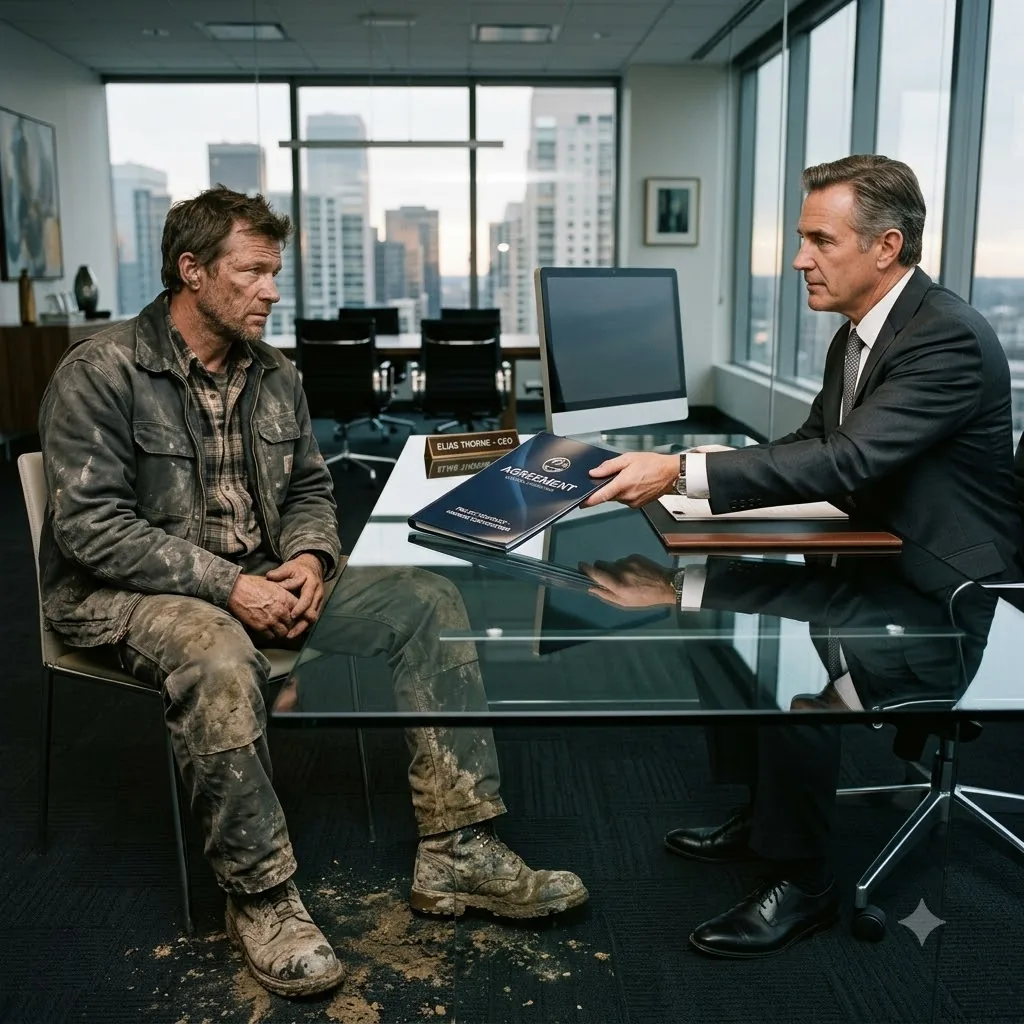
The climate control in the forty-second-floor executive conference room blasted a steady stream of arctic air against the back of Marcus’s neck, chilling the damp sweat in his collar to ice. He sat perfectly still in the ergonomic mesh chair, acutely aware of the toxic, gray-green river mud caked thick onto his steel-toed boots. The sludge was already drying, flaking off in powdery chunks onto the pristine, bone-white carpet beneath the mahogany table. The stench of it-a harsh chemical burn mixed with rotting sulfur-clung to his clothes, a sharp contrast to the sterile, lemon-scented atmosphere of the corporate boardroom.
Elaine sat across the vast expanse of polished wood, her hands folded neatly over a cream-colored file folder. Her tailored beige suit was immaculate, without a single wrinkle or speck of dust, and her smile remained fixed in a perfect, sympathetic curve. She leaned forward slightly, projecting an aura of practiced, soothing warmth.
“We are simply devastated by the tragic overflow at the secondary containment pond,” Elaine said, her voice dripping with careful, focus-group-tested empathy. “The entire executive team watched the drone footage of your neighborhood. The damage to the lower-income housing tracts is just heartbreaking. We consider the local residents to be part of our extended corporate family.”
Marcus stared at her, his jaw tight. His hands rested on his thighs, the knuckles scraped raw and wrapped in dirty gauze from three days of tearing ruined, soaked drywall out of his neighbors’ living rooms. The floodwaters had crested the poorly maintained earthen berm on Tuesday night, sending a tidal wave of untreated runoff directly into the lowest elevation of the city. The affluent neighborhoods on the hill remained completely untouched. Down in the valley, Marcus and his neighbors lost almost everything they owned in a matter of twenty minutes. He said nothing to Elaine. He let her fill the silence, focusing instead on the faint hum of the fluorescent lights and the freezing air biting his skin.
“An unprecedented weather event like this requires an unprecedented response,” Elaine continued, undeterred by his silence. “Our primary concern is getting our community partners back on their feet. We know that federal aid takes time, and insurance adjusters take even longer. We want to be proactive. We want to provide immediate, tangible support to the families who bore the brunt of the water damage.”
She unclasped her hands and slid the cream-colored folder across the polished mahogany. It came to a stop exactly three inches from the edge of the table, right in front of Marcus. The thick linen paper of the folder looked expensive. Everything in this building looked expensive, funded by the very chemical plant that had just washed a decade of toxic runoff into Marcus’s living room.
“Open it,” Elaine urged softly. “We want to help.”
Marcus reached out with a stiff, bruised hand and flipped the cover open. Pinned to the left side of the folder was a corporate cashier’s check. He stared at the numbers printed across the secure background. Ten thousand dollars. Made out directly to him.
The zeros seemed to blur together under the harsh boardroom lights. Marcus rubbed his eyes with the back of his wrist. He had expected a voucher for a hotel stay. A gift card for groceries. Maybe a token check for five hundred dollars to keep the press happy. Ten grand was an aggressive, staggering amount of cash to just hand over in a linen folder. It was enough to buy clean beds for his kids, who were currently sleeping on deflating air mattresses in a high school gymnasium on the other side of the county. It would buy hot food, clean bottled water, and a long-term rental car to replace his flooded sedan. The sheer gravity of the relief pulled at his tired muscles, making him want to slump forward and rest his heavy head on the cool mahogany table.
“That is not a loan,” Elaine said, her tone softening into a gentle, reassuring purr. “That is a direct disaster relief grant from the company to you. You can deposit it this afternoon. We want to remove the immediate financial stress so you can focus on healing and rebuilding.”
Elaine watched his eyes trace the numbers on the check. Her sympathetic smile deepened into something that looked remarkably like satisfaction. She reached into her tailored jacket pocket, withdrew a heavy, gold-plated fountain pen, and laid it gently on the table. She nudged it toward him with the tip of her manicured index finger.
“There is just a standard receipt of funds on the right side of the folder,” Elaine said, gesturing gracefully. “We need it for our internal accounting, just to prove we distributed the relief grants fairly to the affected residents. You sign the bottom line, take the check, and go take care of your family.”
Marcus looked from the check to the gold pen. The metal caught the overhead light, gleaming brightly. He picked it up. It felt cold and heavy in his bruised hand. He shifted his gaze to the right side of the folder, where a crisp white document awaited his signature.
“Just your signature and the date at the bottom, Marcus,” Elaine murmured. “Then you can get out of these wet clothes.”
Marcus lowered the pen toward the signature line, but his eyes naturally drifted up the page. He bypassed the dense blocks of tiny boilerplate text in the middle and stopped at the bold, all-caps lettering centered at the very top of the document. The freezing air in the boardroom suddenly felt suffocating as he read the title. It was not a receipt for disaster relief, but a Binding Waiver of Liability and Full Settlement of the Eastside District Class Action Discrimination Lawsuit.
Elaine tapped the signature line with a perfectly manicured nail, sliding the paper a fraction of an inch closer to his pen.
The climate control in the forty-second-floor executive conference room blasted a steady stream of arctic air against the back of Marcus’s neck, chilling the damp sweat in his collar to ice. He sat perfectly still in the ergonomic mesh chair, acutely aware of the toxic, gray-green river mud caked thick onto his steel-toed boots. The sludge was already drying, flaking off in powdery chunks onto the pristine, bone-white carpet beneath the mahogany table. The stench of it-a harsh chemical burn mixed with rotting sulfur-clung to his clothes, a sharp contrast to the sterile, lemon-scented atmosphere of the corporate boardroom.
Elaine sat across the vast expanse of polished wood, her hands folded neatly over a cream-colored file folder. Her tailored beige suit was immaculate, without a single wrinkle or speck of dust, and her smile remained fixed in a perfect, sympathetic curve. She leaned forward slightly, projecting an aura of practiced, soothing warmth.
“We are simply devastated by the tragic overflow at the secondary containment pond,” Elaine said, her voice dripping with careful, focus-group-tested empathy. “The entire executive team watched the drone footage of your neighborhood. The damage to the lower-income housing tracts is just heartbreaking. We consider the local residents to be part of our extended corporate family.”
Marcus stared at her, his jaw tight. His hands rested on his thighs, the knuckles scraped raw and wrapped in dirty gauze from three days of tearing ruined, soaked drywall out of his neighbors’ living rooms. The floodwaters had crested the poorly maintained earthen berm on Tuesday night, sending a tidal wave of untreated runoff directly into the lowest elevation of the city. The affluent neighborhoods on the hill remained completely untouched. Down in the valley, Marcus and his neighbors lost almost everything they owned in a matter of twenty minutes. He said nothing to Elaine. He let her fill the silence, focusing instead on the faint hum of the fluorescent lights and the freezing air biting his skin.
“An unprecedented weather event like this requires an unprecedented response,” Elaine continued, undeterred by his silence. “Our primary concern is getting our community partners back on their feet. We know that federal aid takes time, and insurance adjusters take even longer. We want to be proactive. We want to provide immediate, tangible support to the families who bore the brunt of the water damage.”
She unclasped her hands and slid the cream-colored folder across the polished mahogany. It came to a stop exactly three inches from the edge of the table, right in front of Marcus. The thick linen paper of the folder looked expensive. Everything in this building looked expensive, funded by the very chemical plant that had just washed a decade of toxic runoff into Marcus’s living room.
“Open it,” Elaine urged softly. “We want to help.”
Marcus reached out with a stiff, bruised hand and flipped the cover open. Pinned to the left side of the folder was a corporate cashier’s check. He stared at the numbers printed across the secure background. Ten thousand dollars. Made out directly to him.
The zeros seemed to blur together under the harsh boardroom lights. Marcus rubbed his eyes with the back of his wrist. He had expected a voucher for a hotel stay. A gift card for groceries. Maybe a token check for five hundred dollars to keep the press happy. Ten grand was an aggressive, staggering amount of cash to just hand over in a linen folder. It was enough to buy clean beds for his kids, who were currently sleeping on deflating air mattresses in a high school gymnasium on the other side of the county. It would buy hot food, clean bottled water, and a long-term rental car to replace his flooded sedan. The sheer gravity of the relief pulled at his tired muscles, making him want to slump forward and rest his heavy head on the cool mahogany table.
“That is not a loan,” Elaine said, her tone softening into a gentle, reassuring purr. “That is a direct disaster relief grant from the company to you. You can deposit it this afternoon. We want to remove the immediate financial stress so you can focus on healing and rebuilding.”
Elaine watched his eyes trace the numbers on the check. Her sympathetic smile deepened into something that looked remarkably like satisfaction. She reached into her tailored jacket pocket, withdrew a heavy, gold-plated fountain pen, and laid it gently on the table. She nudged it toward him with the tip of her manicured index finger.
“There is just a standard receipt of funds on the right side of the folder,” Elaine said, gesturing gracefully. “We need it for our internal accounting, just to prove we distributed the relief grants fairly to the affected residents. You sign the bottom line, take the check, and go take care of your family.”
Marcus looked from the check to the gold pen. The metal caught the overhead light, gleaming brightly. He picked it up. It felt cold and heavy in his bruised hand. He shifted his gaze to the right side of the folder, where a crisp white document awaited his signature.
“Just your signature and the date at the bottom, Marcus,” Elaine murmured. “Then you can get out of these wet clothes.”
Marcus lowered the pen toward the signature line, but his eyes naturally drifted up the page. He bypassed the dense blocks of tiny boilerplate text in the middle and stopped at the bold, all-caps lettering centered at the very top of the document. The freezing air in the boardroom suddenly felt suffocating as he read the title. It was not a receipt for disaster relief, but a Binding Waiver of Liability and Full Settlement of the Eastside District Class Action Discrimination Lawsuit.
Elaine tapped the signature line with a perfectly manicured nail, sliding the paper a fraction of an inch closer to his pen.