Story code: ST-000635
Part 2: The Fine Print
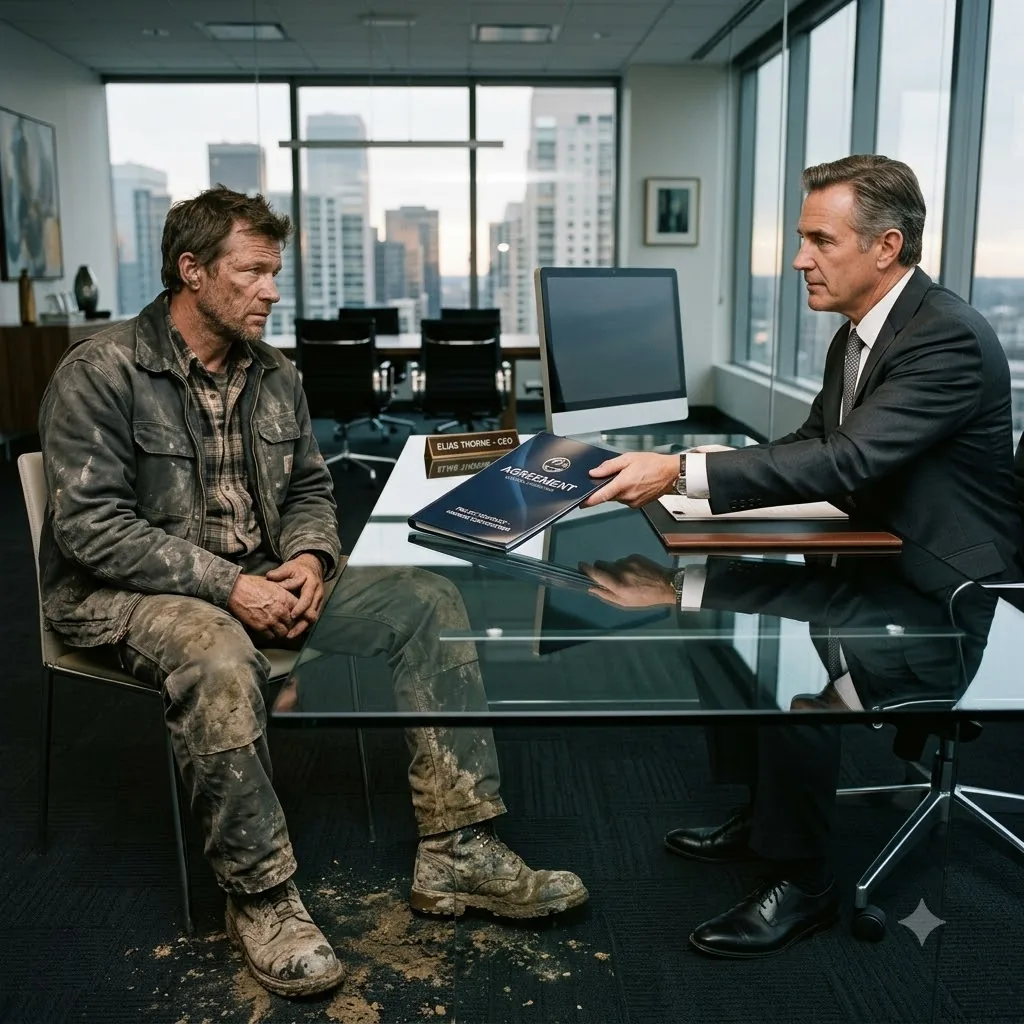
The bold, capitalized letters swam in front of Marcus’s eyes. *BINDING WAIVER OF LIABILITY AND FULL SETTLEMENT.*
He stopped breathing. The freezing air of the forty-second-floor conference room seemed to crystallize in his lungs. The gold-plated fountain pen hovered a mere inch above the crisp white page, its heavy metal barrel suddenly feeling like a lead weight in his bruised, dirt-stained hand.
“Is there a problem, Marcus?” Elaine asked. Her voice was still a gentle, focus-group-tested purr, but the edges had sharpened just a fraction, the maternal warmth dropping a few degrees.
Marcus didn’t look at her. He kept his eyes locked on the paper. “This isn’t a receipt,” he said, his voice raspy from inhaling drywall dust and dried sulfur for three days. “This is a settlement for the Eastside District class action.”
Elaine didn’t flinch. Her sympathetic smile remained surgically affixed to her face. She withdrew her perfectly manicured hand and folded it neatly over the other on the polished mahogany table. “It is a standard indemnification clause,” she explained smoothly, as if reciting from a well-rehearsed, legally-approved script. “The company is providing you with an immediate, substantial grant to rebuild your life. In exchange, we simply ask for assurance that you won’t take our relief funds and then join a lawsuit against us for the exact same property damages. It prevents double-dipping. It is entirely standard practice in disaster relief.”
Marcus slowly lowered the pen. He didn’t drop it, but he let the gold tip rest on the mahogany desk, inches away from the signature line. “The class action isn’t about the flood,” he said, his mind racing to catch up with the corporate trap snapping shut around him. “We filed that lawsuit two years ago. Because of the leukemia clusters. Because you’ve been dumping heavy metals into the groundwater beneath the Eastside tracts since before my kids were born.”
“The language is comprehensive, yes,” Elaine said, her tone brisk now, the illusion of empathy vanishing entirely. “It covers all past, present, and future claims regarding environmental impact. We are buying peace of mind, Marcus. Yours, and ours.”
Marcus stared at the document, forcing his tired, burning eyes to focus on the dense paragraphs of fine print he had almost skipped. There it was. Buried in the center of the legal jargon: *…hereby waives any and all rights to seek damages for personal injury, property loss, chronic health conditions, or emotional distress arising from…*
They weren’t being generous. They were being opportunistic. The poorly maintained earthen berm had failed, washing away his neighborhood in a torrent of toxic sludge, and the executives on the forty-second floor had seen a golden opportunity. Ten thousand dollars was a staggering fortune to a man whose family was currently sleeping on the hardwood floor of a high school gymnasium. But weighed against the multi-million-dollar liability of a cancer cluster, it was couch change. They were using the disaster to starve the community out, buying off their legal rights while the residents were desperate, wet, and freezing.
“You’re paying us off,” Marcus whispered, the sheer horror of it twisting into a tight knot in his gut. “You flooded us, and now you’re using the damage to buy your way out of the cancer suit.”
Elaine sighed, a delicate, practiced sound of corporate disappointment. “Marcus, let’s be pragmatic. The class action has been tied up in appellate courts for twenty-four months. It will likely stay there for another five years. Even if your lawyers eventually win, the payout will be eaten up by legal fees, and you might see a few hundred dollars. Sometime next decade.” She reached out and tapped the corporate cashier’s check pinned to the left side of the folder. “This is ten thousand dollars. Today. Tax-free. Cleared funds.”
Marcus swallowed hard. His throat felt lined with sandpaper.
“Think about your family,” Elaine urged softly, leaning in again. “Your neighbors are thinking about theirs.”
Marcus looked up, his eyes narrowing. “What does that mean?”
“It means you aren’t the first person to sit in that chair today,” Elaine said, her perfectly lined lips curving into a tight, victorious smile. “I have had twenty-two Eastside residents up here since nine o’clock this morning. Do you know how many of them signed?”
Marcus didn’t answer. He didn’t want to know. The cold from the air conditioning felt like it was seeping directly into his bones.
“Twenty-two,” Elaine said quietly. “Including Sarah Jenkins. Including the Miller family. People who need cash right now to buy food and find shelter. They understood that abstract principles don’t pay for hotel rooms. The class action is already falling apart, Marcus. The plaintiffs are withdrawing, one by one, every time I hand over one of these folders.”
The silence in the room became absolute, save for the low, relentless hum of the ventilation system. The isolation pressed down on Marcus like a physical weight. He had thought he was part of a unified front. The Eastside had stood together against the chemical plant for two long, exhausting years. But the flood had broken them. The water had washed away their homes, and now this cream-colored folder was washing away their fight.
A sharp buzz vibrated against his thigh.
Marcus flinched. He awkwardly dug his free hand into the damp, mud-stained pocket of his jeans and pulled out his phone. The screen was cracked from when he had tripped hauling wet debris the day before, but the text message from his wife, Maya, was clearly legible.
*Leo’s cough is worse. He’s throwing up. The clinic nurse here says he needs a real bed and clean air, not a gym floor with a hundred other people. Did you get the hotel voucher? Please tell me you got it. We can’t stay here tonight.*
Marcus stared at the glowing words. He could hear his seven-year-old son’s wet, rattling cough in his memory-a cough that had started months before the flood, a cough the lawsuit lawyers said was directly linked to the groundwater contamination.
Elaine didn’t need to see the screen. She read his face perfectly. She reached across the polished wood and pushed the waiver a fraction of an inch closer.
“The relief fund is capped, Marcus,” she said, checking her gold wristwatch with casual, calculated cruelty. “We budgeted two million dollars for this initiative. It is strictly first-come, first-served. Once the fund is exhausted, we stop issuing checks.”
Marcus looked from his cracked phone screen to the pristine ten-thousand-dollar check. The numbers blurred under the harsh fluorescent lights. It was enough for a long-term rental, private doctor visits, clean clothes, and hot meals. It was safety. Immediate, life-saving safety for his son.
“If you walk out that door without signing, the offer is permanently rescinded,” Elaine added, her voice dropping to a whisper. “I have another family waiting in the lobby. Your signature, right on the line, and the check is yours.”
The gold fountain pen in his hand felt as heavy as an anvil, dragging his bruised wrist toward the paper.