Story code: ST-000644
Part 1: Agonal Breathing
The smell of burnt tin foil, stale vomit, and sharp iodine hit Mateo before the gurney wheels even locked into place. Bay Four was a vibrating mess of tangled IV lines and thrashing limbs. The city had caught a bad batch of street fentanyl, turning the Friday night shift into a relentless conveyor belt of cyanotic lips and pinpoint pupils. Three severe overdoses had crashed through the doors in the last hour, and now paramedics were rolling in two more, shouting abbreviated reports over the wailing of the cardiac monitors. Mateo leaned over the nearest bed rail, his blue nitrile gloves slipping on cold sweat as he firmly tilted a teenager’s jaw upward to clear an obstructed airway. His lower back radiated a dull, constant ache, the inevitable result of a twelve-hour shift stretching seamlessly into fourteen. He moved on pure, unthinking clinical autopilot. He checked pupillary response, shouted a bleak respiratory rate over the din to the charge nurse, and stepped back just far enough to let the junior resident push the first desperate round of Narcan into a newly established line.
There was no time to pause for a deep breath. Mateo pivoted smoothly away from the stabilizing teenager and strode toward the second newly arrived gurney. The paramedics had essentially dumped this one in Bay Five, yelled a quick handoff, and bolted back out into the freezing rain to their idling rig. The anonymous John Doe lay entirely still, save for the sporadic, agonizing heave of his chest. It was agonal breathing. The sound was a distinctive, wet, ragged gasp echoing from the back of the throat, a primal biological alarm indicating the brainstem was rapidly suffocating. Mateo snapped a fresh pair of gloves over his raw hands and moved in tight against the metal rails.
The patient was a massive, immobile mountain of dark, layered fabric and heavy tactical webbing, thoroughly soaked in sour-smelling emesis. A stiff canvas jacket swallowed the man’s thick torso, obscuring any immediate view of his chest rise. Mateo wiped a coarse sterile gauze pad across the man’s vomit-slicked chin, pressing his first two fingers deep into the side of the neck to hunt for a pulse at the carotid artery under the thick, rigid collar. The skin beneath his fingertips was clammy, terribly cold, and tinted a dangerous, ashen gray. The pulse was barely a flutter, an irregular thready rhythm that threatened to vanish completely at any second.
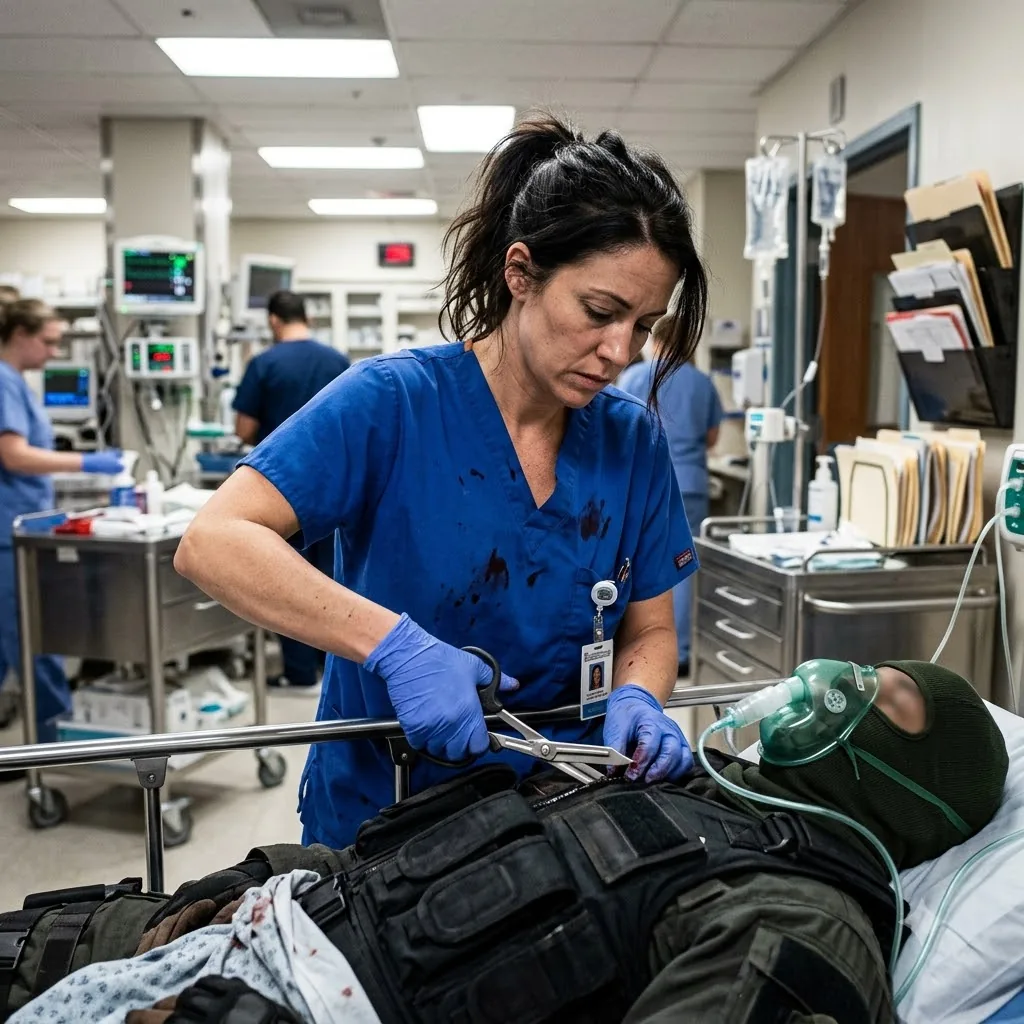
Mateo needed immediate, unobstructed access to the bare chest. He needed a patent intravenous line, and he needed to attach the cardiac monitor leads before that faint flutter flatlined. He reached down without looking, his fingers finding the familiar molded handle of the heavy-duty trauma shears holstered on his right hip. The chaotic emergency room around him immediately blurred into a single, narrow tunnel of urgent clinical necessity. The shouting doctors, the overlapping alarms, and the metallic clatter of dropped instruments faded into background noise. He ignored the mounting stacks of charting paperwork awaiting him, the ever-present, quiet dread regarding his own precarious legal status in the city, and the exhaustion threatening to buckle his knees. There was only the dark fabric, the serrated steel shears, and the acute oxygen starvation happening right in front of him.
He hooked the blunt lower blade of the shears under the thick hem of the dark tactical jacket. The synthetic material fiercely resisted the cut. It was abnormally stiff, heavily reinforced with double stitching and thick nylon webbing that belonged in a combat zone rather than a downtown emergency room. Mateo grunted softly, bearing down hard on the plastic handles. The serrated metal blades crunched loudly through a heavy brass zipper track and chewed an erratic path upward along the left side of the ribcage. The dying man’s chest heaved once again, pulling a desperate, rattling draw of air that sounded like torn paper. Time was evaporating. Mateo readjusted his aching grip, his right forearm burning with lactic acid as he aggressively angled the shears toward the collarbone to bypass a thick canvas strap.
He needed to peel the stiff, heavy material away completely to place the adhesive defibrillator pads on the pale skin beneath. He shoved the lower jaw of the shears forcefully into the breast pocket area to cut horizontally across the reinforced chest panel. The metal blades instantly jammed against something solid. Mateo pulled his arm back and shoved the shears forward again, using his entire upper body weight to force the cutting tool through the stubborn obstruction. The shears snagged hard on a thick, dense block hidden deep inside the heavily reinforced breast pocket. Frustrated by the delay and the failing pulse, Mateo yanked upward with all his remaining strength to clear the jammed blades. The tough synthetic fabric ripped sideways with a loud, tearing sound. A heavy black leather wallet tore violently loose from the shredded lining and tumbled rapidly over the side of the ruined jacket. It hit the cold metal rail of the bloody gurney and flopped open. A heavy, five-point silver star badge slammed flat against the steel.
The smell of burnt tin foil, stale vomit, and sharp iodine hit Mateo before the gurney wheels even locked into place. Bay Four was a vibrating mess of tangled IV lines and thrashing limbs. The city had caught a bad batch of street fentanyl, turning the Friday night shift into a relentless conveyor belt of cyanotic lips and pinpoint pupils. Three severe overdoses had crashed through the doors in the last hour, and now paramedics were rolling in two more, shouting abbreviated reports over the wailing of the cardiac monitors. Mateo leaned over the nearest bed rail, his blue nitrile gloves slipping on cold sweat as he firmly tilted a teenager’s jaw upward to clear an obstructed airway. His lower back radiated a dull, constant ache, the inevitable result of a twelve-hour shift stretching seamlessly into fourteen. He moved on pure, unthinking clinical autopilot. He checked pupillary response, shouted a bleak respiratory rate over the din to the charge nurse, and stepped back just far enough to let the junior resident push the first desperate round of Narcan into a newly established line.
There was no time to pause for a deep breath. Mateo pivoted smoothly away from the stabilizing teenager and strode toward the second newly arrived gurney. The paramedics had essentially dumped this one in Bay Five, yelled a quick handoff, and bolted back out into the freezing rain to their idling rig. The anonymous John Doe lay entirely still, save for the sporadic, agonizing heave of his chest. It was agonal breathing. The sound was a distinctive, wet, ragged gasp echoing from the back of the throat, a primal biological alarm indicating the brainstem was rapidly suffocating. Mateo snapped a fresh pair of gloves over his raw hands and moved in tight against the metal rails.
The patient was a massive, immobile mountain of dark, layered fabric and heavy tactical webbing, thoroughly soaked in sour-smelling emesis. A stiff canvas jacket swallowed the man’s thick torso, obscuring any immediate view of his chest rise. Mateo wiped a coarse sterile gauze pad across the man’s vomit-slicked chin, pressing his first two fingers deep into the side of the neck to hunt for a pulse at the carotid artery under the thick, rigid collar. The skin beneath his fingertips was clammy, terribly cold, and tinted a dangerous, ashen gray. The pulse was barely a flutter, an irregular thready rhythm that threatened to vanish completely at any second.
Mateo needed immediate, unobstructed access to the bare chest. He needed a patent intravenous line, and he needed to attach the cardiac monitor leads before that faint flutter flatlined. He reached down without looking, his fingers finding the familiar molded handle of the heavy-duty trauma shears holstered on his right hip. The chaotic emergency room around him immediately blurred into a single, narrow tunnel of urgent clinical necessity. The shouting doctors, the overlapping alarms, and the metallic clatter of dropped instruments faded into background noise. He ignored the mounting stacks of charting paperwork awaiting him, the ever-present, quiet dread regarding his own precarious legal status in the city, and the exhaustion threatening to buckle his knees. There was only the dark fabric, the serrated steel shears, and the acute oxygen starvation happening right in front of him.
He hooked the blunt lower blade of the shears under the thick hem of the dark tactical jacket. The synthetic material fiercely resisted the cut. It was abnormally stiff, heavily reinforced with double stitching and thick nylon webbing that belonged in a combat zone rather than a downtown emergency room. Mateo grunted softly, bearing down hard on the plastic handles. The serrated metal blades crunched loudly through a heavy brass zipper track and chewed an erratic path upward along the left side of the ribcage. The dying man’s chest heaved once again, pulling a desperate, rattling draw of air that sounded like torn paper. Time was evaporating. Mateo readjusted his aching grip, his right forearm burning with lactic acid as he aggressively angled the shears toward the collarbone to bypass a thick canvas strap.
He needed to peel the stiff, heavy material away completely to place the adhesive defibrillator pads on the pale skin beneath. He shoved the lower jaw of the shears forcefully into the breast pocket area to cut horizontally across the reinforced chest panel. The metal blades instantly jammed against something solid. Mateo pulled his arm back and shoved the shears forward again, using his entire upper body weight to force the cutting tool through the stubborn obstruction. The shears snagged hard on a thick, dense block hidden deep inside the heavily reinforced breast pocket. Frustrated by the delay and the failing pulse, Mateo yanked upward with all his remaining strength to clear the jammed blades. The tough synthetic fabric ripped sideways with a loud, tearing sound. A heavy black leather wallet tore violently loose from the shredded lining and tumbled rapidly over the side of the ruined jacket. It hit the cold metal rail of the bloody gurney and flopped open. A heavy, five-point silver star badge slammed flat against the steel.