Story code: ST-000646
Part 2: The Empathy Exploit
The sharp clack of the aluminum chassis snapping shut echoed like a gunshot in the freezing pool house.
Julian left his hand resting on the closed lid. His knuckles were white, pressed hard against the brushed metal. The silence stretched, heavy and suffocating, broken only by the anemic, rhythmic ticking of the malfunctioning space heater in the corner.
“Context,” Julian said finally. His voice dropped an octave, slipping seamlessly back into his measured, authoritative cadence. He stood up straight, adjusting the cuffs of his cashmere sweater. “Context is absolutely everything in this industry, Marcus.”
Marcus said nothing. He watched a single, thick drop of condensation slide down the side of the green smoothie glass on his desk, pooling perilously close to the power strip.
“That warehouse is structurally unsound,” Julian continued, his eyes locking onto Marcus with a terrifying, unblinking intensity. “Black mold in the drywall. Asbestos in the ceiling tiles. It’s a literal death trap. The injunction you just saw? It’s a complex, tactical legal maneuver to force the city council to allocate funds for a proper, dignified facility. We have to play aggressive hardball to protect the vulnerable. You understand that, right?”
Marcus felt a slow, dark, heavy beat in his chest. *Irreparable harm to neighborhood property values. The immediate need to block undesirable transient elements.* The specific, ruthless phrasing from the legal PDF was already burned permanently into his retinas.
“I understand,” Marcus said. His voice was a dry, hollow rasp.
“Good,” Julian exhaled, clapping his hands together once. The mask of the enlightened, compassionate founder slid perfectly back into place. “Because this is exactly why we need the community empathy metric live by Monday morning. If word gets out about the injunction without the proper technological context, the optics could be… aggressively misinterpreted by our competitors. I need you to build the resource-mapping algorithm right now. We are locking down this room until a staging build is pushed.”
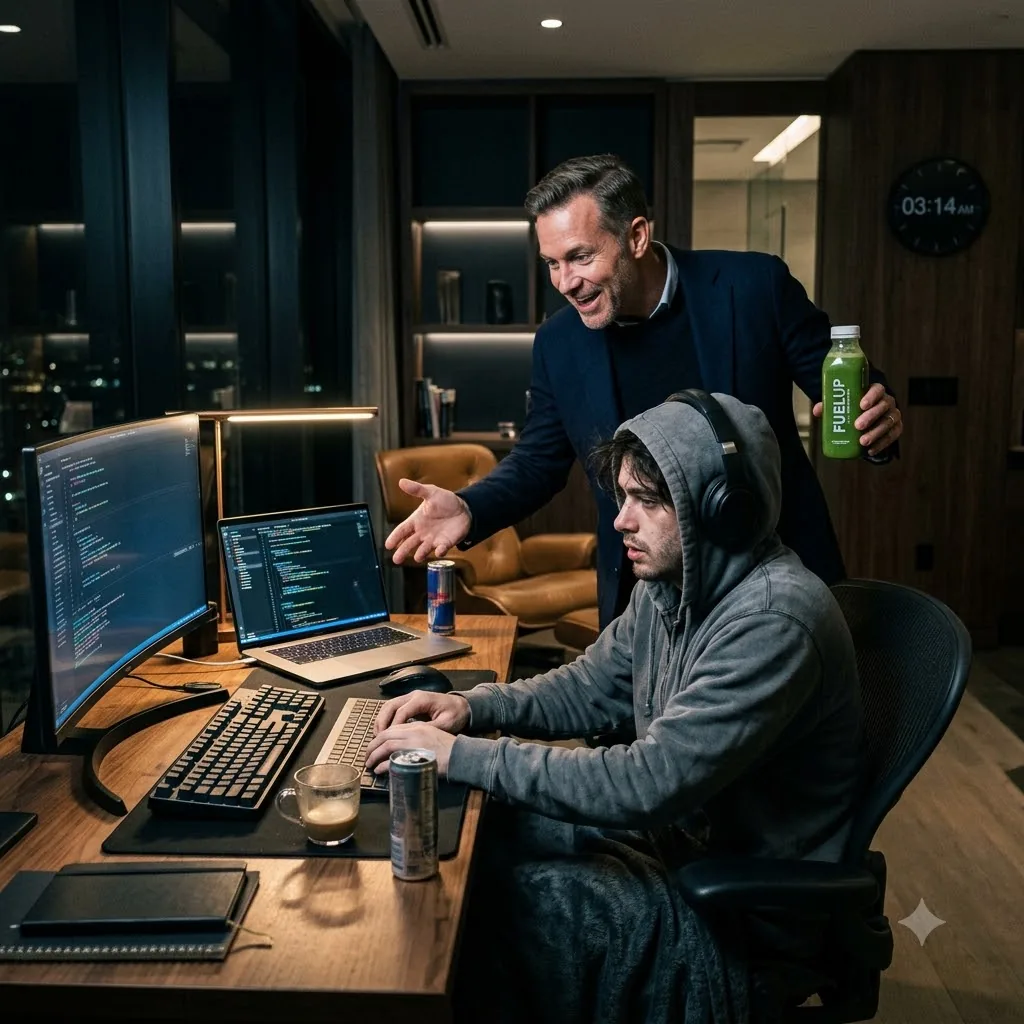
Julian dragged his titanium barstool closer to Marcus’s desk, intentionally blocking the only clear path to the sliding glass door.
Marcus turned back to his primary monitor. The crushing exhaustion that had been paralyzing his limbs for three days suddenly vanished, burned away by a strange, icy adrenaline. He opened his integrated development environment. His stiff, freezing fingers hovered over the mechanical keyboard.
Julian wanted a resource-mapping algorithm. Julian wanted a tangible demonstration of their commitment to the unhoused. Marcus was going to give him exactly that.
The app was fundamentally designed to connect marginalized groups with community resources-free pantries, overnight safe-parking zones, mutual aid stations. Julian’s original specifications called for these zones to be heavily geofenced, restricted to industrial outskirts and commercial sectors under the guise of “municipal zoning compliance.”
Marcus began defining the backend logic for the new `ResourceLocator` class. With Julian sitting less than two feet away, casually sipping his violently green sludge and watching the screen, Marcus started architecting a digital weapon.
He created a custom weighting function for the geolocation services. Instead of pushing the resource zones to the edges of the city, Marcus silently inverted the latitude and longitude parameters. He integrated a backdoor API call to public property tax records. He wrote a recursive loop that assigned the highest algorithmic priority to the highest property values. The wealthier the street, the higher the “empathy score” the algorithm calculated.
He was meticulously hardcoding Julian’s exclusive, gated cul-de-sac as the absolute epicenter of the app’s mutual aid map.
Once this code was deployed to their massive user base, the app would push automated notifications to thousands of transient users across the greater metro area. It would direct anyone seeking emergency shelter, free meals, or safe overnight parking straight to Julian’s front door. It would mathematically designate Julian’s pristine, multi-million-dollar neighborhood as an ‘Unrestricted Empathy Zone.’ The resulting flood of vehicles and encampments would collapse the local property values overnight.
“What’s that block doing?” Julian asked suddenly, pointing a manicured finger at a cluster of variables on the screen.
Marcus didn’t blink. He kept his eyes glued to the syntax. “It’s the equity distribution radius. It ensures we aren’t just clustering our digital resources in historically low-income areas. It mathematically forces the algorithm to recognize high-capacity, affluent neighborhoods as potential support hubs.”
Julian nodded slowly, clearly possessing zero understanding of the backend architecture but absolutely vibrating at the sound of the buzzwords. “Brilliant. Decentralized, disruptive compassion. That’s exactly the narrative framing we need for the Series B investor pitch. Make sure the UI really highlights that data.”
Marcus’s fingers flew across the keys. The bitter cold in the room didn’t register anymore. He was dismantling his CEO’s life, line by line, keystroke by keystroke, hiding the explosive payload beneath layers of mundane JSON formatting.
The tension in the small pool house thickened. Julian began pacing the narrow strip of floorboards behind Marcus, complaining softly about the draft from the window, entirely oblivious to the fact that he controlled the thermostat in the main house. He checked his phone obsessively, the blue light reflecting off his expensive sweater.
“We need a visual, Marcus,” Julian said, his patience abruptly evaporating. “I can’t just pitch lines of Python to the venture capital board. I need to see the heat map on the staging server. I want to see exactly how these empathy nodes populate across the city grid.”
Marcus swallowed hard. His throat felt lined with shattered glass. “The rendering engine takes time to compile the geospatial data. I need to run a few more unit tests first.”
“Skip the unit tests,” Julian snapped, stopping right behind Marcus’s chair. “We are in absolute crisis mode. Compile the map.”
“It’s not a stable build,” Marcus lied. His hands hovered frozen over the keyboard. If he compiled the visual heat map right now, Julian’s address would light up like a blinding red supernova on the monitor. The sabotage would be instantly, undeniably visible.
“I don’t care if it’s stable, I care if it proves my concept,” Julian said. The scent of expensive sandalwood cologne mixed sickeningly with the metallic, burning dust smell of the struggling space heater. Julian leaned heavily over Marcus’s shoulder, his physical presence suffocating. “Run the staging environment.”
“Give me ten minutes to clean up the repository,” Marcus said, subtly dragging his mouse to shift a terminal window, trying desperately to cover the inverted weighting formula.
Julian didn’t wait. He reached right over Marcus’s shoulder. His heavy hand bypassed Marcus’s trembling fingers entirely and slammed down on the keyboard, forcefully hitting the execution shortcut to launch the staging build.
“I said,” Julian whispered, his eyes locked on the compiling terminal, “show me the map.”