Story code: ST-000646
Part 1: The Empathy Metric
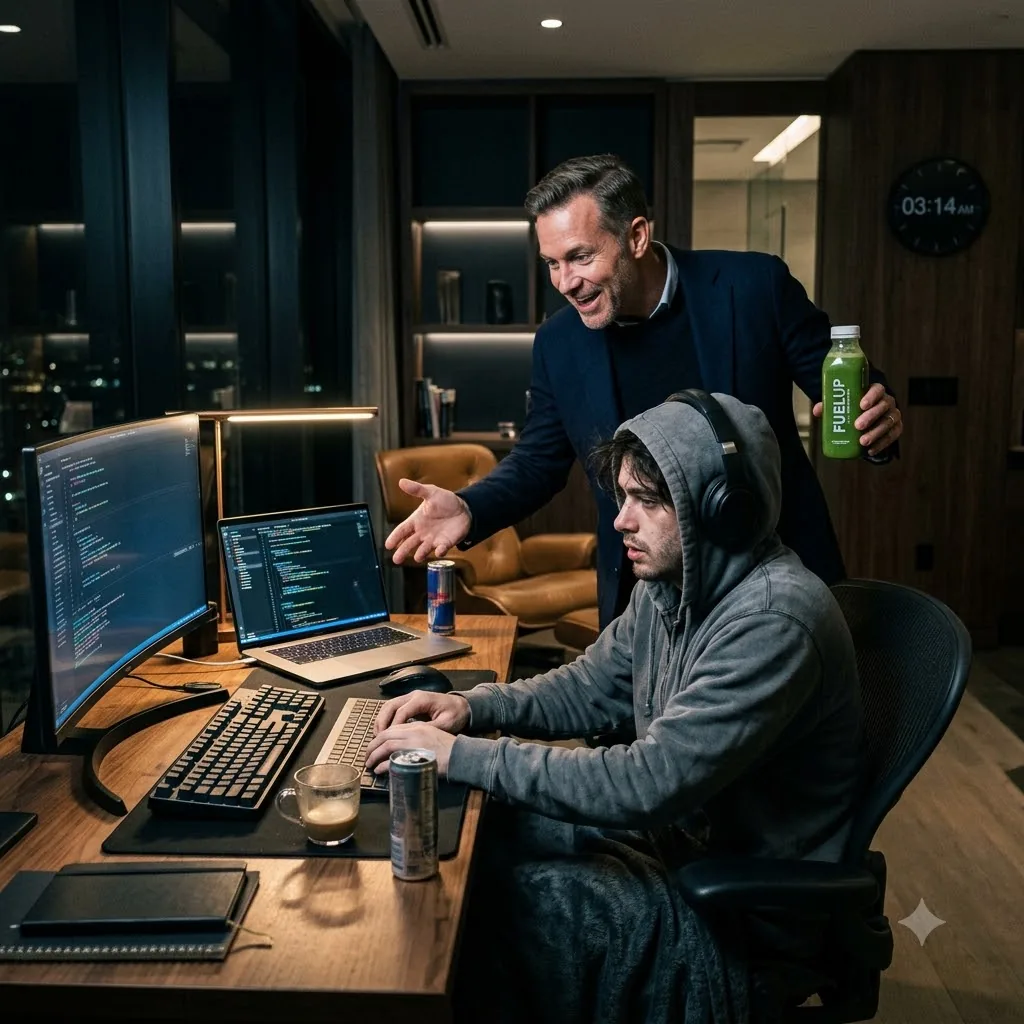
The space heater in the corner of the uninsulated guest house glowed a useless, anemic orange, doing absolutely nothing to stop the tremors wracking Marcus’s shoulders. It was three in the morning, marking hour eighty of his current work week, and his fingers were stiff blocks of ice hovering over a mechanical keyboard. The Silicon Valley innovation pod was, in reality, just his CEO’s detached pool house, rented out to Marcus as a supposed executive perk that somehow functioned as a twenty-four-hour trap.
Marcus rubbed his burning eyes, staring at the lines of backend architecture that blurred into a gray, swimming smear on his primary monitor.
The glass patio door slid open along its tracks, letting in a sudden, brutal blast of damp coastal fog. Julian stepped inside, completely immune to the chill in a thick cashmere sweater, wearing a look of profound, weaponized serenity. He carried two tall glasses filled with a thick, violently green sludge.
Julian set one of the kale-and-ashwagandha smoothies next to Marcus’s keyboard, placing it dangerously close to the power strip. He spoke in that measured, hypnotic podcast-host cadence he always deployed during seed-round pitches, explaining that he sensed Marcus was experiencing a severe energetic misalignment with the company’s core mission. Julian leaned against the edge of the cheap IKEA desk, radiating expensive warmth and unearned confidence. He declared, without a hint of irony, that they needed to pivot the weekend’s entire slate of deliverables. The new focus would be solely on the community empathy metric for their neighborhood networking app.
The investors, Julian insisted, were looking for a tangible demonstration of their commitment to social equity. Julian felt it was absolutely vital that Marcus lean heavily into this space, pushing through until Sunday evening to get the algorithm deployed.
Marcus stared at the green sludge sweating condensation onto the veneer desk. His chest tightened with a familiar, suffocating pressure. He tried to calculate how many hours of sleep he had banked since Tuesday morning, eventually coming up with a single-digit number. Julian kept talking, stringing together words like synergy, holistic impact, and vulnerability as if they were actual technical specifications.
Julian placed a heavy, manicured hand on Marcus’s freezing shoulder. He gave the joint a firm squeeze that felt significantly more like a physical restraint than a gesture of comfort. True innovation, Julian explained softly, required a temporary suspension of personal boundaries and archaic concepts like the standard work week. Their app was going to fundamentally change how modern neighborhoods interacted. It was designed to foster deep, systemic compassion across class divides, and Marcus was the vital architect of that compassion.
Marcus managed a stiff, jerky nod, keeping his eyes fixed straight ahead on his glowing monitor. The cold in the small room seemed to sink deeper into his bones, settling permanently in the marrow. He was too tired to point out that the space heater had been malfunctioning since November.
Julian pulled up a sleek titanium barstool, completely uninvited, and flipped open his own ultra-thin laptop. He announced his intention to align their visual paradigms before Marcus started the weekend coding sprint. Julian tilted his screen toward Marcus, the sudden brightness searing in the dim, shadowy light of the pool house.
He began swiping through a deck of wireframes outlining the new empathy dashboard. There were soft, rounded graphs and pastel icons specifically designed to track user altruism. Julian narrated each swipe, praising his own visionary approach to user experience design. He talked continuously about frictionless charity, decentralized community support, and the moral imperative of tech leaders to uplift the unhoused population.
Marcus forced himself to look at the screen, letting the endless corporate buzzwords wash over him in a numb wave. He was too exhausted to argue, too cold to care about the aesthetic differences between seafoam green and mint. He just wanted Julian to leave the pool house so he could finally wrap himself in the scratchy wool blanket he kept hidden under the desk.
Julian swiped his trackpad with an aggressive, theatrical flourish to bring up the final user flow diagram. The presentation software glitched. The wireframe vanished entirely.
Instead of the final slide in the empathy pitch deck, a PDF document snapped into full-screen view.
Marcus blinked, his exhausted brain struggling to process the dense, single-spaced blocks of legal text. The header was prominently stamped with the logo of a notoriously aggressive San Francisco real estate law firm. Julian’s full legal name was listed at the top, right next to the word Plaintiff.
The document was an emergency legal injunction. Marcus scanned the bolded clauses, his bloodshot eyes catching on specific street names and local zoning codes. It was a formal, aggressively worded petition to block the conversion of a vacant warehouse into an emergency winter shelter. The warehouse in question was located exactly four blocks from Julian’s primary residence.
The injunction cited irreparable harm to neighborhood property values, the disruption of elite community character, and the immediate need to block undesirable transient elements from entering the zip code.
Julian’s fingers froze instantly over the silver trackpad. The cultivated, podcast-host serenity completely evaporated from his face, replaced in a microsecond by a rigid, bloodless mask of absolute panic.
Marcus looked slowly from the ruthless legal injunction on the screen back to Julian, the words community empathy metric echoing loudly in the freezing, dead air of the room.
Julian slammed the laptop shut.
The space heater in the corner of the uninsulated guest house glowed a useless, anemic orange, doing absolutely nothing to stop the tremors wracking Marcus’s shoulders. It was three in the morning, marking hour eighty of his current work week, and his fingers were stiff blocks of ice hovering over a mechanical keyboard. The Silicon Valley innovation pod was, in reality, just his CEO’s detached pool house, rented out to Marcus as a supposed executive perk that somehow functioned as a twenty-four-hour trap.
Marcus rubbed his burning eyes, staring at the lines of backend architecture that blurred into a gray, swimming smear on his primary monitor.
The glass patio door slid open along its tracks, letting in a sudden, brutal blast of damp coastal fog. Julian stepped inside, completely immune to the chill in a thick cashmere sweater, wearing a look of profound, weaponized serenity. He carried two tall glasses filled with a thick, violently green sludge.
Julian set one of the kale-and-ashwagandha smoothies next to Marcus’s keyboard, placing it dangerously close to the power strip. He spoke in that measured, hypnotic podcast-host cadence he always deployed during seed-round pitches, explaining that he sensed Marcus was experiencing a severe energetic misalignment with the company’s core mission. Julian leaned against the edge of the cheap IKEA desk, radiating expensive warmth and unearned confidence. He declared, without a hint of irony, that they needed to pivot the weekend’s entire slate of deliverables. The new focus would be solely on the community empathy metric for their neighborhood networking app.
The investors, Julian insisted, were looking for a tangible demonstration of their commitment to social equity. Julian felt it was absolutely vital that Marcus lean heavily into this space, pushing through until Sunday evening to get the algorithm deployed.
Marcus stared at the green sludge sweating condensation onto the veneer desk. His chest tightened with a familiar, suffocating pressure. He tried to calculate how many hours of sleep he had banked since Tuesday morning, eventually coming up with a single-digit number. Julian kept talking, stringing together words like synergy, holistic impact, and vulnerability as if they were actual technical specifications.
Julian placed a heavy, manicured hand on Marcus’s freezing shoulder. He gave the joint a firm squeeze that felt significantly more like a physical restraint than a gesture of comfort. True innovation, Julian explained softly, required a temporary suspension of personal boundaries and archaic concepts like the standard work week. Their app was going to fundamentally change how modern neighborhoods interacted. It was designed to foster deep, systemic compassion across class divides, and Marcus was the vital architect of that compassion.
Marcus managed a stiff, jerky nod, keeping his eyes fixed straight ahead on his glowing monitor. The cold in the small room seemed to sink deeper into his bones, settling permanently in the marrow. He was too tired to point out that the space heater had been malfunctioning since November.
Julian pulled up a sleek titanium barstool, completely uninvited, and flipped open his own ultra-thin laptop. He announced his intention to align their visual paradigms before Marcus started the weekend coding sprint. Julian tilted his screen toward Marcus, the sudden brightness searing in the dim, shadowy light of the pool house.
He began swiping through a deck of wireframes outlining the new empathy dashboard. There were soft, rounded graphs and pastel icons specifically designed to track user altruism. Julian narrated each swipe, praising his own visionary approach to user experience design. He talked continuously about frictionless charity, decentralized community support, and the moral imperative of tech leaders to uplift the unhoused population.
Marcus forced himself to look at the screen, letting the endless corporate buzzwords wash over him in a numb wave. He was too exhausted to argue, too cold to care about the aesthetic differences between seafoam green and mint. He just wanted Julian to leave the pool house so he could finally wrap himself in the scratchy wool blanket he kept hidden under the desk.
Julian swiped his trackpad with an aggressive, theatrical flourish to bring up the final user flow diagram. The presentation software glitched. The wireframe vanished entirely.
Instead of the final slide in the empathy pitch deck, a PDF document snapped into full-screen view.
Marcus blinked, his exhausted brain struggling to process the dense, single-spaced blocks of legal text. The header was prominently stamped with the logo of a notoriously aggressive San Francisco real estate law firm. Julian’s full legal name was listed at the top, right next to the word Plaintiff.
The document was an emergency legal injunction. Marcus scanned the bolded clauses, his bloodshot eyes catching on specific street names and local zoning codes. It was a formal, aggressively worded petition to block the conversion of a vacant warehouse into an emergency winter shelter. The warehouse in question was located exactly four blocks from Julian’s primary residence.
The injunction cited irreparable harm to neighborhood property values, the disruption of elite community character, and the immediate need to block undesirable transient elements from entering the zip code.
Julian’s fingers froze instantly over the silver trackpad. The cultivated, podcast-host serenity completely evaporated from his face, replaced in a microsecond by a rigid, bloodless mask of absolute panic.
Marcus looked slowly from the ruthless legal injunction on the screen back to Julian, the words community empathy metric echoing loudly in the freezing, dead air of the room.
Julian slammed the laptop shut.