Story code: ST-000688
Part 1: The Error Code
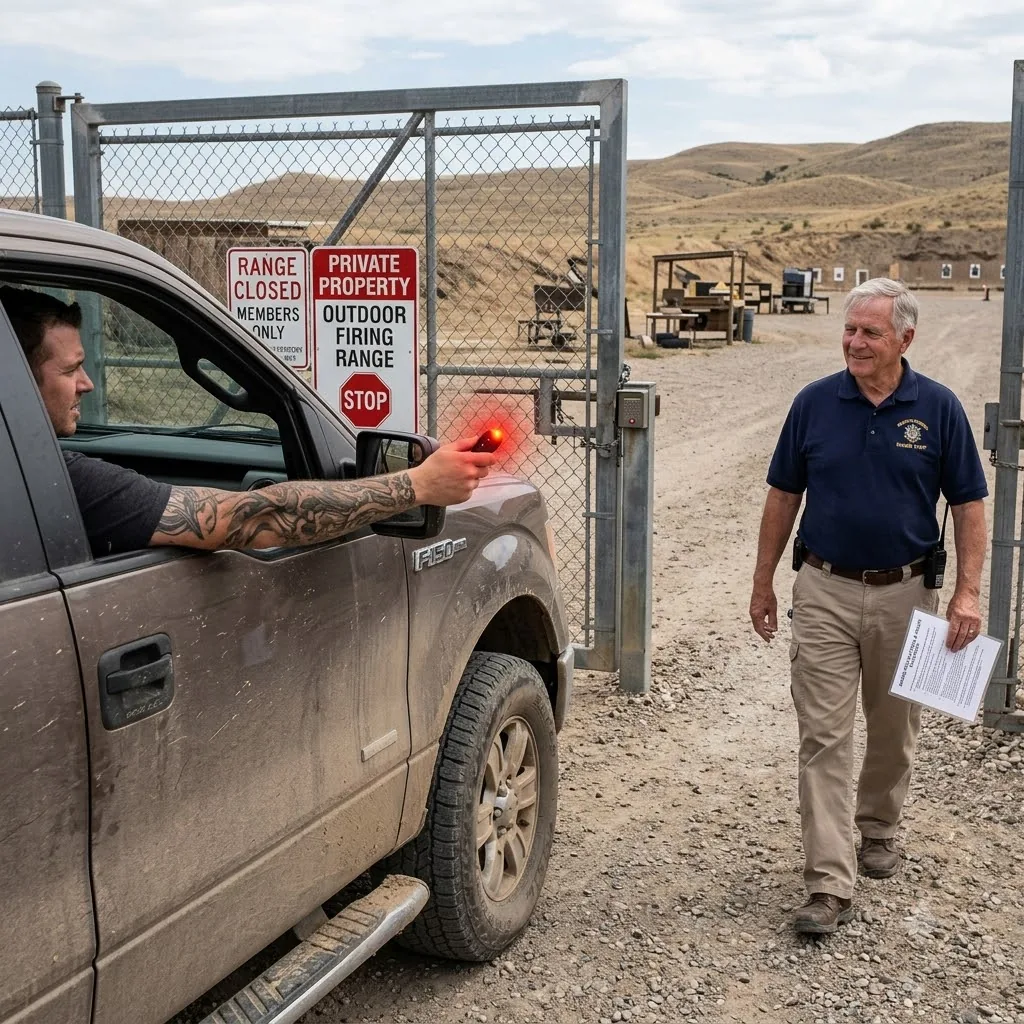
Elias jammed his thumb into the plastic button of the gate fob for the third time. The little LED blinked a sharp, angry red, and the striped aluminum barrier of the Oakhaven Gun Club remained stubbornly lowered across the asphalt.
He let out a slow, controlled breath, shifting his weight against the worn fabric of the driver’s seat. Fire flared down his right thigh, a familiar, grinding ache radiating from the deep shrapnel scars webbing his lower spine. He adjusted his posture incrementally, swallowing the wince before it could reach his face, forcing his expression into a mask of mild, everyday annoyance. He glanced at the rearview mirror.
Three teenagers sat crammed into the back seat of his extended cab, practically vibrating with a potent mix of anticipation and dread. Marcus was tracing the raised seam of his denim jeans over and over, his eyes darting toward the distant, rhythmic crackle of small-arms fire echoing from the open pistol bays. Beside him, Leo and Sam sat shoulder-to-shoulder, their postures rigid and defensive. They wore bright, oversized thrift-store jackets and dyed hair that stood out sharply against the muted greens, browns, and grays of the rural county.
Elias had spent the last two weeks carefully talking them into this trip. He had promised them that learning fundamental safety from a certified instructor was the most effective way to demystify their deep-seated fear of firearms. More importantly, he had promised them they would be safe and welcome with him.
He pressed the fob again. A fourth red light. No movement from the gate mechanism.
He rolled down the window. The humid June morning air rushed into the air-conditioned cabin, carrying the distinct, sharp, metallic scent of spent brass and burnt gunpowder.
“Just a minor technical glitch,” Elias said, pitching his voice low and steady to project absolute calm. “The optical sensor out here acts up when the humidity spikes overnight.”
“Are you sure we are allowed to be here,” Marcus stated, his voice tight and breathless. The sentence wasn’t phrased as an inquiry, just a flat expression of his mounting, suffocating anxiety.
“I am a lifetime member,” Elias said. “They know my truck.”
They certainly knew his face. Less than twenty-four hours ago, he had been standing right up there on the wooden deck of the main clubhouse, wearing his pressed dress uniform for the annual Memorial Day barbecue. The club leadership had presented him with a heavy, brass-trimmed plaque. Dozens of members had clapped him on the shoulder, handing him paper plates piled high with brisket, publicly thanking him for his combat tours in Kandahar. The transition from that warm, suffocatingly patriotic embrace to this unyielding mechanical rejection felt deeply jarring. It was like stepping off a curb in the dark that was far higher than it appeared.
Elias put the truck in reverse, backing up a few feet to reset the magnetic sensor loop embedded in the pavement. He eased forward again until the chrome bumper nearly touched the painted gate. He leaned out the window, extending his arm fully to hold the fob directly in front of the black receiver box mounted on the keypad pole.
Red light.
Behind him, Sam shifted, the rustle of a nylon jacket sounding deafening in the confined space. “We can just go back home. We really do not have to do this today.”
“We are doing this,” Elias said, keeping his eyes fixed on the clubhouse. “You all woke up at six in the morning for this. I have three private lanes reserved on the fifty-yard line.”
He reached out to the heavy metal keypad to punch in his manual override code. His knuckles throbbed with a dull ache as he tapped the digits, the physical toll of his service asserting itself in his joints.
The small LCD screen flashed an instant error message. ACCESS DENIED. SEE ADMINISTRATION.
A cold knot of unease tightened abruptly in Elias’s gut. The club never suspended lifetime memberships over late dues, and his account was paid through the next decade regardless. He scanned the expansive gravel parking lot beyond the gate. Several men in tactical vests and mesh ballcaps were loading gear boxes into the beds of their pickups. None of them looked in his direction. The deliberate lack of attention felt heavy and intentional. Under normal circumstances, a stalled truck at the front gate drew at least one helpful wave or someone jogging over to swipe their own access card. Today, it was as if an invisible wall had descended around his vehicle.
The heavy wooden door of the main clubhouse swung outward. Club President Vance stepped out onto the wrap-around porch.
Elias let out a quiet sigh of relief. Vance was the exact man who had handed him the plaque yesterday, the man who had practically shouted into the PA microphone about Elias’s bravery and sacrifice. Elias raised a hand out the open window, offering a casual wave.
Vance did not wave back.
The older man descended the wooden steps with a stiff, unnatural gait. He was not wearing his usual wide, welcoming smile. His jaw was locked, pulling the skin tight across his flushed cheeks. His eyes were fixed intensely on Elias’s truck. More specifically, Vance’s gaze seemed to bypass Elias at the wheel entirely, sliding right past the driver to lock relentlessly onto the three young people sitting in the back seat.
Elias felt the shift in the atmosphere instantly, a drop in barometric pressure that made the hairs on his arms stand up. His combat instincts, carefully managed and dormant for years, flared into immediate life. The dull ache in his back was utterly erased by a sharp, cold burst of adrenaline. He checked his mirrors automatically. The narrow road behind them was completely empty, flanked on both sides by deep, muddy drainage ditches. They were bottlenecked. Trapped.
Vance crossed the gravel lot, his heavy leather boots crunching loudly in the quiet, tense space between distant gunshots. He wasn’t walking like a man coming to fix a broken gate motor. He was marching like a man approaching a hostile trespasser. In his right hand, pressed flat and rigid against his thigh, Vance held a stiff, laminated piece of paper.
“Morning, Vance,” Elias called out, forcing his tone to remain light and conversational for the sake of the kids behind him. “System decided to lock me out.”
Vance stopped on the other side of the aluminum barrier. He didn’t look at the keypad. He didn’t look at the electronic fob in Elias’s hand. He planted his feet squarely, raising the laminated paper to chest height as he stepped right up to the edge of the driver’s side window.
Elias jammed his thumb into the plastic button of the gate fob for the third time. The little LED blinked a sharp, angry red, and the striped aluminum barrier of the Oakhaven Gun Club remained stubbornly lowered across the asphalt.
He let out a slow, controlled breath, shifting his weight against the worn fabric of the driver’s seat. Fire flared down his right thigh, a familiar, grinding ache radiating from the deep shrapnel scars webbing his lower spine. He adjusted his posture incrementally, swallowing the wince before it could reach his face, forcing his expression into a mask of mild, everyday annoyance. He glanced at the rearview mirror.
Three teenagers sat crammed into the back seat of his extended cab, practically vibrating with a potent mix of anticipation and dread. Marcus was tracing the raised seam of his denim jeans over and over, his eyes darting toward the distant, rhythmic crackle of small-arms fire echoing from the open pistol bays. Beside him, Leo and Sam sat shoulder-to-shoulder, their postures rigid and defensive. They wore bright, oversized thrift-store jackets and dyed hair that stood out sharply against the muted greens, browns, and grays of the rural county.
Elias had spent the last two weeks carefully talking them into this trip. He had promised them that learning fundamental safety from a certified instructor was the most effective way to demystify their deep-seated fear of firearms. More importantly, he had promised them they would be safe and welcome with him.
He pressed the fob again. A fourth red light. No movement from the gate mechanism.
He rolled down the window. The humid June morning air rushed into the air-conditioned cabin, carrying the distinct, sharp, metallic scent of spent brass and burnt gunpowder.
“Just a minor technical glitch,” Elias said, pitching his voice low and steady to project absolute calm. “The optical sensor out here acts up when the humidity spikes overnight.”
“Are you sure we are allowed to be here,” Marcus stated, his voice tight and breathless. The sentence wasn’t phrased as an inquiry, just a flat expression of his mounting, suffocating anxiety.
“I am a lifetime member,” Elias said. “They know my truck.”
They certainly knew his face. Less than twenty-four hours ago, he had been standing right up there on the wooden deck of the main clubhouse, wearing his pressed dress uniform for the annual Memorial Day barbecue. The club leadership had presented him with a heavy, brass-trimmed plaque. Dozens of members had clapped him on the shoulder, handing him paper plates piled high with brisket, publicly thanking him for his combat tours in Kandahar. The transition from that warm, suffocatingly patriotic embrace to this unyielding mechanical rejection felt deeply jarring. It was like stepping off a curb in the dark that was far higher than it appeared.
Elias put the truck in reverse, backing up a few feet to reset the magnetic sensor loop embedded in the pavement. He eased forward again until the chrome bumper nearly touched the painted gate. He leaned out the window, extending his arm fully to hold the fob directly in front of the black receiver box mounted on the keypad pole.
Red light.
Behind him, Sam shifted, the rustle of a nylon jacket sounding deafening in the confined space. “We can just go back home. We really do not have to do this today.”
“We are doing this,” Elias said, keeping his eyes fixed on the clubhouse. “You all woke up at six in the morning for this. I have three private lanes reserved on the fifty-yard line.”
He reached out to the heavy metal keypad to punch in his manual override code. His knuckles throbbed with a dull ache as he tapped the digits, the physical toll of his service asserting itself in his joints.
The small LCD screen flashed an instant error message. ACCESS DENIED. SEE ADMINISTRATION.
A cold knot of unease tightened abruptly in Elias’s gut. The club never suspended lifetime memberships over late dues, and his account was paid through the next decade regardless. He scanned the expansive gravel parking lot beyond the gate. Several men in tactical vests and mesh ballcaps were loading gear boxes into the beds of their pickups. None of them looked in his direction. The deliberate lack of attention felt heavy and intentional. Under normal circumstances, a stalled truck at the front gate drew at least one helpful wave or someone jogging over to swipe their own access card. Today, it was as if an invisible wall had descended around his vehicle.
The heavy wooden door of the main clubhouse swung outward. Club President Vance stepped out onto the wrap-around porch.
Elias let out a quiet sigh of relief. Vance was the exact man who had handed him the plaque yesterday, the man who had practically shouted into the PA microphone about Elias’s bravery and sacrifice. Elias raised a hand out the open window, offering a casual wave.
Vance did not wave back.
The older man descended the wooden steps with a stiff, unnatural gait. He was not wearing his usual wide, welcoming smile. His jaw was locked, pulling the skin tight across his flushed cheeks. His eyes were fixed intensely on Elias’s truck. More specifically, Vance’s gaze seemed to bypass Elias at the wheel entirely, sliding right past the driver to lock relentlessly onto the three young people sitting in the back seat.
Elias felt the shift in the atmosphere instantly, a drop in barometric pressure that made the hairs on his arms stand up. His combat instincts, carefully managed and dormant for years, flared into immediate life. The dull ache in his back was utterly erased by a sharp, cold burst of adrenaline. He checked his mirrors automatically. The narrow road behind them was completely empty, flanked on both sides by deep, muddy drainage ditches. They were bottlenecked. Trapped.
Vance crossed the gravel lot, his heavy leather boots crunching loudly in the quiet, tense space between distant gunshots. He wasn’t walking like a man coming to fix a broken gate motor. He was marching like a man approaching a hostile trespasser. In his right hand, pressed flat and rigid against his thigh, Vance held a stiff, laminated piece of paper.
“Morning, Vance,” Elias called out, forcing his tone to remain light and conversational for the sake of the kids behind him. “System decided to lock me out.”
Vance stopped on the other side of the aluminum barrier. He didn’t look at the keypad. He didn’t look at the electronic fob in Elias’s hand. He planted his feet squarely, raising the laminated paper to chest height as he stepped right up to the edge of the driver’s side window.