Story code: ST-000687
Part 4: The Dead Ends
The two private security contractors calculated the odds. Two hundred angry locals, armed with generations of betrayed trust and nothing left to lose, against two men making forty dollars an hour. The guards lowered their hands, stepped backward out of the center aisle, and melted toward the exit.
Ellis realized he was entirely alone. The regional director’s face lost its arrogant flush, draining to a sickly, panicked white. He didn’t try to salvage the pitch. He didn’t offer a corporate platitude. He just turned, hit the push-bar of the double doors, and shoved his way out into the damp night air. The heavy metal doors swung shut behind him with a hollow clang, sealing the gym.
The silence that followed wasn’t peaceful. It was the ringing, high-pressure quiet of a bomb detonating.
Marcus stood at the edge of the stage, his chest heaving as the adrenaline crash hit him. His hands began to shake. He looked down at the floorboards, at the crushed bits of plastic from his earpiece. With every second that ticked by, the automated machinery of Vanguard Holdings was locking him out. His corporate email was likely already deactivated. By morning, they would freeze his stock portfolio, void his severance, and initiate the catastrophic NDA breach protocols. His keycard wouldn’t open his high-rise apartment building. Ten years of meticulous, exhausting reinvention, incinerated in three minutes.
He reached inside his tailored charcoal suit jacket. His fingers found the heavy plastic of his Vanguard executive badge, clipped to his belt. He unspooled the retractable lanyard, feeling the familiar tension of the wire. For a decade, that badge had been his shield. It meant he wasn’t from Oakridge anymore. It meant he was safe.
Marcus unclipped it. He let the lanyard snap back, then dropped the badge onto the stage. It landed next to the leather-bound presentation binder, a piece of useless plastic on the particle board.
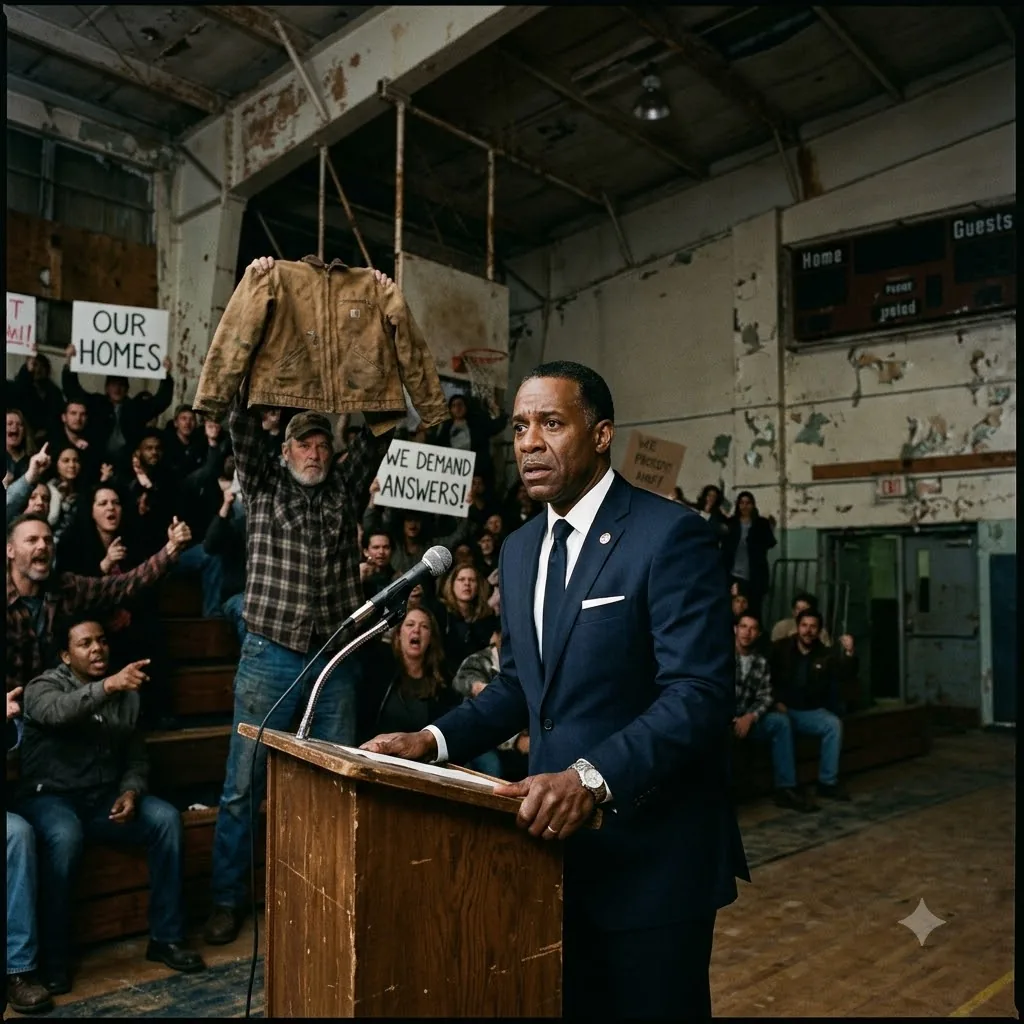
Below him, the crowd hadn’t moved. They weren’t cheering. There was no sudden, cinematic applause. They just stared at him, their expressions a complicated knot of lingering suspicion, shock, and a newly ignited, desperate anger.
Footsteps echoed on the wooden walkway. Sarah had retrieved the jacket from the bleacher. She carried the heavy canvas bundle down the aisle, her boots scuffing the floor, until she reached the lip of the stage. She climbed the three wooden steps, standing beside him in the glare of the projector light, which was still displaying the sterile bullet points of Vanguard’s environmental compliance.
She looked at the badge on the floor, then at her brother. “You’re out of your mind, Marc,” she said softly. It wasn’t an insult. It was an acknowledgment.
“They’re going to come for everything,” Marcus said, his voice flat, the heavy local vowels still anchoring his words. “They’ll sue me into the bedrock. Then they’ll come for the town council.”
Sarah didn’t argue. She knew how the mill had fought the union; she knew corporate retaliation was a force of nature, not a negotiation. She held out the jacket.
Marcus looked at the faded navy blue canvas. The silver reflective tape was peeling away in jagged strips. The left sleeve was still scorched black from the blast furnace flare-up that had nearly taken their father’s arm. He hesitated for only a second before slipping his arms into the sleeves.
He pulled the heavy coat over his shoulders, leaving it open over his silk tie and pressed dress shirt. The fit was exact. The weight of it was immense, pressing down on his collarbones. The smell hit him instantly-stale ozone, machine grease, and the bitter, metallic tang of iron dust. It smelled like exhausting, unbroken labor. It smelled like home.
The man from the third row walked down to the edge of the stage. He looked up at Marcus, eyeing the union jacket over the corporate suit. “So what now?” the man asked, his voice rough. “They got the money. They got the lawyers. We got a condemned aquifer.”
Marcus looked out at the sea of faces. He felt the crude, hand-stitched nylon patch on the jacket’s right shoulder scratching against his neck. The terror of losing his Vanguard life was receding, replaced by a cold, mechanical clarity. He had spent years learning exactly how Vanguard dismantled vulnerable communities. He knew their eminent domain loopholes, their shell companies, their aggressive timeline strategies.
“Ellis is calling Chicago from his car right now,” Marcus said to the crowd, projecting across the gym without the microphone. “They’re gonna file injunctions by noon tomorrow to force the sale before the EPA can test the water. They want a fast, quiet war.”
“Can we stop ’em?” someone else called out from the back.
Marcus reached over and hit the power button on his laptop. The projector went dark, plunging the stage into shadows, leaving only the dull glow of the emergency exit signs.
“I drafted half the contracts they’re gonna use against yinz,” Marcus said, the heavy canvas settling firmly against his spine. “I know where the dead ends are. Tomorrow morning, we lock down the zoning board. We make ’em fight for every inch of dirt.”