Story code: ST-000689
Part 4: The Opening
Hector’s heavy steel-toed boot slams onto the concrete, closing the final gap between them. The cheap plastic wheels of the faded-blue cooler screech violently against the polished floor, the jarring, mechanical roar echoing off the narrow walls. The sheer, unstoppable momentum of the massive man surging forward-combined with the agonizing, suffocating tension of the enclosed corridor-overrides whatever rational thought remains in Julian’s terrified mind.
He does not make a conscious decision to shoot. There is no deliberate choice. His exhausted, trembling muscles simply spasm under the crushing weight of his own panic.
The tension of the heavy steel trigger finally breaks.
The noise is catastrophic. A concussive, deafening blast of pressure violently compresses the air in the cramped utility hallway, punching Julian square in the chest. A blinding, strobe-light flash of orange illuminates the damp drywall, casting monstrous, jagged shadows across the exposed ceiling pipes. The handgun kicks upward with a brutal, bone-jarring force, wrenching Julian’s wrist backward and sending a sharp ache shooting straight into his shoulder.
The immediate aftermath is a terrible, ringing vacuum. A high-pitched, electronic whine pierces Julian’s eardrums, instantly drowning out the faint classical music from the main gallery.
Hector stops dead. The fierce, stubborn defiance completely drains from his deeply lined face, replaced by a hollow, wide-eyed look of absolute shock. He does not yell. He does not stumble. He simply stands frozen in the harsh fluorescent glare, looking down at his chest. A dark, jagged hole has torn through the thick fabric of his rain-slicked canvas work coat, right above his heart. A thick, wet stain of crimson immediately begins to bloom outward, soaking rapidly into the dull gray threads.
Hector’s scraped, calloused hand goes slack. He releases the thick plastic handle of the Coleman cooler. His knees buckle beneath his considerable weight, folding entirely in half. He collapses straight backward, hitting the concrete with a sickening, heavy thud that vibrates through the soles of Julian’s Italian leather oxfords.
As Hector falls, his boot catches the side of the cooler. The blue plastic bin tips violently sideways, popping its white lid open against the drywall. A cascade of crushed ice, dirty rainwater, and raw, silver fish scales spills outward, washing across the floor. The freezing slurry rapidly mixes with the thick, dark blood pooling beneath Hector’s motionless body, creating a horrific, swirling tide of red that crawls toward Julian’s immaculate shoes.
Julian stands completely paralyzed. His lungs refuse to draw air. The heavy handgun slips from his numb, unfeeling fingers, clattering loudly against the concrete and skidding into the spilled ice. The acrid, choking stench of burnt gunpowder and metallic copper fills the corridor, entirely overpowering the damp smell of the alleyway.
“No,” Julian whispers, his voice a frantic, breathy rasp. “No, no, no.”
He looks at the battered cardboard survey tube resting harmlessly by his feet. He looks at the spilled ice and the cheap cooler. The terrifying, organized mob he had spent all week obsessing over never existed. He had just shot an exhausted fisherman in the chest over a walkway.
Beyond the heavy wooden swinging doors at the end of the hall, the lively allegro of the string quartet cuts off mid-measure with an ugly, discordant screech of a cello bow. For three agonizing seconds, there is absolute silence from the main gallery, save for the wet sloshing of melting ice in the utility corridor.
Then, the heavy oak doors are pushed open.
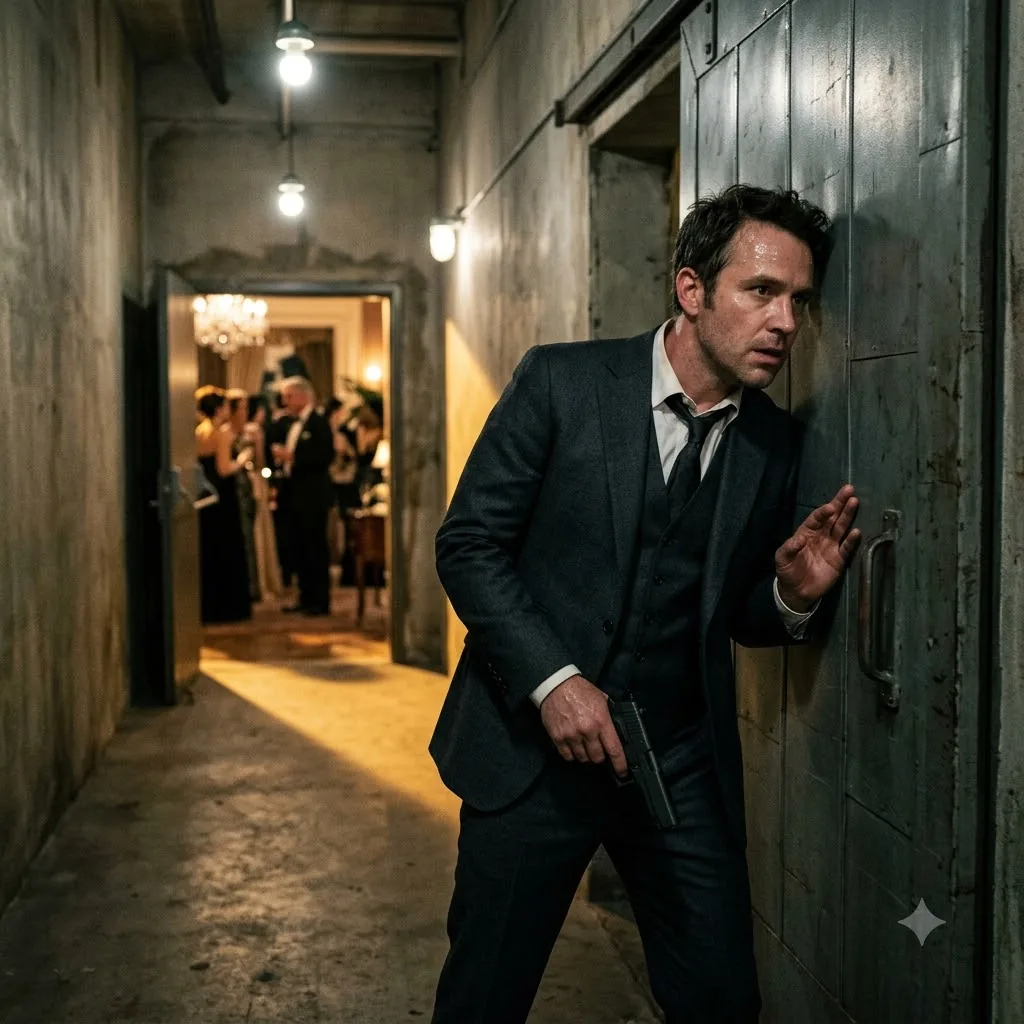
Warm, golden light from the center exhibition space floods into the dim, utilitarian gloom of the hallway. A wave of expensive, imported perfumes and the faint, savory scent of catered caviar washes over the metallic stench of the blood.
The mayor of the city, dressed in a sharp, bespoke tuxedo, steps through the doorway. Behind him presses a crowd of the city’s elite-wealthy donors, prominent art critics, and high-society socialites, all holding crystal champagne flutes. They had heard the blast. They had come to see what happened to the star of the evening.
The mayor stops dead in his tracks. The crystal flute slips from his hand, shattering into a dozen glittering pieces against the floor.
The crowd presses into the doorway, their excited murmurs instantly dying in their throats. They do not see a triumphant, visionary gallery owner defending his hard-won property from a violent mob. They see Julian, pale, shivering, and stripped of all his refined arrogance, standing over a bleeding, motionless man in a mud-caked coat. They see the discarded survey tube, the cheap plastic cooler, and the dead fish laying in the bloody water-the undeniable, ugly evidence of a mundane, working-class life brutally extinguished to protect their evening of luxury.
A woman in a silk gown presses a hand over her mouth, letting out a sharp, terrified sob. The critics and donors physically recoil, shrinking back into the main gallery as if Julian is a rabid animal. The pristine, curated world Julian had spent a decade meticulously building from nothing dissolves in an instant.
There is no applause. There are no glowing reviews to cement his legacy.
Julian drops to his knees in the freezing, blood-stained water, ruining the fabric of his tailored trousers. He stares down at Hector, whose chest has stopped moving entirely, and then looks up at the horrified, disgusted faces of the patrons he so desperately wanted to impress. He kneels in the ruined remains of the neighborhood he had tried so desperately to pave over, forever trapped under the terrified gaze of the people he had destroyed it for.