Story code: ST-000697
Part 3: The Family Plan
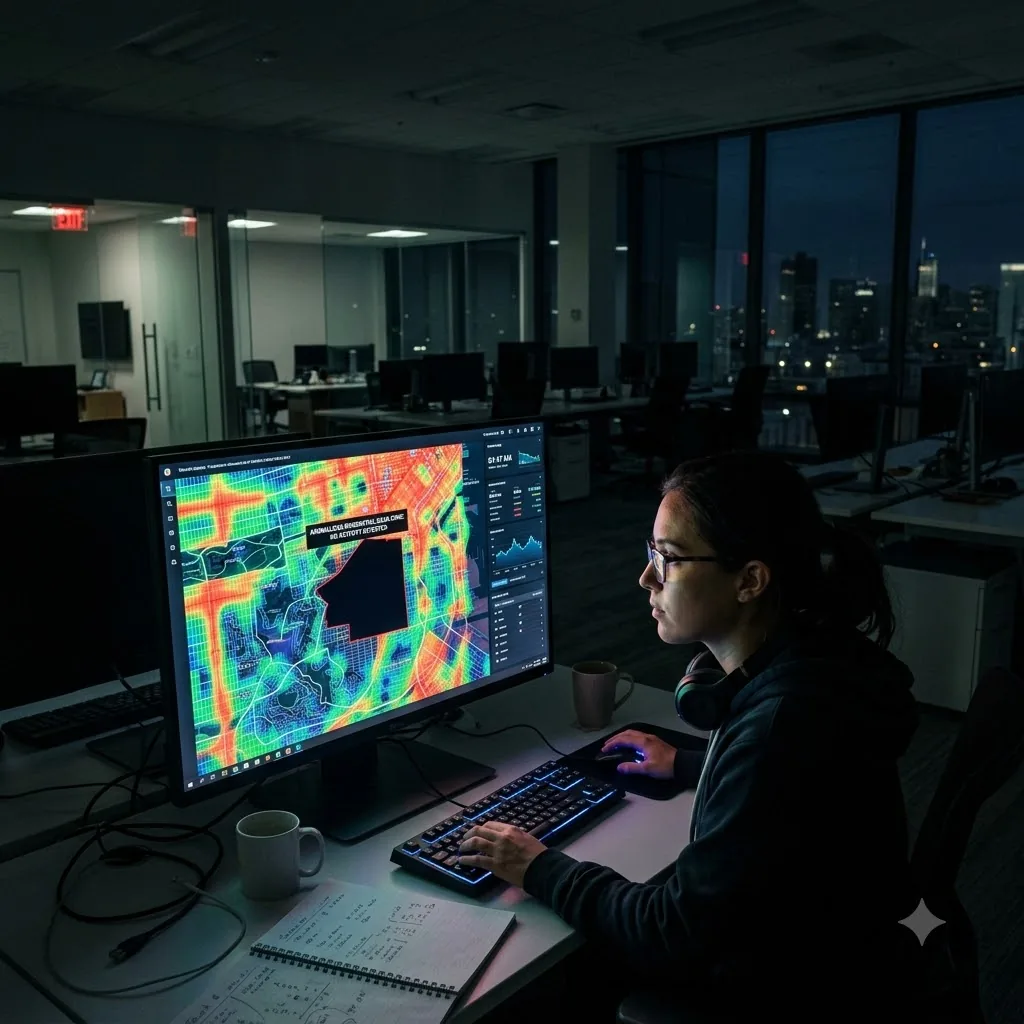
Arthur sat frozen in his ergonomic chair, his breathing shallow in the sudden darkness. The only illumination on the seventy-fourth floor came from the blood-red glow of his dual monitors, casting long, warped shadows across the empty cubicle farm. He stared at the blue Ethernet cable resting uselessly on the industrial carpet. His workstation was physically severed from the corporate intranet. The tower had no wireless card installed. It was completely impossible for the data transfer to continue.
Yet, the progress bar in the center of his primary ultra-wide screen ticked from ninety-eight percent to ninety-nine.
Arthur lunged for the hard power button on the tower chassis, but as his fingers brushed the cold metal, a loud, mechanical click echoed from the server closet down the hall. A tiny, amber indicator light flickered to life on the bottom bezel of his primary monitor.
*OOBM Active*, the bezel read. Out-of-Band Management.
His stomach dropped. Omnia Data’s core engineering workstations were equipped with cellular backup modules buried deep in the motherboard architecture, designed exclusively for remote IT diagnostics during catastrophic hardware failures. The external script hadn’t just hijacked his local drive; it had triggered a false panic state, forcing the workstation to dial out through the emergency 5G failsafe. The machine was bridging a new connection, completely bypassing the physical firewall and his severed cable.
The progress bar hit one hundred percent. The violent red cascade of reverse-ping errors abruptly vanished.
The cooling fans beneath his desk spooled down to a quiet hum. The harsh red glare on the monitors shifted back to the soft, vibrant interface of the Omnia Data ad-exchange tracker. The system had stabilized, but Arthur wasn’t the one who had stabilized it.
On his secondary monitor, the packet sniffer began parsing the raw data of the payload he had successfully forced onto the seven ghost devices. Now that the ad network had a solid GPS lock on the West 44th Street coordinates, its automated algorithms were executing exactly as designed. The system was eagerly profiling the “new” users, scanning their digital footprints to serve them highly targeted local advertisements.
Arthur reached for his mouse, his hand shaking. The cursor moved normally now. He clicked on the first of the seven newly populated profiles, desperate to see who or what he had exposed to the corporate grid.
The parsed metadata flooded the screen.
The automated exchange had instantly categorized the device user based on recent search history and encrypted cloud backups. The algorithmic tags generating on the screen were not the standard holiday shopping demographics Arthur expected. There were no flags for electronics, luxury apparel, or travel deals.
Instead, the system was queuing targeted local ads for state-funded legal aid, expedited burner phones, and trauma counseling.
Arthur leaned closer to the glass, squinting in the dark as he read the secondary classification tags. *Emergency Relocation. Child Custody Dispute. Address Confidentiality Program.*
The system hadn’t breached a corporate competitor or a hostile foreign server. The complex firewall he had brute-forced wasn’t a malicious quarantine. It was a digital barricade, meticulously constructed by a privacy advocate or a state agency. The multi-story residential building on West 44th Street wasn’t an empty industrial park or a legacy routing error. It was a hidden domestic violence shelter.
“No,” Arthur whispered, the word dry and hollow in his throat.
He frantically dragged his mouse to the terminal, typing the interrupt commands to kill his initial Python script, to reinstate the null routing and scrub the coordinates. But his local admin privileges had been revoked. The failover cellular connection had locked his interface into a read-only diagnostic mode. The ad network was fully in control, doing exactly what he had optimized it to do: sharing the newly acquired location data across the user’s linked digital ecosystem to maximize ad penetration.
On the primary monitor, the retail heat map refreshed. The seven devices inside the safe house glowed with bright, stable orange signatures.
Then, a new notification popped up on the secondary screen.
*Synchronization Complete: Legacy Family Account.*
Arthur’s heart hammered against his ribs. He clicked the notification. The user profile he was viewing-a woman whose device had been meticulously scrubbed of all location data for the past six months-had an old, dormant link to a shared family cellular plan. Because Arthur had forced the device onto the commercial grid, the ad network had helpfully updated the user’s current GPS coordinates across all associated cloud services, ensuring maximum targeted reach for the “family” unit.
He looked back at the primary ultra-wide screen. The retail heat map spanned the entire downtown sector.
Three miles away from the West 44th Street shelter, a new, single red dot appeared on the map.
It was the administrator device for the legacy family account. It had just received the automated location update.
Arthur watched the red dot. It wasn’t stationary. It was moving at forty-five miles per hour down the interstate, cutting through the sparse, late-night holiday traffic. It wasn’t bouncing between cell towers randomly; it was navigating with absolute, terrifying precision. The algorithm calculated its trajectory in real-time, projecting a pale gray line across the digital map to anticipate the user’s destination.
The line terminated exactly at the front door of the West 44th Street safe house.
Arthur jammed his finger against the power button on his monitor, hoping to at least kill the visual feed, but the screen ignored the manual input. The out-of-band management protocol kept the display locked and active. He was entirely paralyzed, trapped in his dark cubicle, staring at the bright ultra-wide screen.
The red dot accelerated to fifty miles per hour, taking the downtown exit. The estimated time of arrival dynamically updated in the corner of the tracker.
Seven minutes.
Arthur reached blindly into the darkness for his cell phone to dial the police, but his fingers only found the cold ceramic of his forgotten coffee mug. The red dot made a sharp turn onto a parallel avenue, moving relentlessly closer, burning a bright, hostile path across the grid he had forced open.