Story code: ST-000708
Part 1: The Sterile Lobby
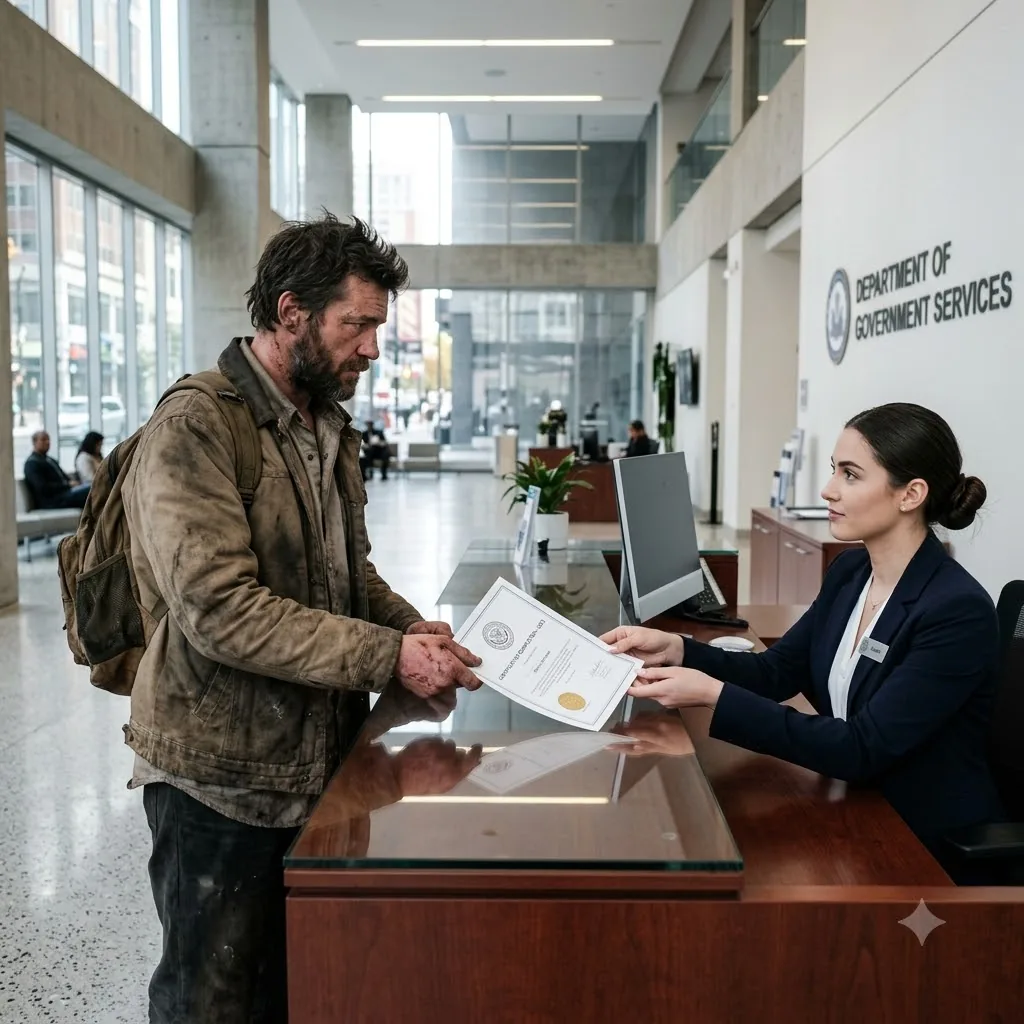
The air conditioning in the State Forestry Department lobby blasted a sterile, chemical chill that made the thick, shiny burn scars along Cole’s neck pull tight. He stood in the center of the pristine white-tiled room, his scuffed lug-sole boots leaving faint gray dust prints that ruined the perfect gloss of the floor. The receptionist behind the curving mahogany desk did not look up from her dual monitors. Her attention remained fixed on whatever civilian logistics she managed in this climate-controlled vacuum. Cole tightened his grip on the manila folder in his left hand, fighting down the familiar, rattling itch deep in his lungs. He coughed once, a dry, harsh bark that echoed off the glass walls, bringing the quiet murmur of the waiting area to a dead halt.
He ignored the stares from the people sitting in the rigid plastic chairs behind him. He walked toward the desk, letting his heavy boots squeak against the tile. Every step felt unnaturally loud, entirely out of place in a room designed to minimize human noise. For four years, his world had been deafening roaring crowns of fire, the grinding gears of bulldozers, the screaming winds pushing through canyons, and the suffocating heat of a Pulaski swinging into dry dirt. Here, the loudest sound was the clicking of the receptionist’s acrylic nails on her keyboard.
She finally raised her head as his shadow fell over her workstation. Her silk blouse was spotless, pressed to a sharp perfection. Her eyes tracked the pink, melted flesh that crept up from Cole’s collar to his jawline. She noticed the way the scarred tissue pulled the corner of his mouth slightly down. Her gaze darted away, settling firmly on his chest rather than meeting his eyes.
“I need a civilian application for the seasonal handcrew,” Cole said, sliding his folder onto the marble counter.
“Applications are processed online,” she stated, her voice flat and heavily practiced.
“The regional director released a memo stating a Type 2 Wildland certification with over three thousand hours requires an in-person override for the physical component,” Cole told her. He leaned his forearms against the tall counter, shifting his weight. “I have four thousand hours. The paperwork is right there.”
He opened the folder and pushed the heavy stock paper toward her through the gap under the glass partition. The edges of the paper were slightly curled, smelling faintly of old woodsmoke and diesel grease, a stark and dirty contrast to the lemon-scented cleanliness of the lobby.
The receptionist let out a tiny puff of annoyance. She pulled the document closer, careful to only touch the very corners of the page. She ran a manicured finger down the columns detailing his deployments.
“Four thousand hours on an active fireline,” she read aloud, her tone shifting from bureaucratic boredom to mild, unhidden skepticism. She glanced at him again. This time, she took in the permanent soot stains worked deep into the calloused creases of his knuckles. She noticed the way he held his left shoulder stiffly, a permanent brace against a long-healed injury. “That is an exceptional amount of active duty for someone not currently showing up in the primary state employee system.”
“I was on a state contract,” Cole said.
“I will need to verify the certification before I can hand you any physical overrides.”
“Verify it.”
Cole turned his head slightly to suppress another rough cough, pressing his fist hard against his mouth. His chest felt heavy. It was the permanent parting gift of a massive blowup on the Sierra ridge two summers ago, an event that had melted his fire shelter and left him breathing ash for three days. When he looked back, the receptionist had pulled a handheld barcode scanner from a black plastic cradle beside her monitor.
She smoothed out the certification paper. The state seal sat at the top, bold and official in dark blue ink. Below the printed grid of his accumulated hours rested the barcode, a simple black-and-white block holding the entirety of his service record.
Cole stood perfectly still. He felt a sudden, familiar tightening in his gut. It was the exact same sensation he experienced right before a wind shift on a steep canyon fire, the moment the air pressure dropped and everything went dead quiet. The sterile lobby suddenly felt suffocating. A security guard in a crisp navy uniform stood by the front doors, adjusting his heavy duty belt, his eyes drifting over to the receptionist desk.
“State issue number verification,” the receptionist murmured, pointing the device at the paper.
She squeezed the trigger. A thin red line of laser light sliced across the barcode.
The scanner let out a sharp, piercing beep.
Cole watched the woman’s monitor. He could not see the actual screen, but he saw the stark white reflection of it in the glass partition instantly flood with a solid, bright red block.
The receptionist froze completely. Her hand, still holding the scanner, hovered motionless in mid-air. The color drained out of her face, leaving her pale and wide-eyed. She stared at the screen, her mouth parting slightly as she took in the red alert banner flashing across her software. Slowly, moving with deliberate caution, she took her hand off the scanner and reached beneath the desk. She did not look at Cole. Her eyes shot straight past his shoulder, locking directly onto the security guard by the entrance, her expression tightening into pure panic as her hand clamped over the hidden button beneath the counter.
The air conditioning in the State Forestry Department lobby blasted a sterile, chemical chill that made the thick, shiny burn scars along Cole’s neck pull tight. He stood in the center of the pristine white-tiled room, his scuffed lug-sole boots leaving faint gray dust prints that ruined the perfect gloss of the floor. The receptionist behind the curving mahogany desk did not look up from her dual monitors. Her attention remained fixed on whatever civilian logistics she managed in this climate-controlled vacuum. Cole tightened his grip on the manila folder in his left hand, fighting down the familiar, rattling itch deep in his lungs. He coughed once, a dry, harsh bark that echoed off the glass walls, bringing the quiet murmur of the waiting area to a dead halt.
He ignored the stares from the people sitting in the rigid plastic chairs behind him. He walked toward the desk, letting his heavy boots squeak against the tile. Every step felt unnaturally loud, entirely out of place in a room designed to minimize human noise. For four years, his world had been deafening roaring crowns of fire, the grinding gears of bulldozers, the screaming winds pushing through canyons, and the suffocating heat of a Pulaski swinging into dry dirt. Here, the loudest sound was the clicking of the receptionist’s acrylic nails on her keyboard.
She finally raised her head as his shadow fell over her workstation. Her silk blouse was spotless, pressed to a sharp perfection. Her eyes tracked the pink, melted flesh that crept up from Cole’s collar to his jawline. She noticed the way the scarred tissue pulled the corner of his mouth slightly down. Her gaze darted away, settling firmly on his chest rather than meeting his eyes.
“I need a civilian application for the seasonal handcrew,” Cole said, sliding his folder onto the marble counter.
“Applications are processed online,” she stated, her voice flat and heavily practiced.
“The regional director released a memo stating a Type 2 Wildland certification with over three thousand hours requires an in-person override for the physical component,” Cole told her. He leaned his forearms against the tall counter, shifting his weight. “I have four thousand hours. The paperwork is right there.”
He opened the folder and pushed the heavy stock paper toward her through the gap under the glass partition. The edges of the paper were slightly curled, smelling faintly of old woodsmoke and diesel grease, a stark and dirty contrast to the lemon-scented cleanliness of the lobby.
The receptionist let out a tiny puff of annoyance. She pulled the document closer, careful to only touch the very corners of the page. She ran a manicured finger down the columns detailing his deployments.
“Four thousand hours on an active fireline,” she read aloud, her tone shifting from bureaucratic boredom to mild, unhidden skepticism. She glanced at him again. This time, she took in the permanent soot stains worked deep into the calloused creases of his knuckles. She noticed the way he held his left shoulder stiffly, a permanent brace against a long-healed injury. “That is an exceptional amount of active duty for someone not currently showing up in the primary state employee system.”
“I was on a state contract,” Cole said.
“I will need to verify the certification before I can hand you any physical overrides.”
“Verify it.”
Cole turned his head slightly to suppress another rough cough, pressing his fist hard against his mouth. His chest felt heavy. It was the permanent parting gift of a massive blowup on the Sierra ridge two summers ago, an event that had melted his fire shelter and left him breathing ash for three days. When he looked back, the receptionist had pulled a handheld barcode scanner from a black plastic cradle beside her monitor.
She smoothed out the certification paper. The state seal sat at the top, bold and official in dark blue ink. Below the printed grid of his accumulated hours rested the barcode, a simple black-and-white block holding the entirety of his service record.
Cole stood perfectly still. He felt a sudden, familiar tightening in his gut. It was the exact same sensation he experienced right before a wind shift on a steep canyon fire, the moment the air pressure dropped and everything went dead quiet. The sterile lobby suddenly felt suffocating. A security guard in a crisp navy uniform stood by the front doors, adjusting his heavy duty belt, his eyes drifting over to the receptionist desk.
“State issue number verification,” the receptionist murmured, pointing the device at the paper.
She squeezed the trigger. A thin red line of laser light sliced across the barcode.
The scanner let out a sharp, piercing beep.
Cole watched the woman’s monitor. He could not see the actual screen, but he saw the stark white reflection of it in the glass partition instantly flood with a solid, bright red block.
The receptionist froze completely. Her hand, still holding the scanner, hovered motionless in mid-air. The color drained out of her face, leaving her pale and wide-eyed. She stared at the screen, her mouth parting slightly as she took in the red alert banner flashing across her software. Slowly, moving with deliberate caution, she took her hand off the scanner and reached beneath the desk. She did not look at Cole. Her eyes shot straight past his shoulder, locking directly onto the security guard by the entrance, her expression tightening into pure panic as her hand clamped over the hidden button beneath the counter.