Story code: ST-000715
Part 1: The Reunification Center
The air inside the Oak Creek Community Center smelled of damp wool, stale coffee, and overwhelming terror. Sarah rammed her shoulder against the heavy metal double doors, forcing her way into a chaotic sea of frantic adults. A shrill whistle cut through the din, but it did nothing to organize the surging crowd of parents desperately looking for their children. Over the heads of sobbing mothers and shouting fathers, Sarah finally spotted the designated student holding area. Fluorescent lights beat down on the varnished wood floor of the basketball court, illuminating a horrifying contrast. The adults in the bleachers were screaming, demanding answers from the overwhelmed deputies, but the hundreds of teenagers sitting shoulder-to-shoulder on the court were entirely, unnervingly silent.
Sarah threw her elbows forward, ignoring the indignant grunts of a man she pushed aside in her blind panic. She ducked under a hastily strung line of yellow police tape, scanning the rows of bowed heads and trembling shoulders. The high schoolers looked like statues molded from pure shock. A few stared blankly at the cinderblock walls. Most stared at the floor. The automated text message from the school district had been sterile, citing only an ‘active threat lockdown’ and a ‘resolved situation.’
Then she spotted the familiar faded denim jacket with the embroidered rose patch on the shoulder.
Sarah broke into a run, her boots skidding on the polished wood. She dropped to her knees beside her sixteen-year-old daughter. Maya sat cross-legged near the foul line, completely still, her posture rigid and unnatural.
Sarah reached out, her hands shaking uncontrollably, and grabbed Maya by the shoulders. She quickly checked her face, her neck, the front of her gray t-shirt, looking for any sign of blood. There was none. Maya appeared physically unharmed. Sarah pulled her into a desperate, crushing hug, burying her face in Maya’s hair. The relief was a sudden, physical weight, threatening to collapse Sarah right there on the gymnasium floor.
But Maya did not hug her back. Maya did not lean into the embrace. Maya’s arms remained locked tight at her sides.
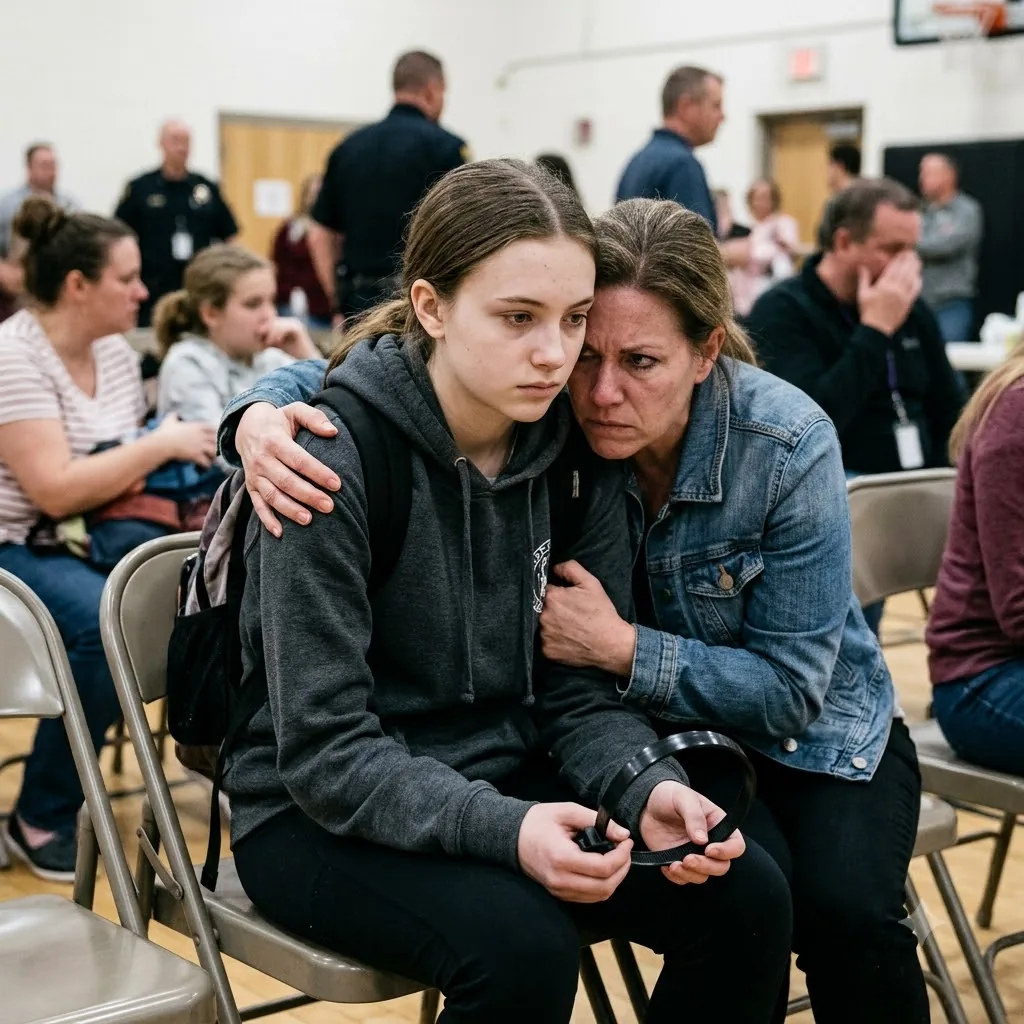
Sarah pulled back, her frantic eyes searching her daughter’s face for any sign of recognition. Maya was not crying. Her face was entirely blank, drained of all color, her jaw clenched so tight a muscle ticked near her ear. Her eyes were fixed downward, staring intently at her own lap. Sarah followed her gaze.
Resting in the center of Maya’s upturned palms was a thick, black plastic strip. It was a heavy-duty tactical zip-tie.
Sarah reached out to touch the cold plastic, but Maya’s fingers flinched, curling slightly inward to protect the object. The zip-tie was industrial grade, over an inch wide, with a locking mechanism as thick as a thumb. It was the exact kind of restraint used by riot police, designed to secure wrists tightly enough to cut off circulation. The edges of the thick black band were deeply scored and chewed, as if someone had frantically tried to saw through the unbreakable plastic with a blunt edge.
Sarah looked around, her initial relief shifting rapidly into a cold, sharp dread. She noticed the boy sitting next to Maya. He was rocking back and forth in a tight rhythm, his hands tucked firmly into his armpits, hiding his wrists. A girl in the row ahead stared vacantly at the floor, a dark, spreading bruise swelling on her cheekbone. The silence of the students was not just the typical aftermath of fear. It was a shared, suffocating weight, a collective trauma that the sterile text message had entirely failed to capture. The district had promised a resolved situation, a false alarm handled efficiently by local law enforcement. The heavy black restraint in Maya’s lap told a completely different, horrifying story.
A sudden, loud squeal of microphone feedback pierced the gymnasium, forcing everyone in the room to wince and cover their ears.
Sarah looked up toward the hastily assembled wooden podium near the home team scoreboard. Mayor Vance stepped up to the microphone, adjusting his crimson tie. His face was plastered with a deeply inappropriate, aggressively reassuring smile. Two heavily armed state police officers flanked him, their expressions carefully neutral, their eyes tracking the crowd. The mayor tapped the microphone twice, the thud echoing through the cavernous space.
Sarah gripped Maya’s shoulder again, feeling the rigid, vibrating tension in her daughter’s muscles. Maya still had not blinked, her gaze trapped on the scored black plastic.
The mayor leaned into the microphone, his voice booming over the PA system with a forced, hearty calm. He told the gathered crowd that their beloved community had been tested and had passed with flying colors. He declared the cafeteria lockdown a minor misunderstanding, a swiftly handled protocol test that proved the absolute resilience of their emergency systems. He waved his hand dismissively toward the silent rows of traumatized teenagers, urging all the parents to take their children home, rest up, and forget the morning’s unfortunate disruptions.
Sarah looked from the smiling, sweating mayor back to the tactical zip-tie in Maya’s trembling hands, noting the deep, frantic gouge marks on the black plastic right as the mayor gave his final, definitive command to the police chief to clear the room immediately.
The air inside the Oak Creek Community Center smelled of damp wool, stale coffee, and overwhelming terror. Sarah rammed her shoulder against the heavy metal double doors, forcing her way into a chaotic sea of frantic adults. A shrill whistle cut through the din, but it did nothing to organize the surging crowd of parents desperately looking for their children. Over the heads of sobbing mothers and shouting fathers, Sarah finally spotted the designated student holding area. Fluorescent lights beat down on the varnished wood floor of the basketball court, illuminating a horrifying contrast. The adults in the bleachers were screaming, demanding answers from the overwhelmed deputies, but the hundreds of teenagers sitting shoulder-to-shoulder on the court were entirely, unnervingly silent.
Sarah threw her elbows forward, ignoring the indignant grunts of a man she pushed aside in her blind panic. She ducked under a hastily strung line of yellow police tape, scanning the rows of bowed heads and trembling shoulders. The high schoolers looked like statues molded from pure shock. A few stared blankly at the cinderblock walls. Most stared at the floor. The automated text message from the school district had been sterile, citing only an ‘active threat lockdown’ and a ‘resolved situation.’
Then she spotted the familiar faded denim jacket with the embroidered rose patch on the shoulder.
Sarah broke into a run, her boots skidding on the polished wood. She dropped to her knees beside her sixteen-year-old daughter. Maya sat cross-legged near the foul line, completely still, her posture rigid and unnatural.
Sarah reached out, her hands shaking uncontrollably, and grabbed Maya by the shoulders. She quickly checked her face, her neck, the front of her gray t-shirt, looking for any sign of blood. There was none. Maya appeared physically unharmed. Sarah pulled her into a desperate, crushing hug, burying her face in Maya’s hair. The relief was a sudden, physical weight, threatening to collapse Sarah right there on the gymnasium floor.
But Maya did not hug her back. Maya did not lean into the embrace. Maya’s arms remained locked tight at her sides.
Sarah pulled back, her frantic eyes searching her daughter’s face for any sign of recognition. Maya was not crying. Her face was entirely blank, drained of all color, her jaw clenched so tight a muscle ticked near her ear. Her eyes were fixed downward, staring intently at her own lap. Sarah followed her gaze.
Resting in the center of Maya’s upturned palms was a thick, black plastic strip. It was a heavy-duty tactical zip-tie.
Sarah reached out to touch the cold plastic, but Maya’s fingers flinched, curling slightly inward to protect the object. The zip-tie was industrial grade, over an inch wide, with a locking mechanism as thick as a thumb. It was the exact kind of restraint used by riot police, designed to secure wrists tightly enough to cut off circulation. The edges of the thick black band were deeply scored and chewed, as if someone had frantically tried to saw through the unbreakable plastic with a blunt edge.
Sarah looked around, her initial relief shifting rapidly into a cold, sharp dread. She noticed the boy sitting next to Maya. He was rocking back and forth in a tight rhythm, his hands tucked firmly into his armpits, hiding his wrists. A girl in the row ahead stared vacantly at the floor, a dark, spreading bruise swelling on her cheekbone. The silence of the students was not just the typical aftermath of fear. It was a shared, suffocating weight, a collective trauma that the sterile text message had entirely failed to capture. The district had promised a resolved situation, a false alarm handled efficiently by local law enforcement. The heavy black restraint in Maya’s lap told a completely different, horrifying story.
A sudden, loud squeal of microphone feedback pierced the gymnasium, forcing everyone in the room to wince and cover their ears.
Sarah looked up toward the hastily assembled wooden podium near the home team scoreboard. Mayor Vance stepped up to the microphone, adjusting his crimson tie. His face was plastered with a deeply inappropriate, aggressively reassuring smile. Two heavily armed state police officers flanked him, their expressions carefully neutral, their eyes tracking the crowd. The mayor tapped the microphone twice, the thud echoing through the cavernous space.
Sarah gripped Maya’s shoulder again, feeling the rigid, vibrating tension in her daughter’s muscles. Maya still had not blinked, her gaze trapped on the scored black plastic.
The mayor leaned into the microphone, his voice booming over the PA system with a forced, hearty calm. He told the gathered crowd that their beloved community had been tested and had passed with flying colors. He declared the cafeteria lockdown a minor misunderstanding, a swiftly handled protocol test that proved the absolute resilience of their emergency systems. He waved his hand dismissively toward the silent rows of traumatized teenagers, urging all the parents to take their children home, rest up, and forget the morning’s unfortunate disruptions.
Sarah looked from the smiling, sweating mayor back to the tactical zip-tie in Maya’s trembling hands, noting the deep, frantic gouge marks on the black plastic right as the mayor gave his final, definitive command to the police chief to clear the room immediately.