Story code: ST-000718
Part 1: The Zero Balance
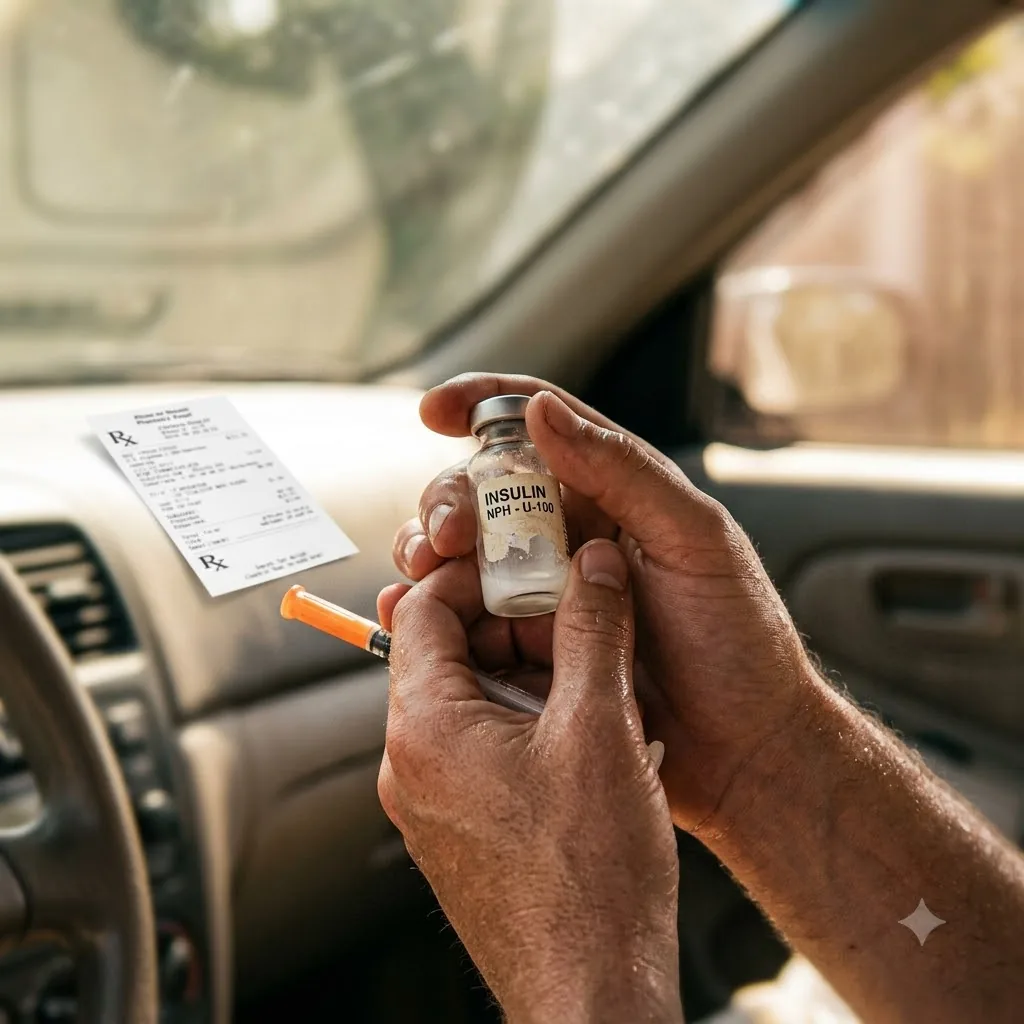
Mateo held the glass vial up to the sunlight baking through the cracked windshield of his Honda, squinting to read the liquid level through a terrifying, persistent blur. Three units remained, a pathetic puddle at the bottom of the cylinder that had to stretch across the next forty-eight hours. His fingers trembled against the plastic barrel of the syringe, a coarse, rhythmic vibration he could not stop no matter how hard he clenched his jaw. At ninety-five degrees in the cabin, the physical math was completely unforgiving, forcing him to trade a fraction of a dose for a few more hours of consciousness. He plunged the needle through the rubber stopper, drew out exactly two units, and injected it into his thigh, saving a single, precious drop for tomorrow.
The drive to the corner pharmacy took ten minutes, but the gray fog creeping into the edges of his sight made it feel like an agonizing hour. He leaned heavily against the laminate counter of the pharmacy drop-off window, wiping a thick layer of cold sweat from his forehead with the back of his sleeve. The pharmacist, a tired man in a crisp white coat, slid a fresh, refrigerated box of Lantus across the counter, tapping the total into the register. Mateo swiped his debit card, a battered piece of blue plastic holding exactly two hundred and fourteen dollars, his lifeline carefully hoarded from weeks of grueling roofing jobs.
The card reader beeped, emitting a harsh, flat tone. Declined.
Mateo blinked hard, trying to clear the dark spots dancing in his vision, and ran the magnetic stripe through the machine a second time. Declined again. The pharmacist sighed, turning the screen around and pointing to a notification generated by the banking system. The screen displayed a zero balance alongside a glaring red flag for an active legal levy from Oakridge General Hospital. A medical debt collection agency had executed a sudden sweep on his account, draining every cent of his insulin fund without a single warning letter or phone call.
His chest tightened, a massive weight crushing his ribs as he stumbled back out into the searing heat of the asphalt parking lot. The single drop of insulin baking in his glovebox would not stop the ketoacidosis creeping into his bloodstream. He had to get the levy reversed, or at least suspended long enough to buy one single vial of medication. He forced himself behind the steering wheel, pointing the Honda toward the imposing brick facade of Oakridge General. Every stoplight on the route stretched into an eternity of shaking hands, shallow breaths, and a foul metallic taste coating the back of his throat.
The hospital billing department was a sterile maze of frosted glass and beige carpet, smelling faintly of industrial bleach and stale coffee. Mateo leaned heavily against the reception desk, gripping the sharp wooden edge just to keep his knees from buckling under his own weight. A manager with a sharp bob and a laminated badge reading Susan led him back to a small, windowless cubicle illuminated by humming fluorescent tubes. He dropped into the hard plastic guest chair, sliding his bank notice of levy and his state identification card across the polished desk. He explained the situation, his voice thick, desperate, and uncoordinated. He begged for an emergency payment plan, pleading that the unannounced bank sweep had taken his absolute last dollar for life-saving medication.
Susan let out a heavy sigh, a highly practiced sound of bureaucratic fatigue, and typed his name into her dual-monitor setup. She clicked rapidly through his patient file, pulling up the detailed admission records from his uninsured emergency room visit three months prior. Mateo wiped another sheet of sweat from his eyes, watching her face.
Her fingers suddenly froze over the keyboard.
Mateo watched her eyes narrow, darting rapidly between the glowing screen and a scanned intake form she pulled from a physical manila folder on her desk. The bored administrative indifference vanished entirely from her posture, replaced instantly by a rigid, alert tension. She picked up a red ballpoint pen, slowly circling a nine-digit number on the printed paper before tracing the ink line down to his employer details. The Social Security Number on the hospital intake did not match the format on the state registry she had just cross-referenced for the debt collection.
The discrepancy was glaring, setting off silent alarms in the hospital compliance system. Mateo felt the last remaining strength drain out of his limbs as Susan reached across the desk and slid his ID card entirely out of his reach, pulling it safely to her side of the blotter. She did not offer a payment plan, nor did she speak another word about his drained bank funds. She picked up the heavy black receiver of her desk phone, locked her eyes onto his pale face, and dialed the nine-digit federal immigration tip line printed on the bright yellow poster pinned to her cubicle wall.
Mateo held the glass vial up to the sunlight baking through the cracked windshield of his Honda, squinting to read the liquid level through a terrifying, persistent blur. Three units remained, a pathetic puddle at the bottom of the cylinder that had to stretch across the next forty-eight hours. His fingers trembled against the plastic barrel of the syringe, a coarse, rhythmic vibration he could not stop no matter how hard he clenched his jaw. At ninety-five degrees in the cabin, the physical math was completely unforgiving, forcing him to trade a fraction of a dose for a few more hours of consciousness. He plunged the needle through the rubber stopper, drew out exactly two units, and injected it into his thigh, saving a single, precious drop for tomorrow.
The drive to the corner pharmacy took ten minutes, but the gray fog creeping into the edges of his sight made it feel like an agonizing hour. He leaned heavily against the laminate counter of the pharmacy drop-off window, wiping a thick layer of cold sweat from his forehead with the back of his sleeve. The pharmacist, a tired man in a crisp white coat, slid a fresh, refrigerated box of Lantus across the counter, tapping the total into the register. Mateo swiped his debit card, a battered piece of blue plastic holding exactly two hundred and fourteen dollars, his lifeline carefully hoarded from weeks of grueling roofing jobs.
The card reader beeped, emitting a harsh, flat tone. Declined.
Mateo blinked hard, trying to clear the dark spots dancing in his vision, and ran the magnetic stripe through the machine a second time. Declined again. The pharmacist sighed, turning the screen around and pointing to a notification generated by the banking system. The screen displayed a zero balance alongside a glaring red flag for an active legal levy from Oakridge General Hospital. A medical debt collection agency had executed a sudden sweep on his account, draining every cent of his insulin fund without a single warning letter or phone call.
His chest tightened, a massive weight crushing his ribs as he stumbled back out into the searing heat of the asphalt parking lot. The single drop of insulin baking in his glovebox would not stop the ketoacidosis creeping into his bloodstream. He had to get the levy reversed, or at least suspended long enough to buy one single vial of medication. He forced himself behind the steering wheel, pointing the Honda toward the imposing brick facade of Oakridge General. Every stoplight on the route stretched into an eternity of shaking hands, shallow breaths, and a foul metallic taste coating the back of his throat.
The hospital billing department was a sterile maze of frosted glass and beige carpet, smelling faintly of industrial bleach and stale coffee. Mateo leaned heavily against the reception desk, gripping the sharp wooden edge just to keep his knees from buckling under his own weight. A manager with a sharp bob and a laminated badge reading Susan led him back to a small, windowless cubicle illuminated by humming fluorescent tubes. He dropped into the hard plastic guest chair, sliding his bank notice of levy and his state identification card across the polished desk. He explained the situation, his voice thick, desperate, and uncoordinated. He begged for an emergency payment plan, pleading that the unannounced bank sweep had taken his absolute last dollar for life-saving medication.
Susan let out a heavy sigh, a highly practiced sound of bureaucratic fatigue, and typed his name into her dual-monitor setup. She clicked rapidly through his patient file, pulling up the detailed admission records from his uninsured emergency room visit three months prior. Mateo wiped another sheet of sweat from his eyes, watching her face.
Her fingers suddenly froze over the keyboard.
Mateo watched her eyes narrow, darting rapidly between the glowing screen and a scanned intake form she pulled from a physical manila folder on her desk. The bored administrative indifference vanished entirely from her posture, replaced instantly by a rigid, alert tension. She picked up a red ballpoint pen, slowly circling a nine-digit number on the printed paper before tracing the ink line down to his employer details. The Social Security Number on the hospital intake did not match the format on the state registry she had just cross-referenced for the debt collection.
The discrepancy was glaring, setting off silent alarms in the hospital compliance system. Mateo felt the last remaining strength drain out of his limbs as Susan reached across the desk and slid his ID card entirely out of his reach, pulling it safely to her side of the blotter. She did not offer a payment plan, nor did she speak another word about his drained bank funds. She picked up the heavy black receiver of her desk phone, locked her eyes onto his pale face, and dialed the nine-digit federal immigration tip line printed on the bright yellow poster pinned to her cubicle wall.