Story code: ST-000718
Part 4: The Discharge
The heavy fabric of the privacy curtain whipped back on its metal rings, a harsh scraping sound that cut through the low hum of the emergency ward. An older nurse with a stethoscope draped over her neck rushed into the bay, her eyes darting from Mateo to the chirping monitor. But Diane was already moving. The director’s face had drained of all color, her meticulously maintained composure shattering into pure, unadulterated terror.
She snatched the metal clipboard off Mateo’s lap, her tailored blazer snagging briefly on the plastic bed rail, and bolted. She didn’t look back, shoving violently past the confused nurse and disappearing down the beige corridor without a word.
“What’s going on? Who is screaming?” the nurse demanded, silencing the heart monitor with a quick press of a button.
Mateo leaned back into the thin foam pillow, his chest heaving as the adrenaline crashed. “The billing director,” he rasped, his voice trembling but resolute. “She’s trying to extort me. Call the federal tip line. Do it.”
The nurse stared at him, bewildered, then looked down the empty hallway where Diane had vanished. She didn’t reach for the wall phone. Instead, she adjusted his IV line, murmuring something under her breath about delirium and high blood sugar, completely unaware of the standoff that had just occurred.
For the next three hours, Mateo lay trapped in the narrow hospital bed, watching the clear saline drip steadily into his vein. Every time the heavy double doors of the ER swung open, his heart seized, expecting a pair of armed immigration officers to walk through the threshold. He had bet his entire life on the assumption that a corrupt hospital administrator was more afraid of a federal audit than he was of a deportation bus. It was a massive, desperate gamble.
Around dusk, the answer finally arrived. It wasn’t an ICE agent. A different woman-wearing a hospital administration badge and looking deeply uncomfortable-stepped into his bay. She carried a thin manila folder.
“Mr. Mateo?” she asked, keeping her voice low. She didn’t ask for a last name. “I’m the regional compliance officer for Oakridge General. We… we are discharging you.”
Mateo braced himself, sitting up slightly. The dull, cramping ache in his abdomen had receded, replaced by an exhausting, hollow weakness.
The compliance officer refused to meet his eyes. “There has been an internal personnel situation regarding Diane Miller and several unauthorized financial transactions. Security has escorted her off the premises. During a rapid audit of her terminal, IT found she initiated a mass deletion of several outstanding patient balances, including yours, shortly before her termination.”
Mateo watched the woman’s tight, forced smile. He understood instantly. Diane hadn’t just run from the room; she had sprinted directly back to her office to destroy the evidence. In her frantic attempt to wipe the digital trail of her illegal bank sweeps before a federal investigation could be triggered, she had erased the very debt she had been using as a weapon.
“Your emergency room visit today is fully covered by the hospital’s charity care fund,” the administrator continued, sliding a single sheet of paper onto his bedside table. It was a discharge summary. At the bottom, the total balance due was stamped in bold, black ink: $0.00. “The previous charge to your banking institution is being flagged for a formal reversal process. It may take several weeks to process through the clearinghouse, but you will not be pursued for any further collections.”
She turned and left before Mateo could ask a single question, eager to distance the hospital from the walking liability he represented.
A young orderly arrived ten minutes later to remove his IV. The sharp pinch of the needle sliding out of his hand left a tiny drop of blood, which the orderly covered with a piece of standard-issue paper tape. Mateo was handed a plastic bag containing his clothes and a small, chilled white box.
“The attending physician approved a three-day sample of Lantus for discharge,” the orderly muttered, dropping the box onto the mattress. “And a juice box. You need to follow up with a primary care doctor. Outpatient.”
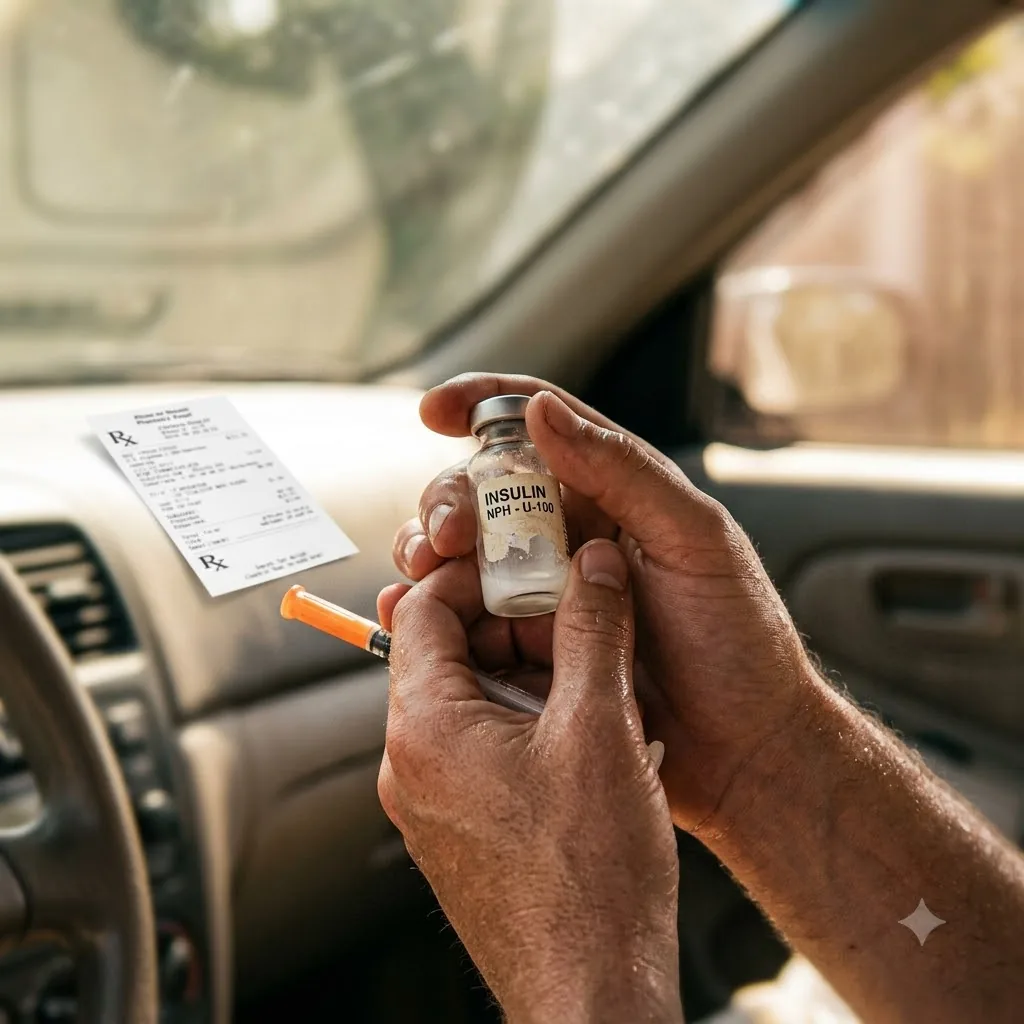
Mateo didn’t have a primary care doctor. He didn’t have health insurance. But he didn’t say a word. He changed into his clothes, the fabric stiff and abrasive with the dried salt of his own sweat. He carefully tucked the sample vial of insulin into his front pocket, feeling the cold glass against his thigh. It was exactly three days of life.
He walked out of the emergency department into the suffocating, humid embrace of the evening. The sun had dipped below the horizon, but the asphalt parking lot still radiated a miserable, heavy heat. The automatic sliding doors shut behind him with a soft hiss, cutting off the sterile, air-conditioned safety of the hospital.
He stood alone on the curb, the harsh glow of the streetlights casting long, jagged shadows across the pavement. His bank account was still completely empty, locked in the slow bureaucratic purgatory of a reversal. His roofing tools-the only things that could generate income-were sitting behind the scratched glass of a pawn shop three miles away, sold for a fifty-dollar bill he had left crumpled on a pharmacy counter. His Honda was parked in a completely different part of the city, likely sitting on an empty gas tank.
Mateo looked down at his trembling hands. The immediate threat of deportation was gone. The medical debt was erased. He had called the bluff and won the standoff. But as he stepped off the curb to begin the long, agonizing walk across the sweltering city, the hollow ache in his stomach reminded him of the brutal reality. He was exactly where he had started yesterday-sick, undocumented, and utterly broke, carrying just enough medication to survive until he had to face the exact same impossible math all over again.