Story code: ST-000211
Part 1: He Put the Tablet Back in Her Hands
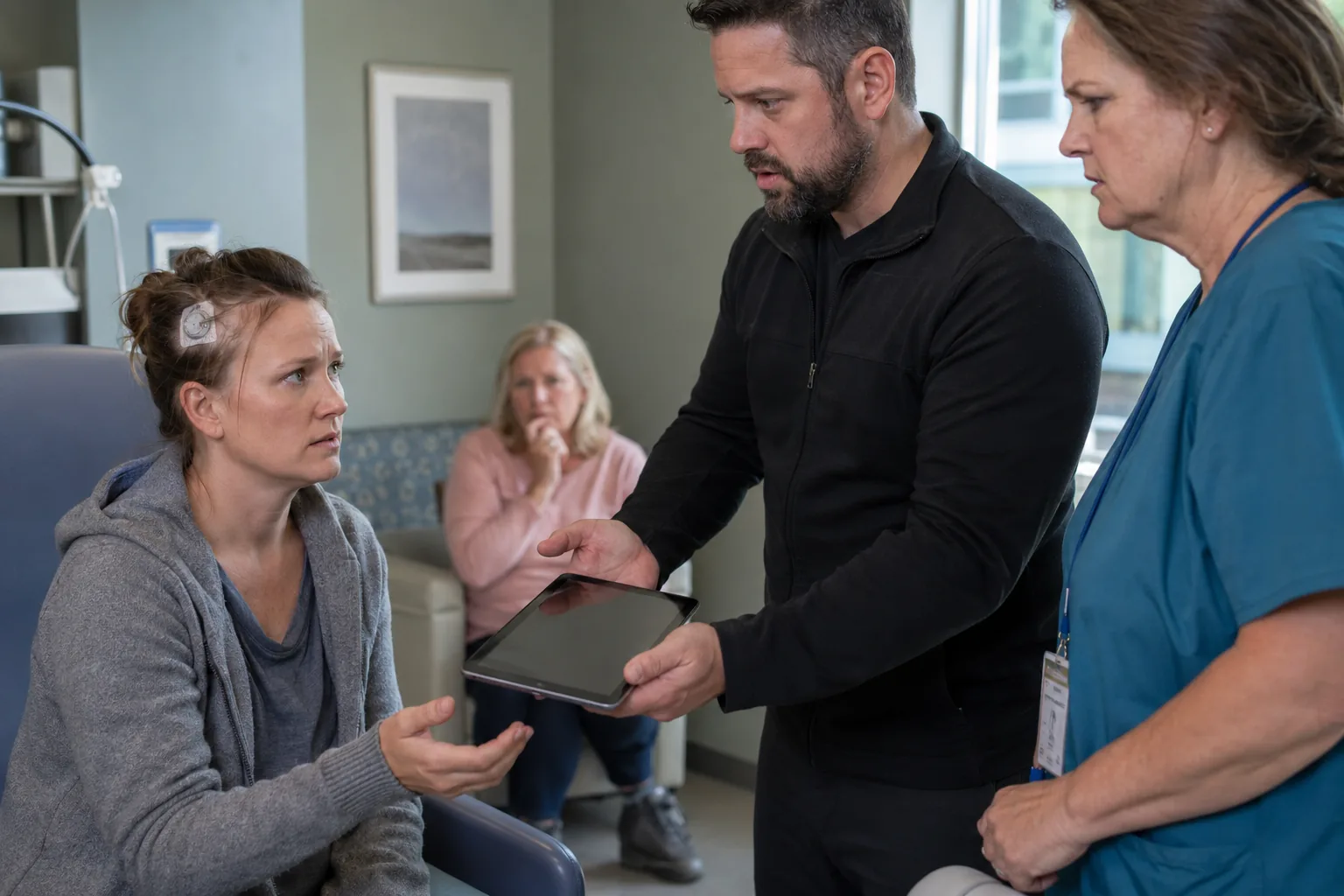
The memory tech at Morrow Neural Clinic cut off Lauren Pike’s ride home, left her account access hanging, and kept shoving an implant consent tablet back into her hands like that was the only way she was leaving. This was happening in the post-procedure discharge bay while volunteers rolled water carts past her chair and other patients were getting walked out one by one. The part that made people stop when Lauren laid out the timeline later was simple: every time she asked for her ride release, Evan Mercer answered with the tablet instead.
That is where the visible sequence starts.
Lauren still had the patient wristband on. Her phone battery was low enough that she had already plugged it into the discharge phone charger once, then unplugged it to check for the transport text she said never came. Above the handoff area, the transport desk display kept flipping names and pickup windows. Hers did not move. Staff crossed the floor with clipboards, pill cups, and those small blue blankets clinics always seem to have, but Lauren stayed planted near the end of the discharge row with a tote bag at her feet and the implant consent tablet appearing in front of her over and over.
She did not start by arguing. Everyone who saw part of it said the same thing about her tone. Controlled. Plain. Procedural.
“Can you explain why my ride was canceled?”
“Your transport is pending completion,” Evan told her.
“Completion of what?”
He set the tablet down on the side table beside her paper cup. “We need to finish implant consent.”
That wording matters because it was not a one-time exchange. It repeated. Lauren looked at the screen, then at the desk, then back at him. The tablet displayed a consent prompt tied to implant support settings. Her ride, according to the transport side of the floor, was not released. Her account, according to the phone alerts she was getting, had also kicked her into another verification loop after the visit. Those two things landed on her at the same moment she was supposed to be leaving with post-visit restrictions in place.
That is the first harm in clean form: independence blocked at the exact point she needed to get home safely.
The clinic was not closed. Nothing dramatic was happening around her. A man in a baseball cap was escorted out with discharge papers. A woman in compression socks laughed at something the volunteer said near the coffee station. The ordinary motion of the place made Lauren’s delay look smaller than it was. But if you track only the observable pieces, the mismatch starts early. Other people moved through the same bay. Lauren did not. Evan kept circling back with the same device.
At one point she stood and walked to the transport handoff desk herself. Malik Dunn did not give her a speech. He looked at the dispatch screen and read what it showed.
“You’re still pending medical release. I can’t send the car until that flips.”
“Who flips it?”
He glanced past her toward the programming side of the floor. “It has to come from inside clinical clearance.”
Lauren asked whether the ride had actually been canceled or just held. He answered carefully.
“Right now it shows pending. Not released.”
That answer is important because it undercut the way Evan had framed it to her minutes earlier. He had already told her, according to her account and the witness timing, that getting home would keep being a problem if she did not “complete consent.” Malik did not mention consent. He mentioned status.
When Lauren went back to her chair, Evan was waiting with the tablet again.
“This is routine,” he said.
“Then release my ride and I’ll read whatever you need me to read at home.”
“That isn’t how this works.”
“Show me where it says my ride depends on this screen.”
He did not point to anything on the tablet. He only rotated it closer to her.
That was the moment a nearby nurse, Rina Solis, started paying closer attention. Not because she stormed in like a hero. Nothing like that. She was moving between rooms, checking statuses on a workstation, lowering her voice when families asked about delays. But more than once, Lauren redirected the same question at her instead of at Evan.
“Am I medically discharged or not?”
Rina checked the screen before answering. “Your floor care is complete. I don’t see transport released yet.”
“Because of him?”
Rina did not answer that. She said, “I can only tell you what is and isn’t cleared in the chart.”
Again, that gap matters. Floor care complete. Transport not released. Technician still pushing consent.
Lauren’s phone lit up with another account verification text while she was speaking. She read it, plugged the phone back into the charger for another minute, then unplugged it and stared at the battery icon. That was when she brought up her sister, Tessa Pike.
“If this is going to keep going, I need to call my backup contact.”
Evan’s response was fast enough that more than one person remembered it.
“Outside calls are only going to complicate this.”
Lauren looked at him, then at the tablet, then toward the transport desk where her status still had not changed.
A routine consent step should not need a stranded patient kept in place, cut off from her ride, and warned off a backup contact. By the time she finally got one short call out to Tessa with the phone on low battery and the charging cable still tangled around her wrist, there was one contradiction sitting in the middle of the bay for anyone willing to see it.
If this was really about safety, why was the only thing Evan kept delivering the tablet instead of an actual discharge answer?
The memory tech at Morrow Neural Clinic cut off Lauren Pike’s ride home, left her account access hanging, and kept shoving an implant consent tablet back into her hands like that was the only way she was leaving. This was happening in the post-procedure discharge bay while volunteers rolled water carts past her chair and other patients were getting walked out one by one. The part that made people stop when Lauren laid out the timeline later was simple: every time she asked for her ride release, Evan Mercer answered with the tablet instead.
That is where the visible sequence starts.
Lauren still had the patient wristband on. Her phone battery was low enough that she had already plugged it into the discharge phone charger once, then unplugged it to check for the transport text she said never came. Above the handoff area, the transport desk display kept flipping names and pickup windows. Hers did not move. Staff crossed the floor with clipboards, pill cups, and those small blue blankets clinics always seem to have, but Lauren stayed planted near the end of the discharge row with a tote bag at her feet and the implant consent tablet appearing in front of her over and over.
She did not start by arguing. Everyone who saw part of it said the same thing about her tone. Controlled. Plain. Procedural.
“Can you explain why my ride was canceled?”
“Your transport is pending completion,” Evan told her.
“Completion of what?”
He set the tablet down on the side table beside her paper cup. “We need to finish implant consent.”
That wording matters because it was not a one-time exchange. It repeated. Lauren looked at the screen, then at the desk, then back at him. The tablet displayed a consent prompt tied to implant support settings. Her ride, according to the transport side of the floor, was not released. Her account, according to the phone alerts she was getting, had also kicked her into another verification loop after the visit. Those two things landed on her at the same moment she was supposed to be leaving with post-visit restrictions in place.
That is the first harm in clean form: independence blocked at the exact point she needed to get home safely.
The clinic was not closed. Nothing dramatic was happening around her. A man in a baseball cap was escorted out with discharge papers. A woman in compression socks laughed at something the volunteer said near the coffee station. The ordinary motion of the place made Lauren’s delay look smaller than it was. But if you track only the observable pieces, the mismatch starts early. Other people moved through the same bay. Lauren did not. Evan kept circling back with the same device.
At one point she stood and walked to the transport handoff desk herself. Malik Dunn did not give her a speech. He looked at the dispatch screen and read what it showed.
“You’re still pending medical release. I can’t send the car until that flips.”
“Who flips it?”
He glanced past her toward the programming side of the floor. “It has to come from inside clinical clearance.”
Lauren asked whether the ride had actually been canceled or just held. He answered carefully.
“Right now it shows pending. Not released.”
That answer is important because it undercut the way Evan had framed it to her minutes earlier. He had already told her, according to her account and the witness timing, that getting home would keep being a problem if she did not “complete consent.” Malik did not mention consent. He mentioned status.
When Lauren went back to her chair, Evan was waiting with the tablet again.
“This is routine,” he said.
“Then release my ride and I’ll read whatever you need me to read at home.”
“That isn’t how this works.”
“Show me where it says my ride depends on this screen.”
He did not point to anything on the tablet. He only rotated it closer to her.
That was the moment a nearby nurse, Rina Solis, started paying closer attention. Not because she stormed in like a hero. Nothing like that. She was moving between rooms, checking statuses on a workstation, lowering her voice when families asked about delays. But more than once, Lauren redirected the same question at her instead of at Evan.
“Am I medically discharged or not?”
Rina checked the screen before answering. “Your floor care is complete. I don’t see transport released yet.”
“Because of him?”
Rina did not answer that. She said, “I can only tell you what is and isn’t cleared in the chart.”
Again, that gap matters. Floor care complete. Transport not released. Technician still pushing consent.
Lauren’s phone lit up with another account verification text while she was speaking. She read it, plugged the phone back into the charger for another minute, then unplugged it and stared at the battery icon. That was when she brought up her sister, Tessa Pike.
“If this is going to keep going, I need to call my backup contact.”
Evan’s response was fast enough that more than one person remembered it.
“Outside calls are only going to complicate this.”
Lauren looked at him, then at the tablet, then toward the transport desk where her status still had not changed.
A routine consent step should not need a stranded patient kept in place, cut off from her ride, and warned off a backup contact. By the time she finally got one short call out to Tessa with the phone on low battery and the charging cable still tangled around her wrist, there was one contradiction sitting in the middle of the bay for anyone willing to see it.
If this was really about safety, why was the only thing Evan kept delivering the tablet instead of an actual discharge answer?