Story code: ST-000730
Part 1: The Margin of Error
Elena’s scrubs carried the sharp, chemical scent of hospital bleach and the metallic tang of an endless night on the ICU floor as she collapsed into the hallway armchair. David knelt immediately to unlace her sneakers, feeling the violent, involuntary tremors shooting through her calves. She lacked the energy to even lift her chin or remove her laminated ID badge.
He worked the tight laces loose, carefully sliding the heavy, rubber-soled nursing shoes off her swollen feet. A dark ring of purple bruising lined her ankles from fourteen straight hours of standing on hard concrete floors. She leaned her head back against the drywall, her eyes already shut, her breathing shallow and ragged. David placed a hand under her elbow, easing her up and guiding her down the hall. He pulled the bedroom’s heavy blackout curtains perfectly flush against the window frame and switched on the white noise machine. She dropped onto the mattress and went completely still.
David closed the bedroom door with a soft click and moved to the kitchen. He poured a mug of black coffee, craving the bitter, predictable routine of his morning, before stepping out onto the front porch to retrieve the empty recycling bin. The morning air was crisp and damp. He froze on the top step, his hand hovering over the iron railing.
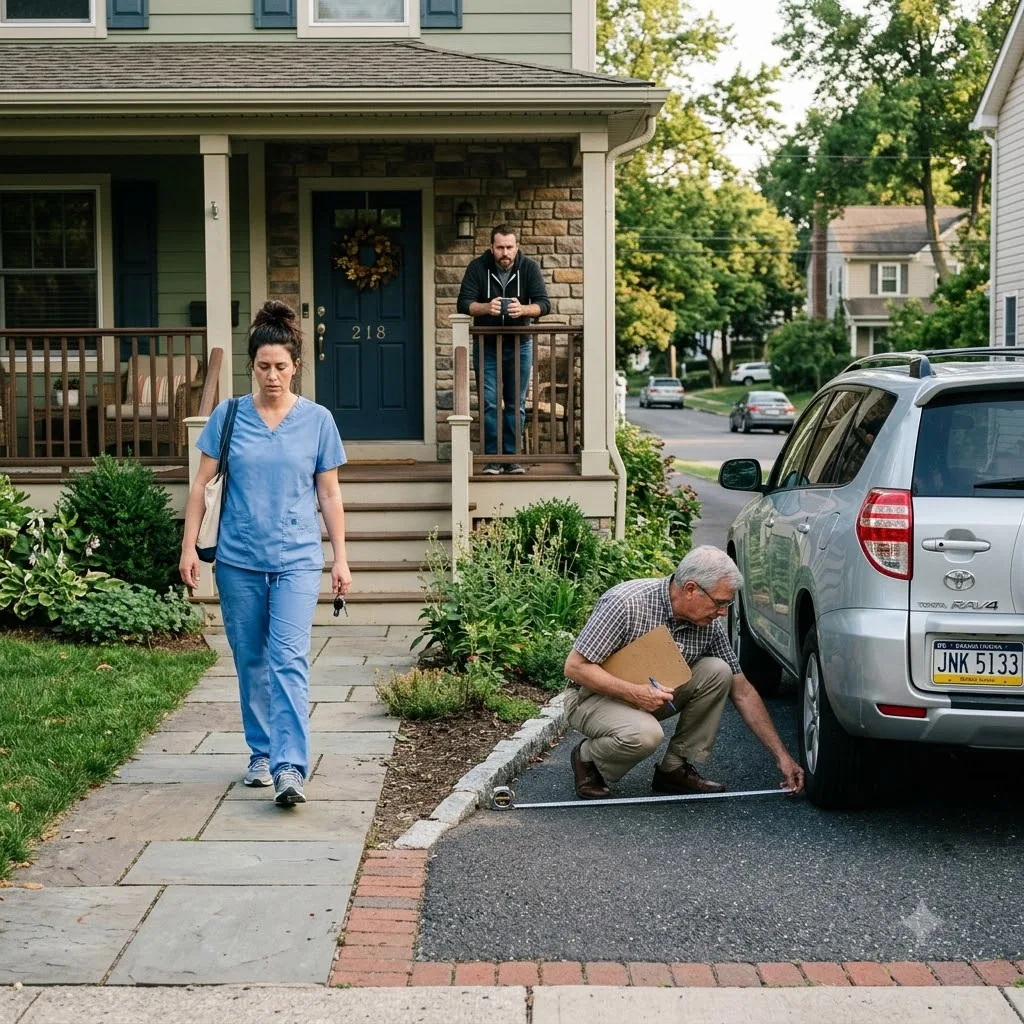
Gary, the Oakridge Homeowners Association president, was on his hands and knees on the cold concrete beside Elena’s Honda Civic. Gary wore heavily creased khaki slacks and a neon yellow safety vest over his polo shirt. He held a rigid, stainless-steel machinist’s ruler pressed flat against the asphalt. He was sliding it meticulously toward the rubber sidewall of Elena’s front left tire, his brow furrowed in deep concentration.
David walked down the driveway, his slippers quiet on the pavement. Gary did not look up. He adjusted his wire-rimmed glasses, bringing his face mere inches from the dirty tire tread, and tapped the ruler perfectly perpendicular to the painted property line. Gary locked the ruler’s sliding brass gauge into place with a sharp, echoing snap.
Standing up, Gary dusted a microscopic speck of dirt from his right kneecap. He tapped the metal ruler against the aluminum clipboard he carried on all his morning patrols. David took a slow sip of his coffee. He actually respected Gary’s dedication to the numbers. Data maintained order. Metrics kept systems running smoothly and predictably. Without measurable, enforceable standards, a community or a corporate logistics chain would inevitably degrade into chaos. David spent his entire professional life optimizing supply algorithms for a massive distribution company; he deeply understood the comforting certainty of a hard, inflexible number.
Gary pointed the metal ruler at the tire like an accusatory finger. He announced the vehicle was protruding exactly four point two inches over the lateral driveway boundary line. He cited Section Four, Paragraph B of the community bylaws from memory, stating that any parked vehicle must be entirely contained within the designated private parking pad to maintain neighborhood uniformity.
David looked at the offending tire. Elena had parked slightly skewed, rushing to get inside and collapse after monitoring crashing patients all night. A flash of protective heat radiated through David’s chest. He thought of her bruised ankles and the way her hands shook as she handed him her keys at the door. He opened his mouth to explain, to mention the brutal shift, to ask for a slight, human margin of error.
He clamped his jaw shut before the words formed. He swallowed the urge to argue. Rules were rules. You could not run a functional system on emotional exceptions. If a system allowed a four-inch deviation today, the entire baseline would shift tomorrow. Standards required strict, universal compliance to mean anything at all. David forced his shoulders to relax and offered a polite, compliant nod of agreement.
Gary unclipped a red pen from his clipboard and filled out a yellow citation slip in precise block letters. He ripped the carbon copy from the pad and thrust it forward. A fifty-dollar penalty, payable within fourteen business days. David took the paper, folded it neatly along the center crease, and slid it into his pajama pocket. He thanked Gary for keeping the neighborhood standards high. Gary offered a curt, satisfied nod and marched toward the Miller house next door to inspect the placement of their trash receptacles.
David turned around and walked back into the quiet house, locking the heavy brass deadbolt behind him. The structure of the morning calmed his lingering irritation. He carried his coffee into the spare bedroom he had converted into his home office. The room was immaculate, devoid of clutter. He sat in his ergonomic mesh chair, adjusting the height by a fraction of an inch to ensure optimal posture. He squared his mechanical keyboard so it sat perfectly parallel to the edge of the glass desk. Order always prevailed when you followed the metrics.
He reached out and tapped the spacebar to wake his monitor. The screen flared to life, illuminating the dark room with a cool blue glow. David typed in his corporate credentials to access the intranet, eager to connect to his remote desktop and begin reviewing the overnight efficiency algorithms. He hit the enter key. The blue loading wheel appeared in the center of the screen, spinning for a long moment, before abruptly freezing in place as the screen flashed to a plain white dialogue box.
Elena’s scrubs carried the sharp, chemical scent of hospital bleach and the metallic tang of an endless night on the ICU floor as she collapsed into the hallway armchair. David knelt immediately to unlace her sneakers, feeling the violent, involuntary tremors shooting through her calves. She lacked the energy to even lift her chin or remove her laminated ID badge.
He worked the tight laces loose, carefully sliding the heavy, rubber-soled nursing shoes off her swollen feet. A dark ring of purple bruising lined her ankles from fourteen straight hours of standing on hard concrete floors. She leaned her head back against the drywall, her eyes already shut, her breathing shallow and ragged. David placed a hand under her elbow, easing her up and guiding her down the hall. He pulled the bedroom’s heavy blackout curtains perfectly flush against the window frame and switched on the white noise machine. She dropped onto the mattress and went completely still.
David closed the bedroom door with a soft click and moved to the kitchen. He poured a mug of black coffee, craving the bitter, predictable routine of his morning, before stepping out onto the front porch to retrieve the empty recycling bin. The morning air was crisp and damp. He froze on the top step, his hand hovering over the iron railing.
Gary, the Oakridge Homeowners Association president, was on his hands and knees on the cold concrete beside Elena’s Honda Civic. Gary wore heavily creased khaki slacks and a neon yellow safety vest over his polo shirt. He held a rigid, stainless-steel machinist’s ruler pressed flat against the asphalt. He was sliding it meticulously toward the rubber sidewall of Elena’s front left tire, his brow furrowed in deep concentration.
David walked down the driveway, his slippers quiet on the pavement. Gary did not look up. He adjusted his wire-rimmed glasses, bringing his face mere inches from the dirty tire tread, and tapped the ruler perfectly perpendicular to the painted property line. Gary locked the ruler’s sliding brass gauge into place with a sharp, echoing snap.
Standing up, Gary dusted a microscopic speck of dirt from his right kneecap. He tapped the metal ruler against the aluminum clipboard he carried on all his morning patrols. David took a slow sip of his coffee. He actually respected Gary’s dedication to the numbers. Data maintained order. Metrics kept systems running smoothly and predictably. Without measurable, enforceable standards, a community or a corporate logistics chain would inevitably degrade into chaos. David spent his entire professional life optimizing supply algorithms for a massive distribution company; he deeply understood the comforting certainty of a hard, inflexible number.
Gary pointed the metal ruler at the tire like an accusatory finger. He announced the vehicle was protruding exactly four point two inches over the lateral driveway boundary line. He cited Section Four, Paragraph B of the community bylaws from memory, stating that any parked vehicle must be entirely contained within the designated private parking pad to maintain neighborhood uniformity.
David looked at the offending tire. Elena had parked slightly skewed, rushing to get inside and collapse after monitoring crashing patients all night. A flash of protective heat radiated through David’s chest. He thought of her bruised ankles and the way her hands shook as she handed him her keys at the door. He opened his mouth to explain, to mention the brutal shift, to ask for a slight, human margin of error.
He clamped his jaw shut before the words formed. He swallowed the urge to argue. Rules were rules. You could not run a functional system on emotional exceptions. If a system allowed a four-inch deviation today, the entire baseline would shift tomorrow. Standards required strict, universal compliance to mean anything at all. David forced his shoulders to relax and offered a polite, compliant nod of agreement.
Gary unclipped a red pen from his clipboard and filled out a yellow citation slip in precise block letters. He ripped the carbon copy from the pad and thrust it forward. A fifty-dollar penalty, payable within fourteen business days. David took the paper, folded it neatly along the center crease, and slid it into his pajama pocket. He thanked Gary for keeping the neighborhood standards high. Gary offered a curt, satisfied nod and marched toward the Miller house next door to inspect the placement of their trash receptacles.
David turned around and walked back into the quiet house, locking the heavy brass deadbolt behind him. The structure of the morning calmed his lingering irritation. He carried his coffee into the spare bedroom he had converted into his home office. The room was immaculate, devoid of clutter. He sat in his ergonomic mesh chair, adjusting the height by a fraction of an inch to ensure optimal posture. He squared his mechanical keyboard so it sat perfectly parallel to the edge of the glass desk. Order always prevailed when you followed the metrics.
He reached out and tapped the spacebar to wake his monitor. The screen flared to life, illuminating the dark room with a cool blue glow. David typed in his corporate credentials to access the intranet, eager to connect to his remote desktop and begin reviewing the overnight efficiency algorithms. He hit the enter key. The blue loading wheel appeared in the center of the screen, spinning for a long moment, before abruptly freezing in place as the screen flashed to a plain white dialogue box.