Story code: ST-000748
Part 2: Below Grade
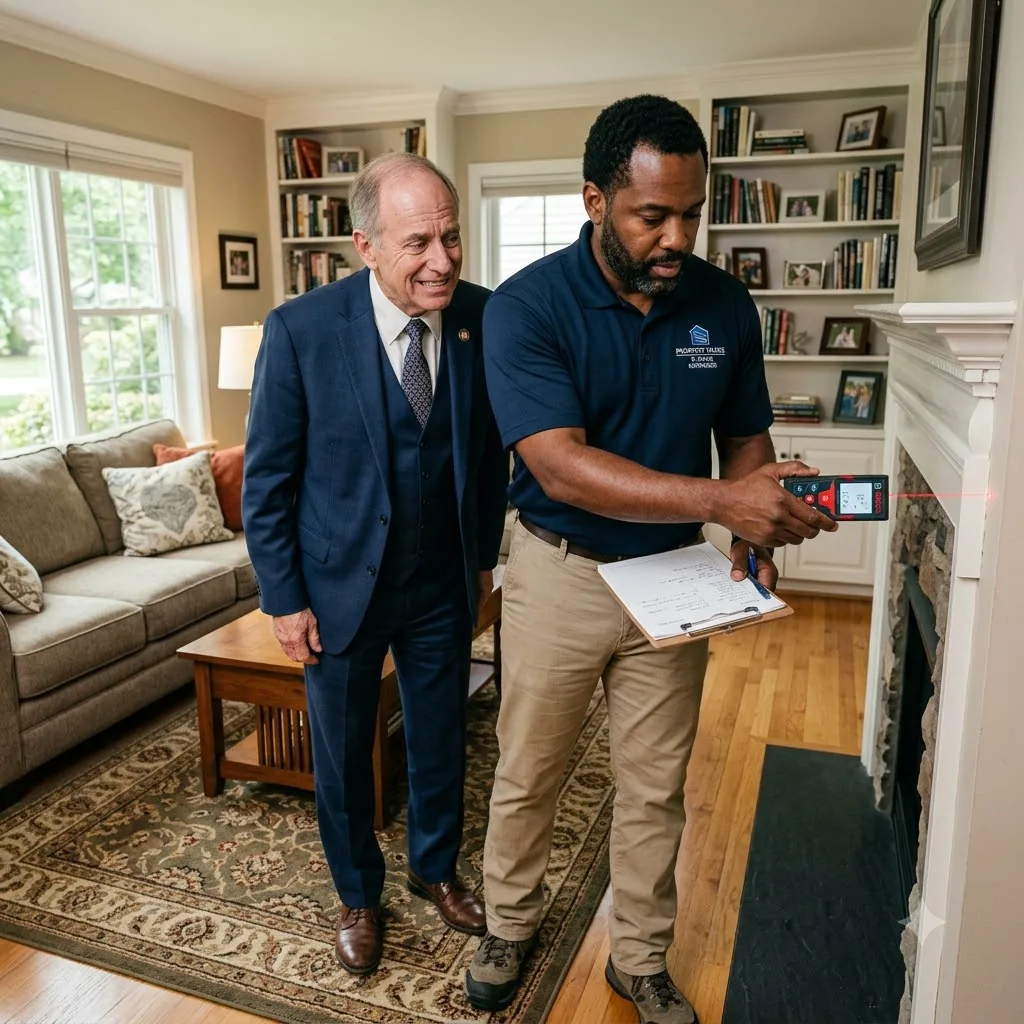
Marcus stared at the pale, manicured hand covering his screen. He yanked the tablet back, the sudden motion causing his stylus to clatter against the hardwood floor. He bent to retrieve it, grateful for the three seconds it gave him to break eye contact and steady his breathing. He needed the math. The math was neutral. It didn’t judge, and it didn’t remember.
“The gross living area calculation includes the lower level,” Marcus said, his voice sounding thinner than he wanted as he stood back up. He bypassed Dale, heading directly for the basement door off the kitchen. “I need to measure the footprint down there.”
“Of course,” Dale said, effortlessly stepping aside and gesturing toward the doorway. “Take all the time you need. But as the MLS listing explicitly notes, it is just raw storage space. Unfinished. Damp. Practically a hazard, really. Nothing that contributes to the livable square footage.”
Marcus opened the door and descended the wooden stairs. The air grew cooler, but not with the damp, earthy draft of an unfinished cellar. As his heavy work boots hit the bottom landing, he reached for the light switch. Recessed LED fixtures flickered to life in sequence, illuminating not raw concrete, but polished engineered hardwood floors, flawless drywall, and a custom built-in wet bar complete with thick quartz countertops.
Marcus froze. This wasn’t just finished; it was premium construction. It was the kind of high-end, below-grade living space that added massive, undeniable value to the comparative market analysis.
He pulled up the county tax records and Dale’s provided spec sheet on his tablet, his eyes scanning the data rows. Both listed the square footage down here as strictly zero percent finished. Someone had pulled the renovation permits quietly, or not at all, and Dale was actively suppressing the massive upgrade to keep the overall property valuation artificially crushed.
“Surprised?” Dale’s voice drifted down from the top of the stairs before his polished loafers appeared on the treads.
“This isn’t raw storage,” Marcus said, raising his tablet to snap a required compliance photo of the wet bar. “This is easily another thousand square feet of prime living space. It drastically changes the final valuation. You left this off the listing entirely.”
“Only if you document it,” Dale said, reaching the bottom of the stairs and casually leaning his hip against the gleaming quartz counter. “But you aren’t going to do that, Marcus. You’re going to use the layout template I provided.”
Marcus lowered the tablet slightly, keeping his finger near the shutter button. “I am bound by USPAP regulations. If I omit this space, it is mortgage fraud. The lender needs an accurate picture of the collateral.”
“The lender is a faceless algorithm sitting on a server in a skyscraper,” Dale countered, picking up a stainless steel cocktail shaker left on the bar and turning it over in his hands. “They don’t care about this house. But your mother? Sister Beatrice? They care very much.”
“Leave my mother out of this,” Marcus snapped, his rigid, practiced professionalism finally cracking.
“I can’t do that,” Dale smiled, setting the shaker down with a dull thud. “Because the buyer we have lined up-the one who desperately needs this valuation to come in under four hundred thousand so their financing clears-is Providence Holdings LLC. Do you happen to know who sits on the board of Providence Holdings?”
Marcus felt the cold air of the basement seep directly into his chest. Providence. It was the name of the fellowship’s private school. The one he had been abruptly pulled out of public education to attend when the congregation’s teachings grew more extreme.
“They are looking for a new parsonage,” Dale continued softly, his voice echoing in the empty, expensive room. “A place to host visiting elders and conduct private counseling. This property is perfect. And they have been praying so hard for the Lord to provide a miracle with the price. I told them I was working with an appraiser who understood the deep, spiritual importance of their mission.”
Marcus looked at the flawless drywall, suddenly feeling the walls closing in. If he logged the finished basement, the appraisal would jump by at least eighty thousand dollars. The fellowship wouldn’t be able to secure the loan. They would lose the property.
“If I falsify this report,” Marcus said, his jaw tight, “I risk my license. My entire livelihood.”
“If you don’t adjust the numbers,” Dale said, stepping closer, his voice dropping into that terrifyingly familiar, rhythmic cadence of a Sunday sermon, “I will have to explain to the congregation why their prodigal son deliberately sabotaged their expansion. I will tell your mother that you stood in this very room and mocked her prayers. You know exactly how the elders handle active enemies of the church, Marcus. They don’t just pray for them. They correct them.”
Marcus knew what correction meant. It meant targeted, relentless harassment. It meant thirty letters a week mailed to the state appraisal review board claiming fabricated ethical violations. It meant his local business contacts drying up overnight as the fellowship’s invisible influence bled through the town’s rotary clubs and municipal boards. He had spent ten grueling years building a quiet, secular life, brick by brick, entirely separated from the suffocating grip of the congregation.
Dale was threatening to tear it all down with one phone call.
Marcus looked down at his tablet. The camera app was still open, framing the expensive wet bar and the engineered hardwood. One photo. That was all it took to prove the house’s true value. One photo to trigger an automated flag in the bank’s underwriting software, exposing Dale’s manipulated MLS data and blowing up the entire fraudulent deal.
“You are suppressing the data to orchestrate a sweetheart deal for the church,” Marcus said, vocalizing the fraud to make it real, desperately trying to anchor himself to the facts instead of his rising panic. “That’s why you’ve been aggressively badmouthing your own listing all morning. You’re breaching your fiduciary duty to your seller.”
“The seller is an out-of-state heir who hasn’t set foot in this house in a decade,” Dale sneered, totally abandoning the polite facade. “He wants a quick cash close and doesn’t know what he has. Everyone wins. The church gets their sanctuary, the seller gets his cash, and you get to keep your quaint little business. Everyone wins, Marcus, unless you decide to be difficult.”
Dale reached out and tapped the glass screen of Marcus’s tablet, his finger landing right over the digital shutter button.
“You have until 5:00 PM tomorrow to submit the final report to the portal,” Dale said, checking his heavy gold watch and turning toward the stairs. “Make sure the basement remains raw concrete in your sketch. Or I spend my Sunday morning fellowship hour discussing your deep-seated hatred for your mother’s faith. Let’s see how many state board complaints a unified congregation of two thousand people can file by Monday morning.”
Dale walked up the stairs, his footsteps heavy and echoing, leaving Marcus alone in the cold, bright basement. Marcus stared down at the screen, his thumb hovering a fraction of an inch above the camera button, trapped agonizingly between the irrefutable truth of the data and the ghosts of his past.