Story code: ST-000779
Part 4: The Watchtower
The corrugated plastic of the yard sign snapped sharply in the bitter January air as Maya bent the metal stakes in half. She shoved the ruined sign deep into the bottom of her rolling municipal trash bin. *In This House, We Believe.* She grabbed the next one from the frosty, dead grass. *Housing is a Human Right.* She broke it over her knee, the sharp edge scraping the palm of her hand, and tossed it in on top of the first. She did not look around to see if any of her neighbors were watching from their windows. The progressive facade was entirely exhausted. It had died the morning Silas Sterling looked at her with pure disgust while David, the surveyor, bled into the freezing mud of the drainage ditch.
Maya dragged the heavy trash bin to the curb and looked across the vacant lot. The chain-link fence was gone. The heavy brass padlock, the rigid diamond-shaped wire, the metal posts-all of it had been systematically torn up by municipal excavators just before Thanksgiving. In its place stood twenty-four prefabricated tiny homes, painted in cheerful, patronizing pastel colors. There was no boundary line anymore. Just an open stretch of winter-dead weeds leading directly to the yellow brick wall of Oak Creek Middle School’s cafeteria. *Open flow.*
David had survived. The aggravated assault charges had been quietly negotiated down to a misdemeanor with probation, pushed heavily by a school board desperate to avoid a media circus about a local mother brutally attacking a humanitarian project. The only concrete consequence enforced by the district was a strict, unyielding no-trespass order. Maya was legally banned from stepping foot on the middle school grounds.
She retreated inside her house, locking the heavy brass deadbolt on the kitchen door. She walked past the shattered remnants of her old life-the silent, empty kitchen, the unlit living room-and stepped into the sunroom at the back of the house. It had once been a bright, welcoming space filled with potted ferns and wicker reading chairs. Now, it was stripped bare except for a folding card table, a rolling office chair, and a heavy-duty aluminum tripod.
Mounted rigidly to the tripod was a DSLR camera equipped with a massive 600mm telephoto lens.
Maya sat heavily in the rolling chair, her hands trembling as they had every single day for the past three months. She leaned forward, pressing her eye to the cold rubber cup of the viewfinder. She reached out and twisted the focus ring.
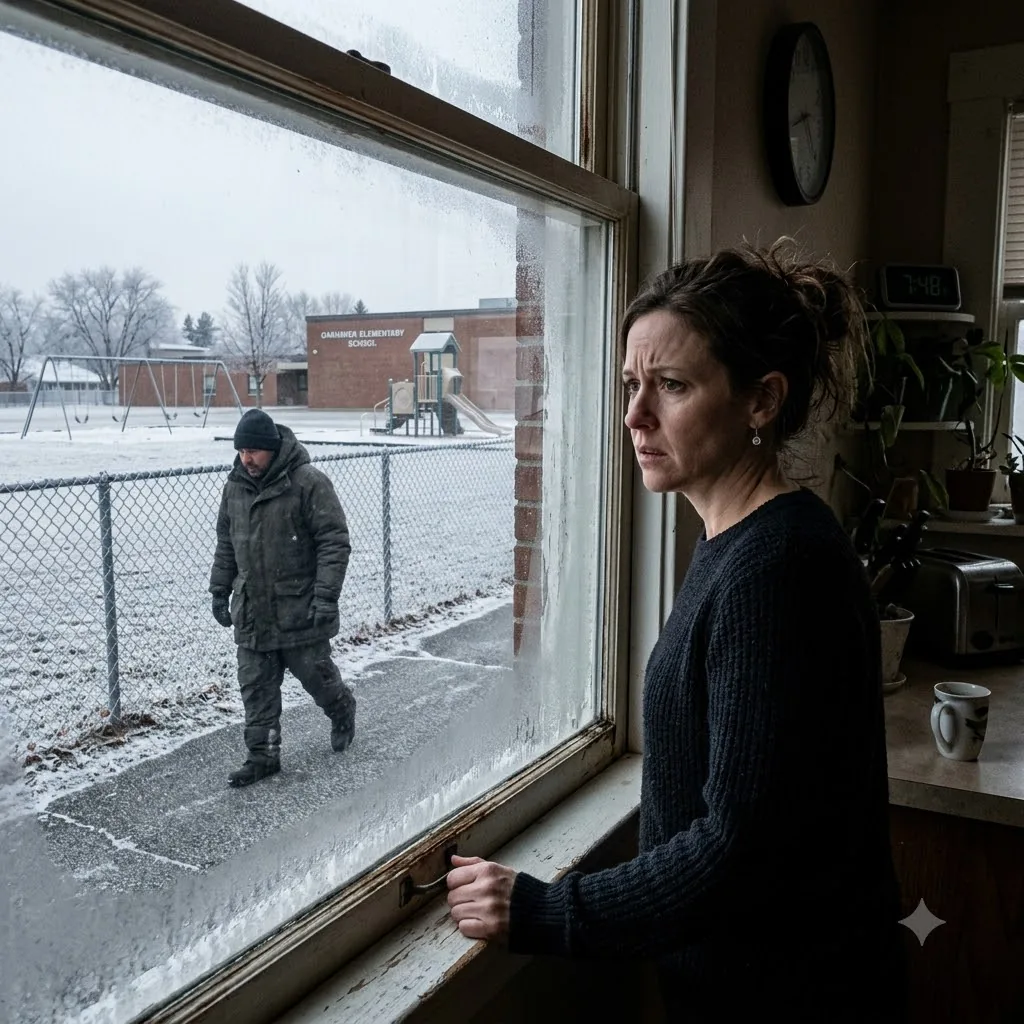
The unhoused village was officially opening today. Through the glass of the sunroom, and through the compressed optics of the heavy lens, the pastel tiny homes looked terrifyingly close to the middle school walls. A white city bus had stopped at the street corner. Figures were disembarking, carrying overstuffed duffel bags, dragging garbage bags and rolling suitcases over the uneven ground. They were strangers. Unvetted, unpredictable, transient strangers walking freely into the space where her child learned.
Maya’s breathing turned shallow and rapid. She tracked a man in a heavy, oversized military surplus jacket. He walked with an erratic limp, his hands buried deep in his cavernous pockets. The dark fabric bulked heavily at his waist. Was it a rolled-up sleeping bag? A water bottle? Or something rigid and metallic? Her breath hitched, momentarily fogging the viewfinder. She snapped a rapid burst of photos. *Click-click-click-click.* The mechanical shutter sounded like a weapon firing in the silent house.
She pulled away from the camera for a fraction of a second to glance at the wall beside the tripod. Taped securely to the drywall was a meticulously color-coded spreadsheet of Chloe’s daily schedule. It was 11:22 AM. In eight minutes, the cafeteria would fill with hundreds of children. They would sit down to eat their sandwiches right beside the massive, floor-to-ceiling glass windows that looked out directly onto the new village.
Her cell phone sat on the folding table, completely dark and silent. There were no texts from the PTA group chat. There were no emails from the zoning board. She was totally ostracized, a pariah in her own neighborhood. When she had tried to warn the other mothers about the twelve-second sprint it would take a man to cross from the tiny homes to the cafeteria doors, they had looked at her exactly the way Silas had-with a mixture of pity, horror, and revulsion. They had chosen the municipal data. They had chosen the community victory.
Maya was entirely alone.
She turned back to the camera. Her bare feet, still faintly scarred with pink lines from the broken concrete and thistles of the vacant lot, wrapped tightly around the cold aluminum legs of the tripod. She panned the massive lens across the frost-bitten grass, watching the man in the heavy military coat sit down on a wooden picnic bench just forty yards from the school doors. He did not take his hands out of his pockets.
Maya’s chest heaved, a cold sweat breaking out across her collarbones and the back of her neck. She could not call the police without violating her probation for harassment. She could not run across the lot to intervene without being arrested for trespassing. She could only sit locked in her sunroom, a prisoner of her own absolute, suffocating certainty, peering through a tunnel of glass and waiting for the monster she knew was coming.