Story code: ST-000789
Part 4: The Dead Zone
The front door swung inward, the splintered remains of the brass deadbolt hitting the wall with a dull thud. The contractor in the blue polo shirt stepped over the threshold, a power drill hanging loosely from his right hand. A dusting of brass shavings glittered on the toes of his work boots. He looked up, the sterile corporate greeting already forming on his lips, and stopped dead.
Frank was standing in the archway of the kitchen. He wasn’t holding a weapon, only the heavy, callused weight of his own fists. He stood with the dense, immovable momentum of a man who had spent thirty years wrestling industrial machinery inches from boiling liquid steel.
“Mr. Russo?” the contractor asked, his voice wavering slightly as he glanced at the silver clipboard in his left hand. “We’re with Summit Wellness. We have legal authorization to initiate a Phase Three-”
“You have a piece of paper signed by a girl in Seattle,” Frank interrupted. His voice wasn’t loud, but it carried the low, vibrating mass of a blast furnace. “I have a house that belongs to me. You have exactly three seconds to get off my property.”
“Sir, your medical proxy authorized this extraction,” the contractor insisted, though he took a half-step backward toward the porch. “If we leave, the corporate buyout is officially voided.”
Frank closed the distance between them in two heavy strides. He stopped mere inches from the man, towering over him, blocking out the late afternoon sun streaming through the open door.
“Good,” Frank breathed. “Now get out before I throw you through the front window.”
The contractor swallowed hard, his eyes dropping to Frank’s grease-stained, scarred knuckles. The glossy *Legacy & Wellness* manual had provided flowcharts for emotional resistance and psychological de-escalation, but it offered no protocol for a two-hundred-and-forty-pound steelworker promising immediate, catastrophic violence.
“Subject is exhibiting physical hostility,” the second man muttered from the porch, already retreating toward the white van.
“We’ll note your non-compliance,” the first contractor said stiffly, backing out the door. “Summit Wellness considers this contract terminated.”
Frank slammed the heavy oak door shut behind them. Because the lock was drilled out, he shoved the heavy hallway console table in front of the doorframe to keep it securely closed.
He walked back into the kitchen. The burner phone sat in a puddle of cold coffee on the linoleum. The screen was still illuminated. Frank picked it up, wiping the brown liquid off the cracked glass with his thumb. Only the ragged, wet sound of Chloe’s panicked breathing came through the cheap speaker.
“They’re gone,” Frank said flatly. “The contract is terminated. There is no buyout.”
A sharp, devastated gasp echoed from Seattle. “Dad… please. The bank is going to lock me out of the apartment by Friday. I don’t have anywhere to go.”
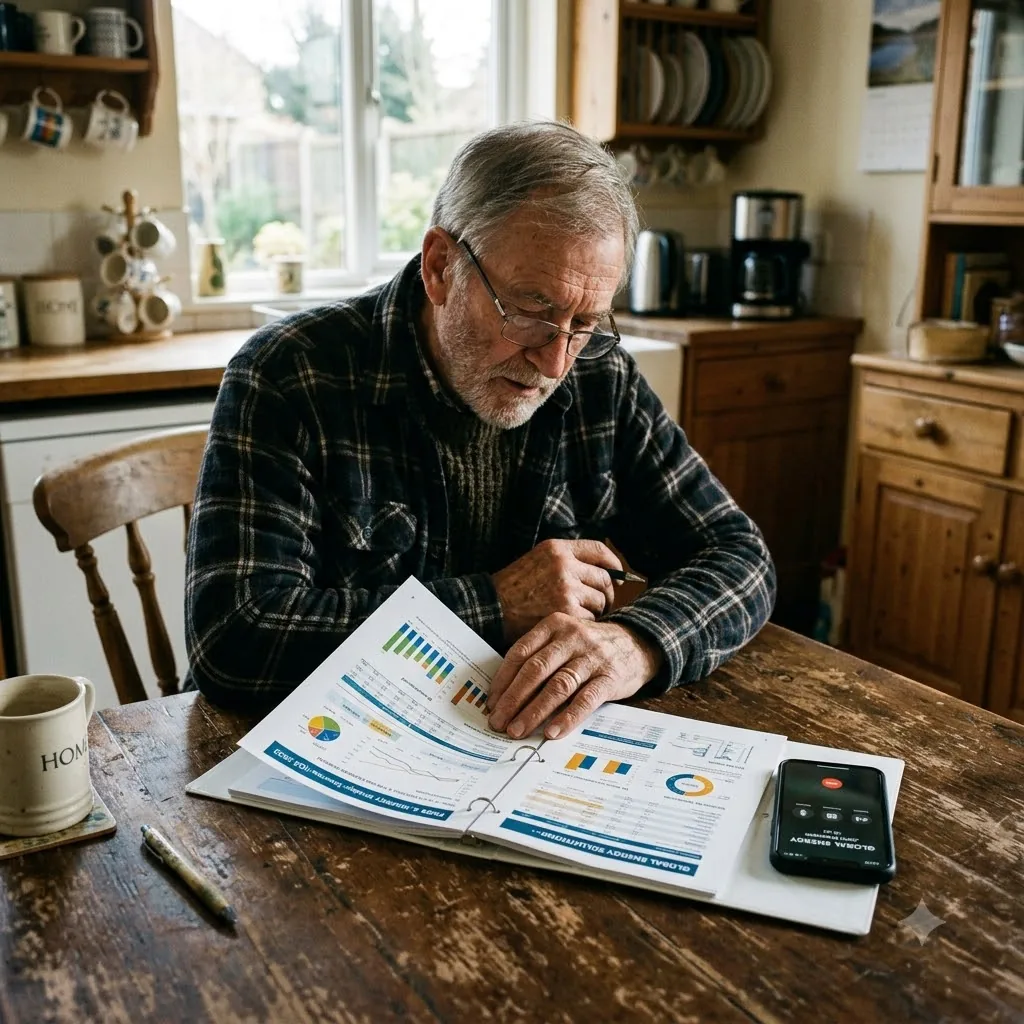
Frank stared at the ruined corporate binder floating in the spilled coffee. The fierce, defensive anger that had burned in his chest all afternoon was entirely gone, replaced by a cold, suffocating ash. His only child had viewed his life as a liquidation asset. She had used his medical vulnerability as a weapon to save herself. And she had done it all because she was just as terrified and expendable in her modern, progressive world as he was in his.
“You’re not going to be on the street,” Frank said. The words tasted like iron in his mouth. “Your room is exactly how you left it. The track posters are still on the wall.”
“Ohio?” Chloe sobbed, the polished corporate cadence utterly broken, revealing the terrified failure underneath. “Dad, I can’t come back to that town. There’s nothing there. It’s a dead zone.”
“It’s where you live now,” Frank said. “Because it’s the only place you have left.”
Silence hung on the line, heavy and suffocating.
“Pack whatever fits in two bags,” Frank told her, his voice carrying no warmth, only the grim, mechanical necessity of survival. “Leave the rest for the bank. Get to the airport. Use whatever credit you have left to buy a one-way ticket to Cleveland. Call me when you’re at the gate.”
“Dad, I’m sorry,” she wept. “I’m so sorry.”
“Just go to the airport, Chloe.”
Frank pressed the red button, cutting the connection. He slid the phone into his jeans pocket.
He turned away from the kitchen and walked slowly through the dim, quiet house. He pushed the console table just enough to squeeze out the front door, stepping onto the wooden planks of his porch. The sun was dipping below the tree line, casting long, bruised shadows across his cracked concrete driveway.
The street was empty. The white van was gone. The neighborhood was dead quiet, entirely devoid of the low, constant industrial rumble that had been the heartbeat of the town for a century.
Frank sat down on the top step of the porch. He rested his heavy forearms on his knees and looked out at the dying town. He had won. He had defended his territory, broken the corporate flowchart, and kept his home. But the victory felt like a tomb. His job was permanently gone. His pension was likely tied up in legal retaliation. And tomorrow, he would drive to the airport to pick up a daughter who was completely broken-a stranger who had tried to cannibalize his life.
The autumn wind blew down the empty street, rattling dry leaves across the asphalt. Frank sat alone on the steps, waiting for the dark to settle, surrounded by an absolute and unyielding isolation.