Story code: ST-000789
Part 1: The Trajectory
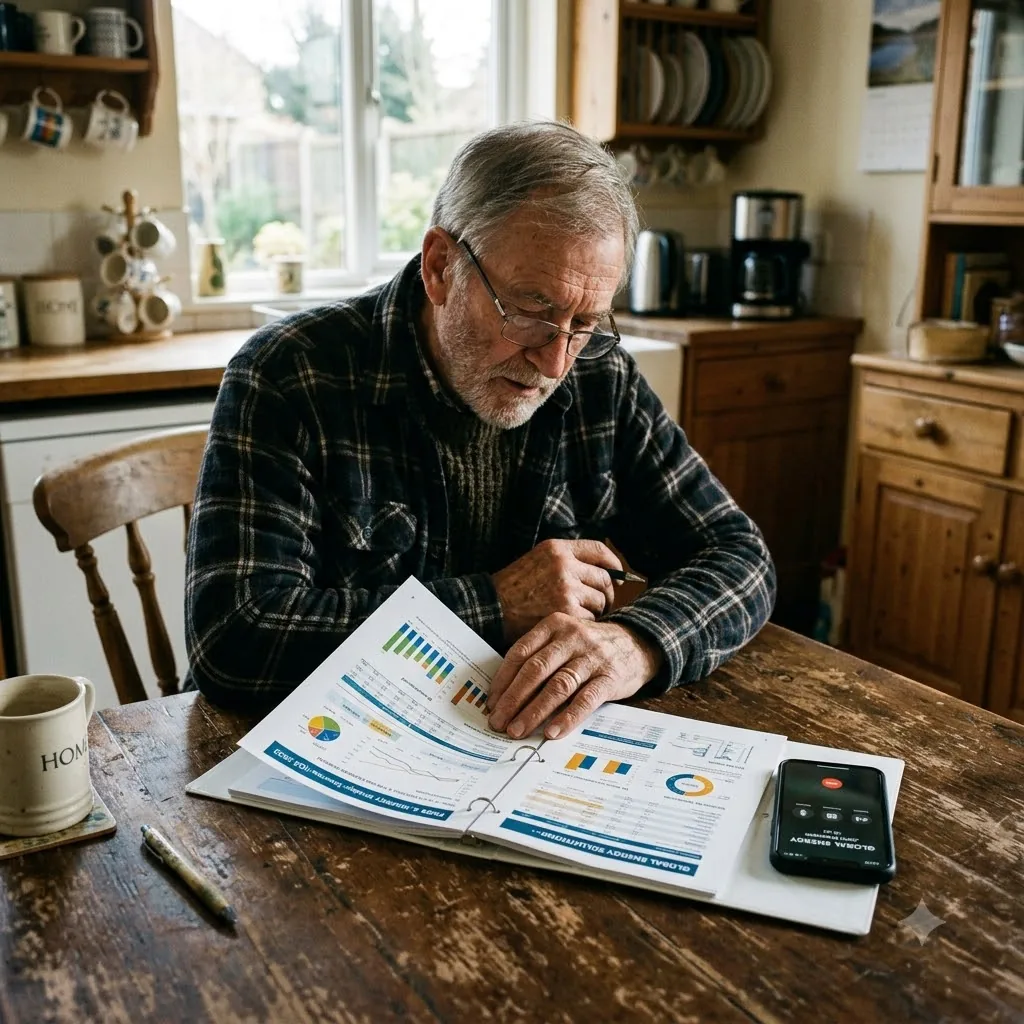
“We need to look at the holistic picture of your daily environment, Dad.” Chloe’s voice echoed out of the scratched plastic grid of Frank’s burner phone, bouncing off the peeling linoleum of the kitchen table. Frank kept his right thumb pressed firmly against the edge of the heavy, gloss-laminated binder sitting between his chipped coffee mug and a short stack of past-due light bills. The cover of the binder bore a brushed-steel corporate logo and the words *Legacy & Wellness Transition*. He had been handed that exact binder at seven-thirty this morning by a twenty-six-year-old HR specialist who refused to look him in the eye while explaining that his thirty years on the blast furnace were no longer synergistically aligned with the mill’s future operational paradigm.
Frank dragged a callused fingertip over the smooth laminate. The cover felt cool, slick, and entirely detached from the grease, the deafening heat, and the grit of the floor he had walked for three decades. Chloe was still talking. Her voice held that bright, aggressively measured cadence she had adopted since finishing her master’s program, a tone designed to sound deeply empathetic while relentlessly steamrolling any opposition.
“Seattle has an incredible ecosystem of support structures for this phase of your life,” Chloe said, the cheap speakerphone distorting the sharp edges of her consonants. “We have already located several premium active-transition communities within a three-mile radius of my apartment. You cannot stay in that drafty house now that the company has pivoted. It is simply not an optimized living situation.”
Frank said nothing. He stared at the glossy white spine of the binder. The word *transition* pulsed in his vision. The HR representative, a kid named Bryce wearing a fleece vest that cost more than Frank’s weekly take-home pay, had used that same word six times in a five-minute exit interview. Bryce had not called it a firing, a layoff, or a redundancy. Bryce had called it an involuntary wellness transition.
“Dad, I need you to engage with what I am saying,” Chloe said. A siren wailed faintly in the background of her Seattle apartment, a thousand miles away. “Silence is a defense mechanism. We are trying to facilitate a positive outcome here.”
Frank opened the binder. The three metal rings clicked open with a sharp snap that sounded entirely too much like the padlock on his locker being sheared off by maintenance. Page one featured a stock photo of a silver-haired man smiling serenely at a tablet. Page two outlined the severance package, a series of decreasing percentages wrapped in dense legal jargon that translated to an empty bank account by Christmas. Page three detailed the company’s mandated psychological off-boarding protocols.
“I am listening,” Frank said. His voice sounded like cracked gravel next to his daughter’s polished broadcast.
“Good, because this requires proactive engagement,” Chloe continued. “You have dedicated your entire physical capacity to that mill. Now that they have shifted their operational focus, you are experiencing an identity deficit. That is completely valid. But sitting in Ohio and stewing in a toxic nostalgia loop is detrimental to your long-term viability.”
Frank paused his hand on page four. The heading at the top of the heavy-stock paper read *Phase Two: Addressing the Identity Deficit*. His eyes locked onto the bolded letters. A cold, thick sensation began to pool at the base of his neck, creeping down his spine.
He looked at the speakerphone. He looked back at the page.
“Say that last part again,” Frank told her.
Chloe let out a long, theatrical sigh. “I said that stewing in a toxic nostalgia loop is detrimental to your long-term viability. You have to let go of the industrial mindset, Dad. We have to move you into a progressive space.”
Frank ran his grease-stained finger down the bullet points on page four. The third bullet point down read: *Assist the transitioned team member in recognizing toxic nostalgia loops that impede long-term viability.*
The kitchen grew very quiet, save for the rhythmic dripping of the leaky faucet in the stainless steel sink. Frank felt the blood rushing in his ears, a low and steady thrum reminiscent of the cooling towers at the plant. He had raised Chloe. He remembered her scraping her knees on the cracked concrete driveway, demanding ice cream for dinner, screaming at him when she failed to make the varsity track team. The person on the phone did not sound like the girl who had cried into his flannel shirt when her dog died. The person on the phone sounded exactly like the corporate mandate sitting on his kitchen table.
“We have an opportunity here,” Chloe pressed, her voice speeding up, catching the rhythm of a well-rehearsed sales pitch. “My spare room is fully prepared. I have already contacted a transition specialist here in the city. We just need to make sure we are aligning on your care trajectory.”
Frank stared at the bottom paragraph of page four. The text was printed in a soothing, rounded font. The final sentence of the page was highlighted in a pale, clinical blue ink.
*Management must ensure the transitioned individual and their designated support network are aligning on the care trajectory.*
Frank kept his eyes on the blue ink. He reached out and pressed the red button on his phone, cutting off Chloe’s next syllable. In the sudden, heavy silence of his empty house, he grabbed the top corner of page four and turned it over.
“We need to look at the holistic picture of your daily environment, Dad.” Chloe’s voice echoed out of the scratched plastic grid of Frank’s burner phone, bouncing off the peeling linoleum of the kitchen table. Frank kept his right thumb pressed firmly against the edge of the heavy, gloss-laminated binder sitting between his chipped coffee mug and a short stack of past-due light bills. The cover of the binder bore a brushed-steel corporate logo and the words *Legacy & Wellness Transition*. He had been handed that exact binder at seven-thirty this morning by a twenty-six-year-old HR specialist who refused to look him in the eye while explaining that his thirty years on the blast furnace were no longer synergistically aligned with the mill’s future operational paradigm.
Frank dragged a callused fingertip over the smooth laminate. The cover felt cool, slick, and entirely detached from the grease, the deafening heat, and the grit of the floor he had walked for three decades. Chloe was still talking. Her voice held that bright, aggressively measured cadence she had adopted since finishing her master’s program, a tone designed to sound deeply empathetic while relentlessly steamrolling any opposition.
“Seattle has an incredible ecosystem of support structures for this phase of your life,” Chloe said, the cheap speakerphone distorting the sharp edges of her consonants. “We have already located several premium active-transition communities within a three-mile radius of my apartment. You cannot stay in that drafty house now that the company has pivoted. It is simply not an optimized living situation.”
Frank said nothing. He stared at the glossy white spine of the binder. The word *transition* pulsed in his vision. The HR representative, a kid named Bryce wearing a fleece vest that cost more than Frank’s weekly take-home pay, had used that same word six times in a five-minute exit interview. Bryce had not called it a firing, a layoff, or a redundancy. Bryce had called it an involuntary wellness transition.
“Dad, I need you to engage with what I am saying,” Chloe said. A siren wailed faintly in the background of her Seattle apartment, a thousand miles away. “Silence is a defense mechanism. We are trying to facilitate a positive outcome here.”
Frank opened the binder. The three metal rings clicked open with a sharp snap that sounded entirely too much like the padlock on his locker being sheared off by maintenance. Page one featured a stock photo of a silver-haired man smiling serenely at a tablet. Page two outlined the severance package, a series of decreasing percentages wrapped in dense legal jargon that translated to an empty bank account by Christmas. Page three detailed the company’s mandated psychological off-boarding protocols.
“I am listening,” Frank said. His voice sounded like cracked gravel next to his daughter’s polished broadcast.
“Good, because this requires proactive engagement,” Chloe continued. “You have dedicated your entire physical capacity to that mill. Now that they have shifted their operational focus, you are experiencing an identity deficit. That is completely valid. But sitting in Ohio and stewing in a toxic nostalgia loop is detrimental to your long-term viability.”
Frank paused his hand on page four. The heading at the top of the heavy-stock paper read *Phase Two: Addressing the Identity Deficit*. His eyes locked onto the bolded letters. A cold, thick sensation began to pool at the base of his neck, creeping down his spine.
He looked at the speakerphone. He looked back at the page.
“Say that last part again,” Frank told her.
Chloe let out a long, theatrical sigh. “I said that stewing in a toxic nostalgia loop is detrimental to your long-term viability. You have to let go of the industrial mindset, Dad. We have to move you into a progressive space.”
Frank ran his grease-stained finger down the bullet points on page four. The third bullet point down read: *Assist the transitioned team member in recognizing toxic nostalgia loops that impede long-term viability.*
The kitchen grew very quiet, save for the rhythmic dripping of the leaky faucet in the stainless steel sink. Frank felt the blood rushing in his ears, a low and steady thrum reminiscent of the cooling towers at the plant. He had raised Chloe. He remembered her scraping her knees on the cracked concrete driveway, demanding ice cream for dinner, screaming at him when she failed to make the varsity track team. The person on the phone did not sound like the girl who had cried into his flannel shirt when her dog died. The person on the phone sounded exactly like the corporate mandate sitting on his kitchen table.
“We have an opportunity here,” Chloe pressed, her voice speeding up, catching the rhythm of a well-rehearsed sales pitch. “My spare room is fully prepared. I have already contacted a transition specialist here in the city. We just need to make sure we are aligning on your care trajectory.”
Frank stared at the bottom paragraph of page four. The text was printed in a soothing, rounded font. The final sentence of the page was highlighted in a pale, clinical blue ink.
*Management must ensure the transitioned individual and their designated support network are aligning on the care trajectory.*
Frank kept his eyes on the blue ink. He reached out and pressed the red button on his phone, cutting off Chloe’s next syllable. In the sudden, heavy silence of his empty house, he grabbed the top corner of page four and turned it over.