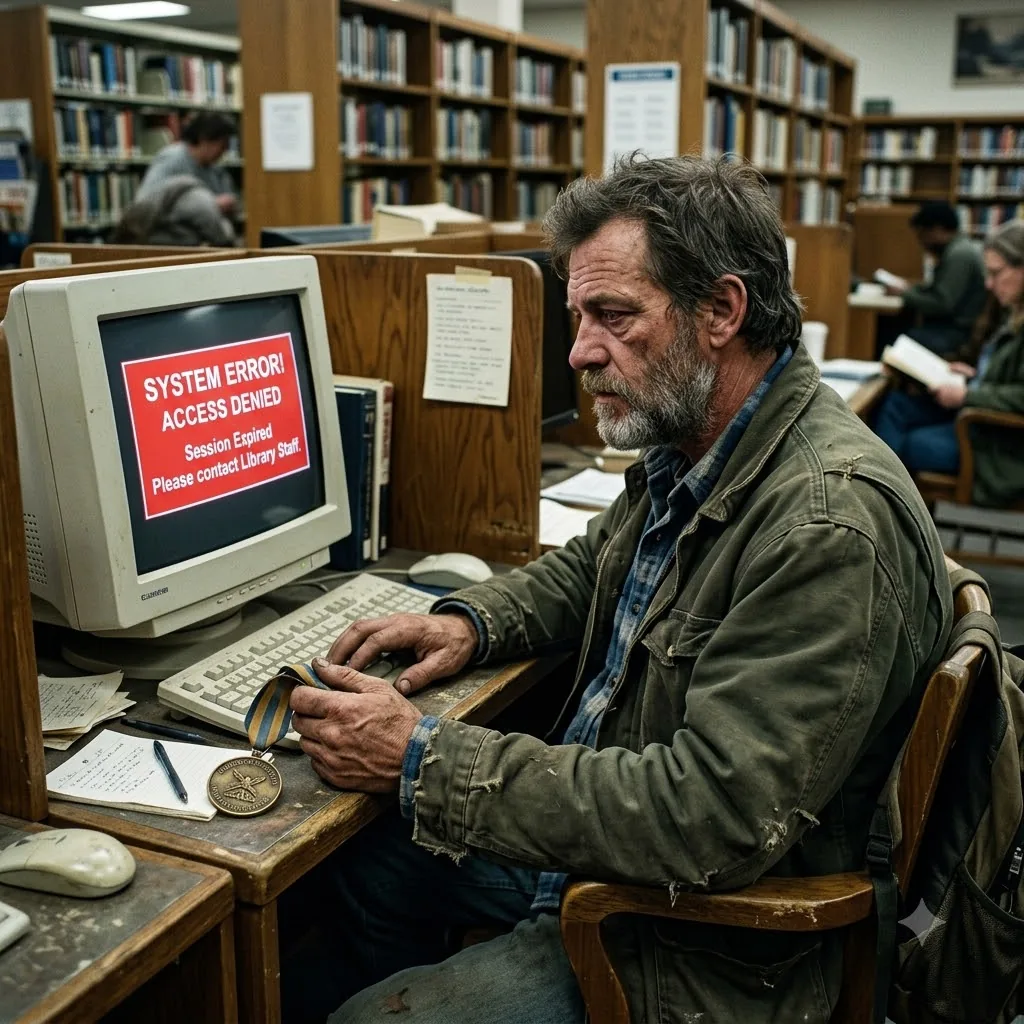
Story code: ST-000798
Part 4: The Price of Ash
The crinkly paper of the examination table was loud in the quiet, sterile room. Teo sat perfectly still, staring at the manila folder resting on his knees. Inside the folder was a cashier’s check for eighteen thousand dollars in back pay and civil damages, resting neatly beneath a formal offer of employment printed on heavy, cream-colored state stationery.
It had taken seven months. Seven months since the dead silence in the High Desert Community Center, broken only by the frantic flashing of a local reporter’s smartphone camera. The video of Teo dropping his brass commendation over Director Corliss’s home address had spread beyond the county line before midnight. By the end of that week, Corliss had taken a quiet, early retirement. By the end of the month, Assemblyman Hayes had introduced an emergency amendment to the Liability Act, carving out a strict legal exception for felons with documented state fire commendations. A pro-bono employment lawyer had handled the rest, dragging the forestry department through arbitration until their legal team folded.
Teo had won. The impenetrable digital wall had been torn down. The state hiring portal now featured a secondary box to check for inmate fire service, triggering a manual human review.
The clinic door clicked open, and an occupational health physician walked in, holding a plastic clipboard. He was an older man with tired eyes, wearing a white coat over a wrinkled blue shirt.
“Alright, Teo,” the doctor said, not looking up as he flipped through a stack of dot-matrix printouts. “We just need to go over the results of your spirometry test and the chest X-rays to sign off on your physical fitness clearance. Standard HR procedure for all state field inspectors.”
Teo nodded. His chest felt tight, but it had felt tight for three years. He had learned to ignore the dull, persistent ache behind his ribs, assuming it was just the lingering cost of doing business in the canyons.
The doctor pulled a rolling stool out and sat down, finally looking up. His expression wasn’t bureaucratic. It was heavy, settling into a look of professional pity that made Teo’s stomach tighten.
“When you were on the inmate handcrews,” the doctor started, tapping a pen against the clipboard. “What kind of respiratory protection did they issue you for active fire lines?”
“None,” Teo said, his voice flat. “We weren’t municipal. We didn’t get SCBA oxygen tanks or filtered respirators. They gave us cotton bandanas and told us to pull them over our mouths when the wind shifted.”
The doctor let out a slow breath. He turned the clipboard around so Teo could see the complex web of clouded gray shadows on the X-ray printout.
“The human lung is a sponge,” the doctor said quietly. “When you spend three years inhaling pulverized ash, superheated air, and the vaporized chemicals of burning residential structures… that sponge hardens. You have extensive, irreversible pulmonary fibrosis. Severe scarring, deep in the lower lobes.”
Teo stared at the gray clouds on the paper. “I can still hike. I can still swing an axe.”
“Your FEV1-the volume of air you can force out of your lungs in one second-is sitting at fifty-eight percent of a normal baseline,” the doctor replied, pointing to a graph beneath the X-ray. “The forestry department’s minimum medical threshold for a field inspector is eighty-five percent. If you exert yourself in a high-stress environment, your oxygen saturation is going to crash. You are a walking risk for acute respiratory failure.”
The fluorescent light of the clinic buzzed overhead. It sounded exactly like the lights in the public library where Teo had first tried to apply.
“I beat the background check,” Teo said, his voice dropping into a low, gravelly register. “I fought them for seven months. I have the offer letter right here.”
“You do,” the doctor agreed gently. “And I’m sorry. But I am legally required to stamp this medical evaluation as a fail. You are permanently disqualified from field service.”
The doctor left the room a few minutes later, leaving the signed medical rejection form on the desk. Teo didn’t move for a long time.
Eventually, he slid off the exam table. He gathered up the state’s formal job offer, the settlement check, and the medical failure notice, folding them all together and sliding them into the inside pocket of his faded canvas jacket.
Stepping out of the clinic, Teo was hit by the brutal afternoon heat. He walked to the edge of the sidewalk and sat down on a concrete transit bench. Cars blurred past, kicking up dust and exhaust.
He reached into his other pocket and pulled out the brass commendation. The Governor’s seal gleamed in the harsh sunlight. Teo ran his calloused thumb over the raised metal ridges.
He had beaten Corliss. He had beaten the algorithm. He had forced the state of California to look him in the eye and admit that his sweat and blood were worth the same as any civilian’s. The eighteen-thousand-dollar check in his pocket meant he could put down first and last month’s rent on a real apartment. He wouldn’t have to worry about his parole officer flagging him for vagrancy. He had won the war.
But as Teo took a deep breath of the dry city air, a sharp, ragged cough rattled in his chest. The spasm echoed deep in his scarred lungs, a permanent souvenir from the San Dimas canyon. The state had finally given him his second chance, but only after they had already taken the breath he needed to live it.
Teo leaned back against the hot concrete bench, closed his eyes, and listened to the hollow, wheezing rhythm of his own chest.