Story code: ST-000809
Part 4: The Negative Balance
The silence stretched so long that the climate control kicked off with a heavy shudder, leaving the office in a stifling, suffocating stillness. Thorne didn’t yell. He didn’t throw the fellowship paperwork or scream about his ruined kitchen remodel. The fight drained out of him all at once, like water escaping a cracked glass.
He reached out, his pale fingers catching the edge of the heavy, cream-colored cardstock. He pulled the fifty-thousand-dollar lifeline back across the mahogany desk, folded it sharply in half, and let it drop into the brass wastebasket at his feet. The thud of the thick paper hitting the metal sounded incredibly loud in the quiet room.
“You think you’ve won,” he said. His voice was no longer a roar or a desperate plea. It was a dry, hollow rasp.
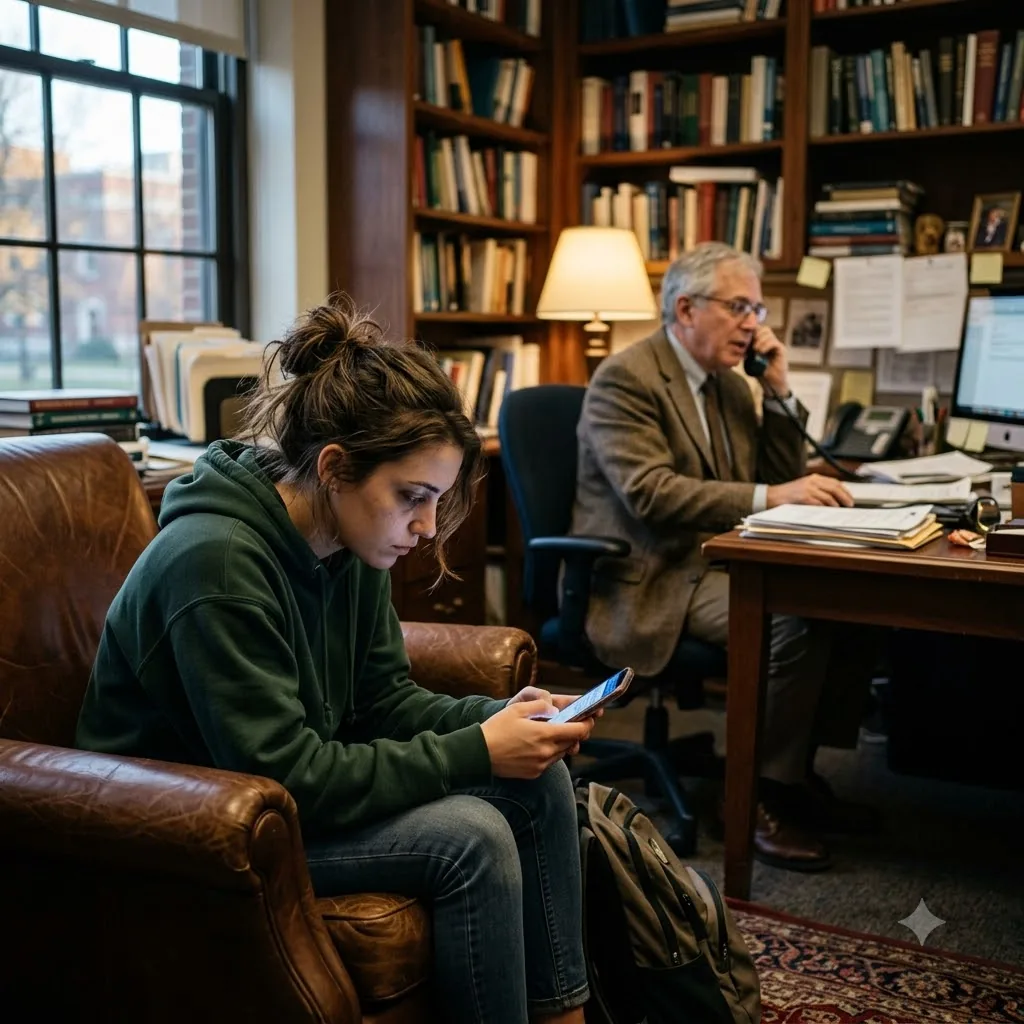
I didn’t speak. I just watched as he pushed his chair back. The thousand-dollar Herman Miller wheels squeaked slightly against the Persian rug. He stood up, turning his back to me, and walked over to the sprawling oak bookcase that dominated the far wall.
He reached for a stack of folded cardboard bankers boxes resting in the bottom corner-leftovers from the department archives. He snapped one open, the loud rip of cardboard echoing off the glass walls.
“The Dean is sending security up at noon to officially escort me off campus,” Thorne murmured, pulling down a row of leather-bound academic journals and dropping them into the box. *Thump. Thump.* “I suppose I should thank you for giving me a three-hour head start to collect my personal effects.”
I sat motionless on the rigid wooden stool. The adrenaline that had carried me through the confrontation was rapidly evaporating, leaving behind a familiar, gnawing ache in my empty stomach.
“Apex Therapeutics is going to sue me into oblivion,” Thorne continued, taking down a framed photograph of himself shaking hands with a Nobel laureate. He didn’t even look at the picture before tossing it face-down into the box. “My career is over. I will likely have to sell the house to cover the legal fees. But what do you think is going to happen to you, Maya?”
He finally turned to look at me. His eyes were devoid of anger now, filled instead with a cold, pitying clarity.
“You are a fourth-year graduate student whose entire research portfolio is tied to a disgraced lab,” he said, leaning heavily against the bookcase. “Every data point you’ve gathered for your dissertation is now compromised by association. And my recommendation letter-the one you spent two years starving for-is now completely radioactive. No post-doc program in the country will touch a candidate endorsed by Richard Thorne.”
My throat tightened. I wanted to tell him he was wrong. I wanted to say that the ethics board would protect me, that my integrity would be rewarded. But I knew the brutal mechanics of academia just as well as he did. Whistleblowers weren’t heroes in this ecosystem; they were liabilities.
“You burned my house down,” Thorne said quietly, turning back to his books. “But you were locked inside it when you struck the match.”
He reached for the brass clock on his shelf. The rhythmic ticking abruptly stopped as he shoved it into the cardboard box. The sudden absence of the sound left a ringing emptiness in the seventy-four-degree air.
My phone vibrated in my coat pocket. I reached in and pulled it out, my thumb brushing the cracked glass. It was an automated text from my landlord. *Rent is due today. Late fees apply after the 3rd.*
My bank account was still overdrawn by forty-two dollars. I had three dollars in quarters rattling in the bottom of my backpack. Rent was eight hundred. I had exactly seventy-two hours before a bright orange eviction notice would be taped to my apartment door. With the bursar’s office freezing all accounts tied to Thorne’s lab, my only source of income had just evaporated.
I watched Thorne carefully place his silver Montblanc pen into its velvet-lined case. He was a disgraced fraud, facing corporate lawsuits and academic exile. But he was packing up a pen worth more than my monthly rent. He would hire expensive lawyers. He would retreat to his house with the delayed Calacatta marble countertops. He would fall back on his family’s trust fund. He was ruined, but he would never go hungry.
I stood up from the wooden stool. My legs felt like lead, heavy and uncoordinated from the lingering sleep deprivation and the sheer lack of calories. My spine ached where it had been pressed against the rigid wood.
“Goodbye, Dr. Thorne,” I said. My voice sounded remarkably steady, completely detached from the rising, suffocating panic in my chest.
He didn’t reply. He just kept pulling books off the shelf, the heavy thuds of text against cardboard tracking my footsteps as I walked out of the office.
The hallway outside was empty. The fluorescent lights buzzed overhead, casting long, sterile shadows against the linoleum. I pushed through the heavy double doors at the end of the corridor and stepped out into the biting November air.
The freezing sleet hadn’t stopped. It hit my face like tiny shards of glass, instantly soaking into the collar of my cheap sweater. I pulled my thin coat tighter around my shoulders and began the four-mile walk back to an apartment I was about to lose, armed with nothing but the absolute certainty that I had told the truth.