Story code: ST-000824
Part 3: The Pitch
Elias’s heavy hand clamped down on Marcus’s shoulder, thick fingers digging into the muscle near his collarbone. “You,” Elias breathed, the word vibrating with a terrifying, contained fury. “You built the machine that’s throwing us onto the street.”
“Not for this!” Marcus choked out. He tried to stand, but Elias’s grip pinned him to the squeaking desk chair. Marcus reached frantically for the keyboard with his free hand, dragging the mouse away from the horrifying landlord dashboard. “I wrote the formatting script at Apex, yes. But the engine itself-I built that with my old dev partner, Leo. Look at the screen!”
He brought up an archived GitHub repository, the interface displaying columns of old code and timestamped notes. “The project was called SafetyNet. It was open-source. We designed it to predict when at-risk families would hit financial zero, so local mutual aid funds could step in and pay the rent before the grace periods expired.”
Sarah leaned closer, her eyes scanning the lines of green text. She pointed to a commit log from three years ago. “It says ‘Adjusted vulnerability tier logic to maximize early intervention.’ That’s your name next to it.”
“Exactly,” Marcus said, his heart hammering against his ribs. “It was a community defense app. But Leo vanished a year ago. He took the repository private and locked me out. He must have stripped the mutual aid triggers, inverted the logic, and repackaged it as a B2B eviction engine.”
“And now he’s running it for Onyx,” Elias growled, finally releasing Marcus’s shoulder. “Where is he?”
Marcus opened a new browser tab and pulled up a tech networking site. A glossy banner ad filled the screen. “He’s at the Catalyst Incubator downtown. Today is Series A pitch day. He’s looking for private equity backing to scale this across the city.”
Forty-five minutes later, Marcus pushed through the revolving glass doors of the Catalyst Incubator, with Sarah and Elias flanked tightly beside him. The building was a sterile monument to venture capital, all polished concrete floors, exposed ductwork, and floor-to-ceiling glass walls. The air smelled of expensive espresso and ozone. Beside the sleek tech-bros in Patagonia vests and tailored sneakers, Elias looked like a wrecking ball in his grease-stained work jacket, and Sarah’s worn winter coat radiated quiet hostility.
“Third floor,” Marcus muttered, checking the digital directory glowing on a minimalist kiosk. “Conference Room B.”
They took the glass elevator in tense silence. Marcus’s palms were slick with sweat. He was about to walk into a room full of people who bought and sold neighborhoods for sport. When the doors slid open, they stepped into a hushed, carpeted lobby. Through the massive glass wall of Conference Room B, Marcus saw him.
Leo stood at the head of a long, white oak table, wearing a crisp charcoal turtleneck and projecting a polished, arrogant confidence. Behind him, a massive digital display showed a sleek presentation titled: *YieldMax: Predictive Asset Optimization.* Three men in sharp, custom suits sat at the table, steepling their fingers as they examined leather-bound pitch decks.
“He’s pitching the IP,” Marcus whispered. “He’s telling them he owns the proprietary code.”
“Let’s go break his jaw,” Elias said, taking a heavy step forward.
“No,” Marcus hissed, catching Elias by the arm. “If you hit him, we go to jail, and the algorithm keeps running. These guys only care about liability. If I can prove the core engine is stolen, open-source code under a strict GPL license, it becomes legally radioactive. They won’t touch it.”
Marcus pulled his lightweight laptop from his messenger bag. He knelt beside a sleek lounge sofa in the hallway, out of sight of the glass walls, and cracked the laptop open. He didn’t need to hack the presentation system; he recognized the incubator’s default AirTame casting hardware. He had pitched in these exact rooms years ago. The casting network was segregated, but the default admin password for the room’s node was practically an industry joke.
He typed the default credentials into the casting portal. The connection icon turned green.
Inside the conference room, Leo tapped his presentation clicker. “As you can see, gentlemen, our proprietary algorithm identifies sub-prime tenant volatility with ninety-eight percent accuracy, allowing property managers to initiate turnover exactly when delinquency risk peaks-”
Marcus hit the cast button.
Leo’s sleek, minimalist slide vanished. In its place, projected ten feet high and blindingly bright, was Marcus’s archived GitHub terminal.
The three private equity backers jolted in their ergonomic chairs, blinking at the dense wall of raw code that suddenly dominated the room. Leo froze, his thumb hovering uselessly over the clicker. He tapped it twice. Nothing happened. Marcus had locked the casting stream.
Marcus stood up from behind the sofa, pushed open the heavy glass door of the conference room, and walked in. Sarah and Elias stepped in right behind him, blocking the exit.
“Having some technical difficulties, Leo?” Marcus asked, his voice echoing loudly in the pristine room.
Leo’s face drained of all color. He stared at Marcus, then looked in sheer panic at the giant projection of the GitHub logs behind him.
“Who the hell are you?” the lead investor demanded, rising from his chair.
“I’m the original author of the code he’s pitching you,” Marcus said, walking toward the head of the table. He pointed up at the screen. “That’s my commit log from three years ago. The algorithm he’s calling ‘YieldMax’ is actually a stolen, open-source community defense app called SafetyNet. If you look at line 402 on the screen, you’ll see the original trigger logic was designed to notify mutual aid charities, not eviction lawyers.”
“Security,” Leo stammered, stepping backward until his shoulder hit the whiteboard. “Get security.”
“The code is licensed under the GNU General Public License,” Marcus continued, ignoring him, speaking directly to the furious investors. “Which means any software built upon it must also be free and open-source by law. He doesn’t own the IP. If you invest a single dime into Onyx Property Holdings, you are buying a stolen, legally unenforceable product. The moment his tenant base files a class-action discovery request, your entire investment burns.”
The lead investor turned slowly to look at Leo. “Is this true?”
“It’s-it’s a disgruntled former contractor,” Leo lied, his voice pitching up an octave, beads of sweat breaking out across his forehead. “He’s trying to extort us. The codebase was completely rewritten!”
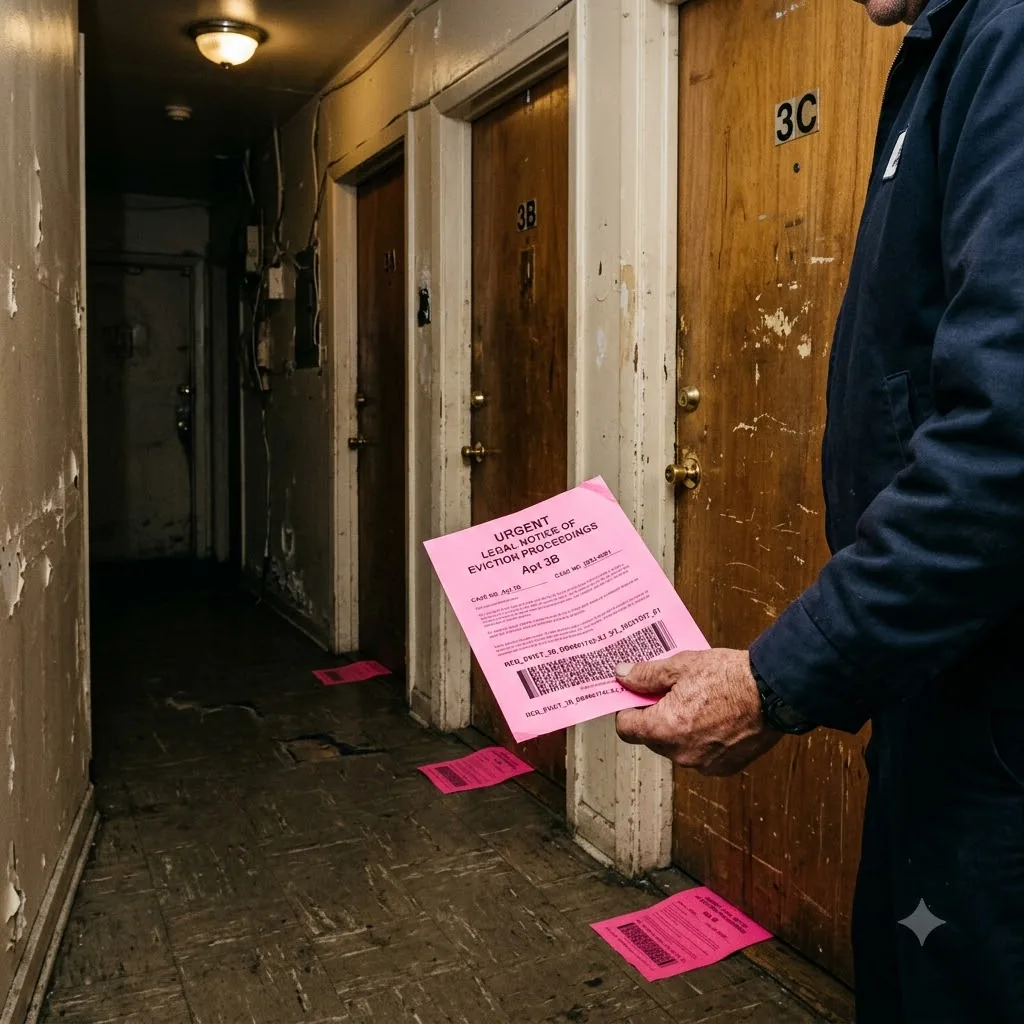
“Was it?” Marcus asked softly. He tapped a key on his laptop, scrolling the giant projection down to the footer-generation module. “Then why does your proprietary, million-dollar B2B software still use my exact, unorthodox bracket syntax for the database hashes? The same hashes you taped to Mrs. Gable’s door this morning?”
Leo opened his mouth, but no sound came out. The room fell dead silent, the only noise the hum of the projector fan as the glaring, undeniable evidence of the stolen commit log washed over Leo’s pale, panicked face.