Story code: ST-000830
Part 1: The Stolen Stroke
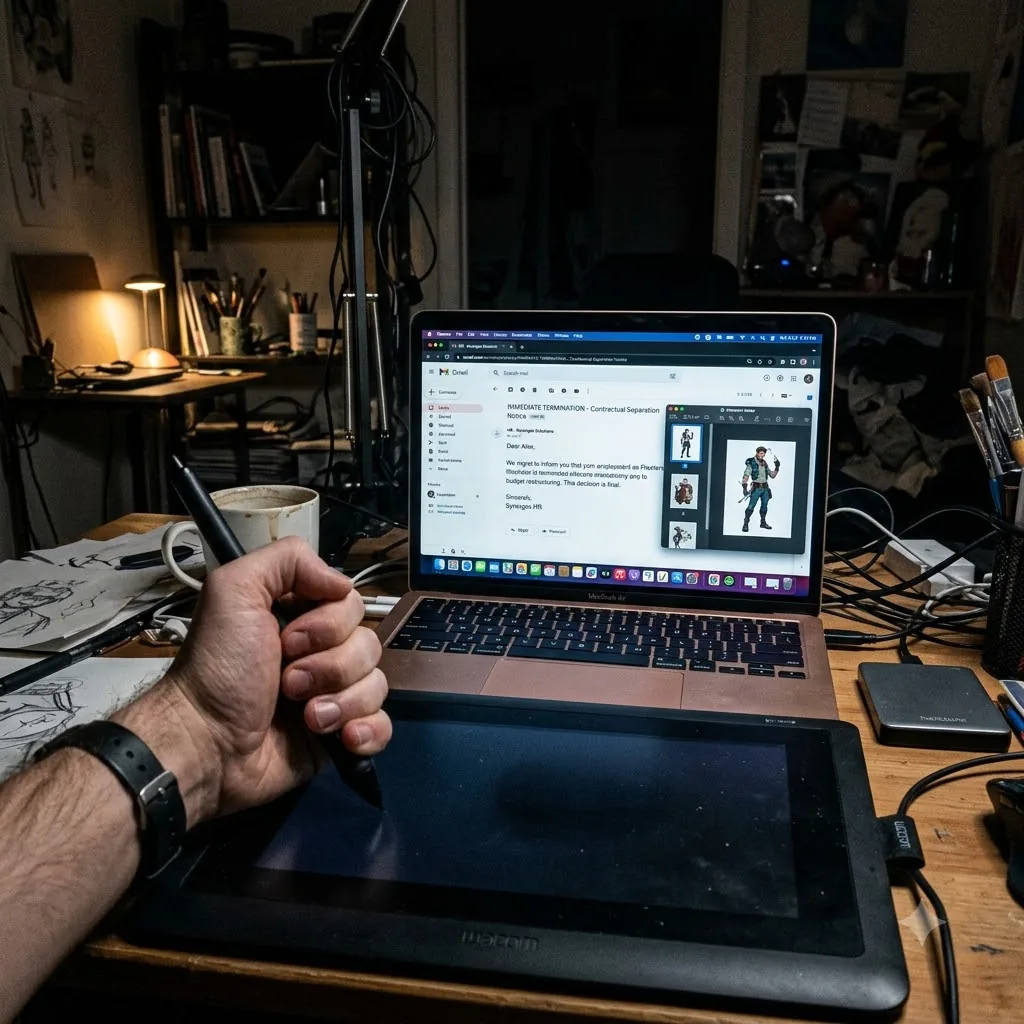
The chime of my inbox breaks the dead silence of my studio apartment. It is a three-line email from Sentinel Media, the corporate anchor client that has kept the lights on for two years, terminating my monthly retainer effective immediately. They cite a sudden shift in their creative pipeline. Attached at the bottom is a fifty-page pitch deck they say they generated internally to demonstrate their new, streamlined brand direction.
I click the PDF, and my lungs seize.
The title slide fills my monitor. Across the header is a sweeping, jagged watercolor stroke in deep cerulean blue. It possesses the exact hesitation at the curve of the arc, the same slight pooling of pigment where I always lift my brush a fraction of a second too late. It is my signature flaw, the one my art school professors tried to train out of me. It is the imperfection that makes my work undeniably mine. But I never painted this file.
My hand trembles on the mouse as I scroll to the next slide, then the next. Every single page of the corporate deck is saturated with my stolen identity. There are charcoal architectural sketches featuring the distinct, heavy-handed smudging technique I use to mask my left-handed drag. There are ink washes replicating the custom, erratic stippling I developed over a decade of desperate freelance hustling. The machine even replicated the way I dilute India ink to create a specific, stormy gray gradient. Sentinel Media has not merely replaced me with a cheaper alternative. They have fed my entire digital portfolio into a machine and extracted my ghost to perform for them forever.
The quiet in my apartment turns suffocating, pressing against my eardrums. Sentinel represented sixty percent of my annual income. They were the safety net that allowed me to buy groceries without checking my bank balance first. Without that direct deposit next week, I have exactly twenty days before my landlord posts an eviction notice on my door. I stare at the screen, watching my cursor hover over the cold, sterile termination clause. The email is signed by an automated HR routing address, offering no human contact, no apology, and no recourse. Below the sign-off, the metadata stamped onto the pitch deck mockups proudly broadcasts the name of the software they used to replace me.
It is Genesis-Nine, the flagship image generation engine owned by Elias Thorne.
Thorne is the Silicon Valley billionaire who spent the entire last year on a global press tour, bragging about democratizing human imagination. He sat on velvet chairs on late-night television, claiming his algorithm would free creatives from the drudgery of commercial production. He never mentioned that his machine was built by harvesting our bones. He never admitted that his artificial intelligence was entirely dependent on scraping the copyrighted lifeblood of working artists without permission or compensation.
I zoom in on slide fourteen. I enlarge a digital brushstroke until the crisp vector lines blur into a mosaic of stolen labor. The algorithm is so thorough it even copied a tiny, microscopic fleck of dried titanium white that I accidentally dragged across my canvas in a piece I uploaded to my public gallery three years ago. The machine did not just learn my style. It learned my mistakes, cataloged my physical limitations, and commodified them at scale. The sheer volume of it makes my stomach turn. I spent eighty hours agonizing over the original piece. Genesis-Nine generated a lifetime of my work in four seconds, stripping away the soul and leaving only a flawless, dead replication.
I push my ergonomic chair back and stand up. Across the room, my physical paint tubes sit in a battered wooden crate, looking utterly obsolete. I pick up a number ten round brush, feeling the worn wood where my thumb has rested every day since I was nineteen. It feels like a useless relic from a dead era. Thorne built a digital slaughterhouse that swallowed my identity whole, reducing fifteen years of bruised fingers, toxic fumes, and poverty to a server calculation. He is smiling on the cover of financial magazines this month, talking about the friction-free future of art. My ruined livelihood is the friction he eliminated.
I drop the brush onto the hardwood floor. It clatters loudly, breaking the spell. The sheer terror of impending eviction burns away, replaced entirely by a cold, vibrating rage. I walk back to my desk and open a new browser tab. I bypass my usual gig boards and freelance forums. Instead, I type in the name of the most predatory, ruinously expensive intellectual property litigation firm in the city.
Their website is a monolith of dark marble backgrounds and aggressive serif fonts. They do not advertise settlements or polite mediation. They promise absolute corporate destruction for copyright infringement. I am a lone gig worker with four hundred dollars in my checking account and a portfolio that no longer belongs to me. Trying to corner a man with a private island, infinite server farms, and an army of retainers is absolute financial suicide.
I pick up my phone and tap the contact number anyway. The dial tone rings against my ear, loud and metallic in the silence of my stolen career. A receptionist picks up, stating the name of the firm before demanding my billing code. I grip the receiver and speak my name.
The chime of my inbox breaks the dead silence of my studio apartment. It is a three-line email from Sentinel Media, the corporate anchor client that has kept the lights on for two years, terminating my monthly retainer effective immediately. They cite a sudden shift in their creative pipeline. Attached at the bottom is a fifty-page pitch deck they say they generated internally to demonstrate their new, streamlined brand direction.
I click the PDF, and my lungs seize.
The title slide fills my monitor. Across the header is a sweeping, jagged watercolor stroke in deep cerulean blue. It possesses the exact hesitation at the curve of the arc, the same slight pooling of pigment where I always lift my brush a fraction of a second too late. It is my signature flaw, the one my art school professors tried to train out of me. It is the imperfection that makes my work undeniably mine. But I never painted this file.
My hand trembles on the mouse as I scroll to the next slide, then the next. Every single page of the corporate deck is saturated with my stolen identity. There are charcoal architectural sketches featuring the distinct, heavy-handed smudging technique I use to mask my left-handed drag. There are ink washes replicating the custom, erratic stippling I developed over a decade of desperate freelance hustling. The machine even replicated the way I dilute India ink to create a specific, stormy gray gradient. Sentinel Media has not merely replaced me with a cheaper alternative. They have fed my entire digital portfolio into a machine and extracted my ghost to perform for them forever.
The quiet in my apartment turns suffocating, pressing against my eardrums. Sentinel represented sixty percent of my annual income. They were the safety net that allowed me to buy groceries without checking my bank balance first. Without that direct deposit next week, I have exactly twenty days before my landlord posts an eviction notice on my door. I stare at the screen, watching my cursor hover over the cold, sterile termination clause. The email is signed by an automated HR routing address, offering no human contact, no apology, and no recourse. Below the sign-off, the metadata stamped onto the pitch deck mockups proudly broadcasts the name of the software they used to replace me.
It is Genesis-Nine, the flagship image generation engine owned by Elias Thorne.
Thorne is the Silicon Valley billionaire who spent the entire last year on a global press tour, bragging about democratizing human imagination. He sat on velvet chairs on late-night television, claiming his algorithm would free creatives from the drudgery of commercial production. He never mentioned that his machine was built by harvesting our bones. He never admitted that his artificial intelligence was entirely dependent on scraping the copyrighted lifeblood of working artists without permission or compensation.
I zoom in on slide fourteen. I enlarge a digital brushstroke until the crisp vector lines blur into a mosaic of stolen labor. The algorithm is so thorough it even copied a tiny, microscopic fleck of dried titanium white that I accidentally dragged across my canvas in a piece I uploaded to my public gallery three years ago. The machine did not just learn my style. It learned my mistakes, cataloged my physical limitations, and commodified them at scale. The sheer volume of it makes my stomach turn. I spent eighty hours agonizing over the original piece. Genesis-Nine generated a lifetime of my work in four seconds, stripping away the soul and leaving only a flawless, dead replication.
I push my ergonomic chair back and stand up. Across the room, my physical paint tubes sit in a battered wooden crate, looking utterly obsolete. I pick up a number ten round brush, feeling the worn wood where my thumb has rested every day since I was nineteen. It feels like a useless relic from a dead era. Thorne built a digital slaughterhouse that swallowed my identity whole, reducing fifteen years of bruised fingers, toxic fumes, and poverty to a server calculation. He is smiling on the cover of financial magazines this month, talking about the friction-free future of art. My ruined livelihood is the friction he eliminated.
I drop the brush onto the hardwood floor. It clatters loudly, breaking the spell. The sheer terror of impending eviction burns away, replaced entirely by a cold, vibrating rage. I walk back to my desk and open a new browser tab. I bypass my usual gig boards and freelance forums. Instead, I type in the name of the most predatory, ruinously expensive intellectual property litigation firm in the city.
Their website is a monolith of dark marble backgrounds and aggressive serif fonts. They do not advertise settlements or polite mediation. They promise absolute corporate destruction for copyright infringement. I am a lone gig worker with four hundred dollars in my checking account and a portfolio that no longer belongs to me. Trying to corner a man with a private island, infinite server farms, and an army of retainers is absolute financial suicide.
I pick up my phone and tap the contact number anyway. The dial tone rings against my ear, loud and metallic in the silence of my stolen career. A receptionist picks up, stating the name of the firm before demanding my billing code. I grip the receiver and speak my name.