Story code: ST-000833
Part 1: A Rounding Error
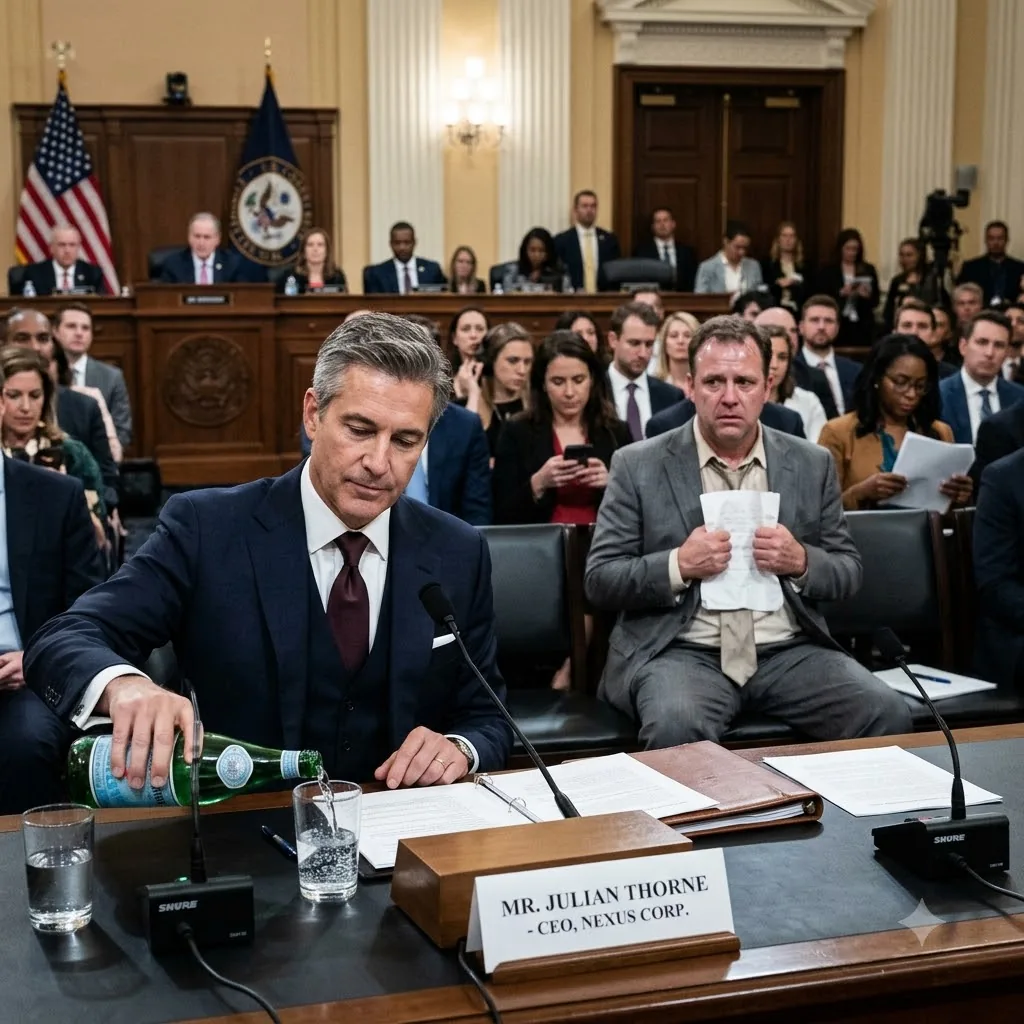
The sterile hum of the Senate committee room air conditioning masked the sound of Marcus Vance pouring sparkling water from a crystal carafe at the witness table. Three rows back in the gallery, Greg’s cheap polyester suit jacket clung to his sweat-drenched shoulders as his right hand choked the life out of a single, folded piece of paper. The contrast between them was drawn in the sharp lines of Vance’s bespoke wool and the frayed cuffs resting on Greg’s knees.
Flashbulbs erupted in a silent, strobe-light frenzy near the press pit. Vance set his glass down, the ice clinking against the rim with sharp, expensive clarity. He leaned toward the microphone, his posture radiating the relaxed confidence of a man who viewed a congressional subpoena as a minor inconvenience.
“Chairman, the recent retail market crash was an unfortunate byproduct of uninformed enthusiasm,” Vance said. His voice was a smooth, practiced baritone that echoed off the high ceiling. “Our algorithms simply corrected an irrational exuberance driven by amateur traders who fundamentally misunderstood the mechanics of leveraged capital.”
Greg’s thumb rubbed the sharp crease of the paper in his lap. The document was damp with his sweat. He stared at the back of Vance’s perfectly trimmed neck. The haircut alone probably cost more than the remaining balance in Greg’s checking account. There was a dull thud behind Greg’s eyes, a stress headache building for three weeks since the trading screens turned red and his life savings vanished into the ether of Vance’s platform.
A senator leaned forward on the dais. “Mr. Vance, I expect you to address the middle-class families who lost their homes due to your firm’s margin calls.”
Vance did not flinch. He did not shift in his leather chair. He merely reached out and adjusted the angle of his microphone by a fraction of an inch. “Senator, the free market is a harsh teacher. We provide a platform. We do not provide financial literacy courses. The capital lost was, in the grand scheme of institutional liquidity, a rounding error.”
A rounding error.
The words hung in the sterile air, heavy and suffocating. Greg felt a bitter surge of bile rise in his throat. He thought of the empty house, the cardboard boxes piled in the driveway, the inescapable weight of a negative balance. He looked down at the piece of paper in his hand again. It was heavily creased, the edges soft and gray from being carried in his coat pocket for five sleepless days. It was not a printed manifesto or a legal summons.
He squeezed it tighter, his knuckles turning a stark, bloodless white against the dark fabric of his trousers. The Capitol Police security detail flanking the aisle stood still, earpieces coiled tight against their necks. They scanned the crowd, their eyes sliding right past Greg. He was invisible to them. He was just a middle-aged guy in an off-the-rack suit with bad posture, another defeated spectator blending into the velvet upholstery of the gallery.
Vance continued his testimony, delivering a clinical masterclass in corporate deflection. He spoke of fiduciary duty, automated market stabilization mechanisms, and strict regulatory compliance. Every polished word was a brick in an impenetrable wall of legal and financial insulation. He sat in his chair, a billionaire protected by armies of lawyers, powerful lobbyists, and the unstoppable momentum of massive wealth.
Greg’s breathing turned incredibly shallow. The air in the packed gallery felt thick with the overwhelming scent of floor wax, ozone from the cameras, and stale cologne. The man sitting next to Greg shifted uncomfortably, sensing his radiating quiet fury, leaning away to pull his briefcase closer to his chest.
“I want the committee to understand our deep commitment to implementing future safeguards,” Vance said, steepling his manicured fingers on the green felt table. “We are currently developing new warning prompts for our non-institutional users.”
Greg slowly brought his hands up, resting his forearms on the low wooden partition separating the gallery from the main floor. He placed the folded paper flat against the wood. The dampness from his palm left a dark, fleeting smudge on the pristine mahogany surface.
The senator at the center of the dais struck his wooden gavel once. “We will now proceed with reviewing the internal company emails provided yesterday by your chief compliance officer.”
Vance reached for his sparkling water again. He brought the crystal rim to his lips, his gaze drifting lazily upward toward the gallery. He scanned the faces of the people he had ruined with the detached, mild curiosity of a tourist observing wildlife.
His eyes swept past the cluster of hungry reporters, past the nervous legislative interns, and stopped abruptly on the third row.
Greg did not look away. He maintained dead eye contact. Without breaking the stare, he dragged his index finger across the folded paper, sliding it forward exactly one inch on the partition.
Vance froze with the glass pressed hard against his mouth.
The water stopped flowing. Vance’s hand trembled, just a fraction of an inch, the ice clinking violently against the crystal. The billionaire’s perfectly manufactured composure shattered as he stared directly at the tiny, unremarkable square of paper sitting under Greg’s hand.
Vance dropped the glass onto the table.
The sterile hum of the Senate committee room air conditioning masked the sound of Marcus Vance pouring sparkling water from a crystal carafe at the witness table. Three rows back in the gallery, Greg’s cheap polyester suit jacket clung to his sweat-drenched shoulders as his right hand choked the life out of a single, folded piece of paper. The contrast between them was drawn in the sharp lines of Vance’s bespoke wool and the frayed cuffs resting on Greg’s knees.
Flashbulbs erupted in a silent, strobe-light frenzy near the press pit. Vance set his glass down, the ice clinking against the rim with sharp, expensive clarity. He leaned toward the microphone, his posture radiating the relaxed confidence of a man who viewed a congressional subpoena as a minor inconvenience.
“Chairman, the recent retail market crash was an unfortunate byproduct of uninformed enthusiasm,” Vance said. His voice was a smooth, practiced baritone that echoed off the high ceiling. “Our algorithms simply corrected an irrational exuberance driven by amateur traders who fundamentally misunderstood the mechanics of leveraged capital.”
Greg’s thumb rubbed the sharp crease of the paper in his lap. The document was damp with his sweat. He stared at the back of Vance’s perfectly trimmed neck. The haircut alone probably cost more than the remaining balance in Greg’s checking account. There was a dull thud behind Greg’s eyes, a stress headache building for three weeks since the trading screens turned red and his life savings vanished into the ether of Vance’s platform.
A senator leaned forward on the dais. “Mr. Vance, I expect you to address the middle-class families who lost their homes due to your firm’s margin calls.”
Vance did not flinch. He did not shift in his leather chair. He merely reached out and adjusted the angle of his microphone by a fraction of an inch. “Senator, the free market is a harsh teacher. We provide a platform. We do not provide financial literacy courses. The capital lost was, in the grand scheme of institutional liquidity, a rounding error.”
A rounding error.
The words hung in the sterile air, heavy and suffocating. Greg felt a bitter surge of bile rise in his throat. He thought of the empty house, the cardboard boxes piled in the driveway, the inescapable weight of a negative balance. He looked down at the piece of paper in his hand again. It was heavily creased, the edges soft and gray from being carried in his coat pocket for five sleepless days. It was not a printed manifesto or a legal summons.
He squeezed it tighter, his knuckles turning a stark, bloodless white against the dark fabric of his trousers. The Capitol Police security detail flanking the aisle stood still, earpieces coiled tight against their necks. They scanned the crowd, their eyes sliding right past Greg. He was invisible to them. He was just a middle-aged guy in an off-the-rack suit with bad posture, another defeated spectator blending into the velvet upholstery of the gallery.
Vance continued his testimony, delivering a clinical masterclass in corporate deflection. He spoke of fiduciary duty, automated market stabilization mechanisms, and strict regulatory compliance. Every polished word was a brick in an impenetrable wall of legal and financial insulation. He sat in his chair, a billionaire protected by armies of lawyers, powerful lobbyists, and the unstoppable momentum of massive wealth.
Greg’s breathing turned incredibly shallow. The air in the packed gallery felt thick with the overwhelming scent of floor wax, ozone from the cameras, and stale cologne. The man sitting next to Greg shifted uncomfortably, sensing his radiating quiet fury, leaning away to pull his briefcase closer to his chest.
“I want the committee to understand our deep commitment to implementing future safeguards,” Vance said, steepling his manicured fingers on the green felt table. “We are currently developing new warning prompts for our non-institutional users.”
Greg slowly brought his hands up, resting his forearms on the low wooden partition separating the gallery from the main floor. He placed the folded paper flat against the wood. The dampness from his palm left a dark, fleeting smudge on the pristine mahogany surface.
The senator at the center of the dais struck his wooden gavel once. “We will now proceed with reviewing the internal company emails provided yesterday by your chief compliance officer.”
Vance reached for his sparkling water again. He brought the crystal rim to his lips, his gaze drifting lazily upward toward the gallery. He scanned the faces of the people he had ruined with the detached, mild curiosity of a tourist observing wildlife.
His eyes swept past the cluster of hungry reporters, past the nervous legislative interns, and stopped abruptly on the third row.
Greg did not look away. He maintained dead eye contact. Without breaking the stare, he dragged his index finger across the folded paper, sliding it forward exactly one inch on the partition.
Vance froze with the glass pressed hard against his mouth.
The water stopped flowing. Vance’s hand trembled, just a fraction of an inch, the ice clinking violently against the crystal. The billionaire’s perfectly manufactured composure shattered as he stared directly at the tiny, unremarkable square of paper sitting under Greg’s hand.
Vance dropped the glass onto the table.