Story code: ST-000848
Part 1: Version Mismatch
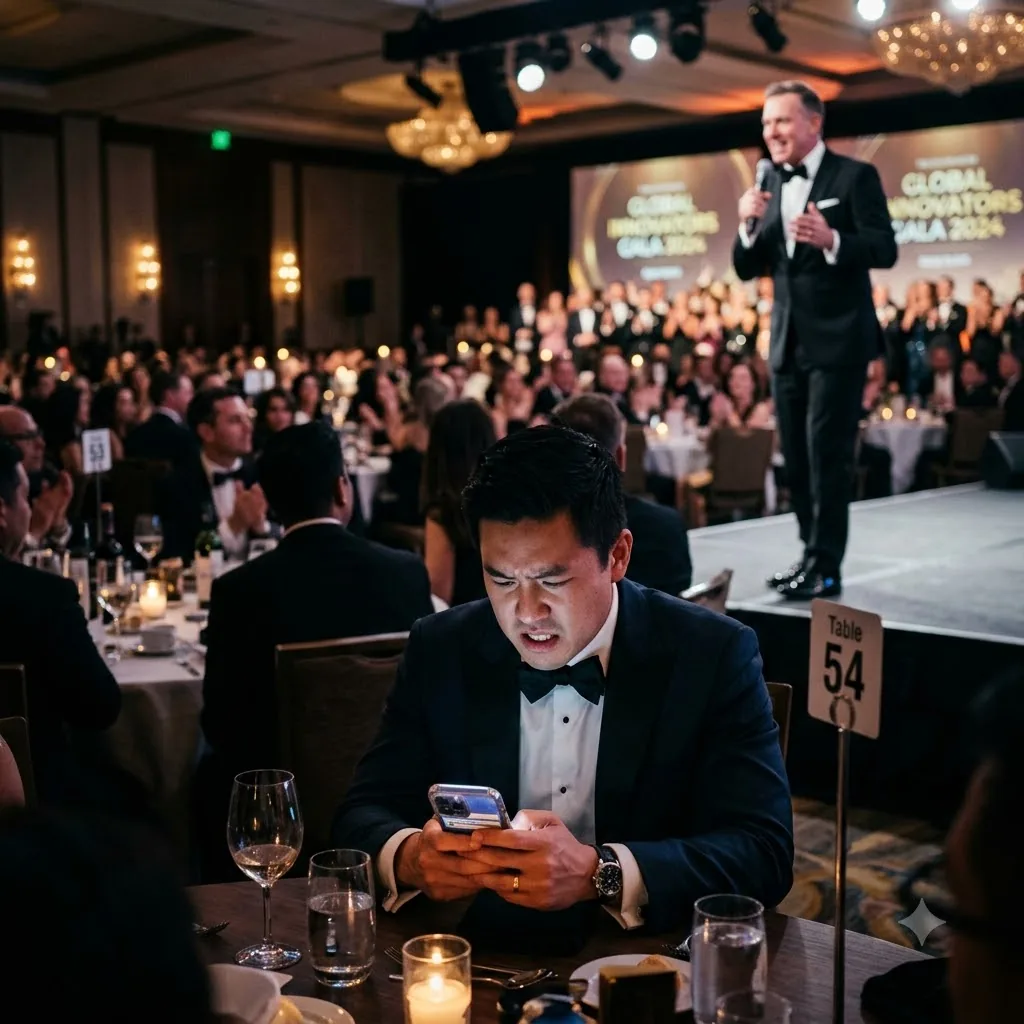
Chase gripped the edges of the lucite podium, his voice breaking at the exact moment the spotlight caught the artificial tear in his eye. Ken sat wedged between a potted ficus and the kitchen doors at Table 41, stabbing a rubbery piece of prime rib while his project manager accepted the industry’s highest award for Ken’s code.
The ballroom of the Grand Hotel was packed with tuxedo-clad executives, venture capitalists, and media personnel, all hanging on Chase’s every word. Giant screens flanking the stage projected the glowing blue logo of ValiantCare AI, rotating slowly above the crowd. Chase leaned into the microphone, his tone dropping to a hushed, reverent register. He spoke of sacrifice and duty, using the exact phrasing Ken had drafted in the original project charter eighteen months ago.
Ken took a long drink of his lukewarm water. He had spent a year and a half locked in a windowless office building the neural network architecture from scratch. He had mapped the impossibly complex web of veteran benefits, writing the routing algorithms designed to ensure no returning soldier ever fell through the cracks of the bureaucracy again. Chase, meanwhile, had spent those eighteen months scheduling stand-up meetings, taking long lunches with stakeholders, and formatting PowerPoint slides. Now Chase was standing under a spotlight holding a heavy glass trophy, dedicating the platform to the heroes it would serve.
The applause rolled through the ballroom in a deafening wave. People at the front tables were standing up. Ken stared at his plate, trying to breathe through the tight knot of anger in his chest. He just had to get through the night, collect his promised equity bonus at the end of the quarter, and transfer out of Chase’s division. That was the plan. Keep quiet, take the money, and move on.
His phone vibrated against his thigh in a sustained, urgent burst.
Ken pulled the device from his pocket, shielding the harsh glow of the screen under the edge of the white linen tablecloth. It was a message from his older brother, Mike. Mike never texted during work hours. He worked a night shift at a logistics warehouse and usually slept until noon. He certainly knew Ken was at the awards dinner tonight.
The message contained no text, only a single image file.
Ken tapped the thumbnail to expand it. It was a screenshot of a mobile phone display. Ken squinted at the small text, his developer instincts immediately scanning the layout. It was the ValiantCare user portal. It was the exact mobile interface Ken had personally optimized for accessibility, designed to be simple and calming for veterans in distress.
But the screen on Mike’s phone was flooded in a flat, jarring shade of red. It was a hex code Ken had explicitly banned from the UI style guide for being too aggressive. In the center of the red block sat a sterile, automated dialogue box.
Ken zoomed in on the pixelated text. The header read, Claim Status Denied.
Below that, a boilerplate paragraph stated that the applicant did not meet the algorithmic threshold for expedited psychiatric care. The text recommended the user contact the standard administrative hotline, a number notorious for endless hold times and dropped calls.
Ken felt the blood drain from his face, leaving his skin cold. This was mathematically impossible.
Mike’s medical profile had been the baseline test case for the entire architecture. Mike had a documented combat history, a Purple Heart, and a recorded diagnosis of severe PTSD. Ken had engineered the core routing logic specifically to flag profiles exactly like Mike’s, bypass the standard administrative queue, and instantly authorize community care vouchers. There was zero margin for a false negative on an application with those parameters. The system was hardcoded to catch him.
Ken stared at the timestamp at the top of the screenshot. It was from two minutes ago. He looked up at the stage. Chase was holding his hand over his heart, accepting another round of applause, nodding humbly at the front row.
Ken looked back down at the screen. His thumb dragged across the glass, scrolling down past the rejection text. He scanned the footer of the application, searching for a server error code or a timeout warning. Instead, he found the system diagnostic string, printed in pale gray at the very bottom of the user viewport.
Ken read the alphanumeric string twice. His vision narrowed to that single line of text.
His original deployment build had passed all ethical compliance audits and staging tests yesterday afternoon. That build was locked and flagged as version 1.4.2 in the repository. The string at the bottom of Mike’s screenshot, however, ended in 1.4.3-b.
There had been no scheduled pushes to the live environment. There had been no secondary release candidate discussed, approved, or coded by his team.
Someone tapped Ken on the shoulder. It was Sarah, the junior front-end developer, leaning over to offer a quiet high-five for their team’s victory. Ken ignored her hand. He was staring at the tiny letter ‘b’ appended to the version number. A heavy sensation settled in his stomach as the reality of that single character clicked into place.
The software currently making life-or-death decisions on the live servers was not the software he had built.
Ken stood up. His heavy wooden chair scraped loudly against the parquet floor, drawing annoyed glances from the neighboring tables. Chase’s triumphant voice echoed through the PA system, promising the crowd that ValiantCare would never abandon a single soldier. Ken shoved his phone into his coat pocket, grabbed his laptop bag from under the table, and pushed his way violently through the swinging kitchen doors.
Chase gripped the edges of the lucite podium, his voice breaking at the exact moment the spotlight caught the artificial tear in his eye. Ken sat wedged between a potted ficus and the kitchen doors at Table 41, stabbing a rubbery piece of prime rib while his project manager accepted the industry’s highest award for Ken’s code.
The ballroom of the Grand Hotel was packed with tuxedo-clad executives, venture capitalists, and media personnel, all hanging on Chase’s every word. Giant screens flanking the stage projected the glowing blue logo of ValiantCare AI, rotating slowly above the crowd. Chase leaned into the microphone, his tone dropping to a hushed, reverent register. He spoke of sacrifice and duty, using the exact phrasing Ken had drafted in the original project charter eighteen months ago.
Ken took a long drink of his lukewarm water. He had spent a year and a half locked in a windowless office building the neural network architecture from scratch. He had mapped the impossibly complex web of veteran benefits, writing the routing algorithms designed to ensure no returning soldier ever fell through the cracks of the bureaucracy again. Chase, meanwhile, had spent those eighteen months scheduling stand-up meetings, taking long lunches with stakeholders, and formatting PowerPoint slides. Now Chase was standing under a spotlight holding a heavy glass trophy, dedicating the platform to the heroes it would serve.
The applause rolled through the ballroom in a deafening wave. People at the front tables were standing up. Ken stared at his plate, trying to breathe through the tight knot of anger in his chest. He just had to get through the night, collect his promised equity bonus at the end of the quarter, and transfer out of Chase’s division. That was the plan. Keep quiet, take the money, and move on.
His phone vibrated against his thigh in a sustained, urgent burst.
Ken pulled the device from his pocket, shielding the harsh glow of the screen under the edge of the white linen tablecloth. It was a message from his older brother, Mike. Mike never texted during work hours. He worked a night shift at a logistics warehouse and usually slept until noon. He certainly knew Ken was at the awards dinner tonight.
The message contained no text, only a single image file.
Ken tapped the thumbnail to expand it. It was a screenshot of a mobile phone display. Ken squinted at the small text, his developer instincts immediately scanning the layout. It was the ValiantCare user portal. It was the exact mobile interface Ken had personally optimized for accessibility, designed to be simple and calming for veterans in distress.
But the screen on Mike’s phone was flooded in a flat, jarring shade of red. It was a hex code Ken had explicitly banned from the UI style guide for being too aggressive. In the center of the red block sat a sterile, automated dialogue box.
Ken zoomed in on the pixelated text. The header read, Claim Status Denied.
Below that, a boilerplate paragraph stated that the applicant did not meet the algorithmic threshold for expedited psychiatric care. The text recommended the user contact the standard administrative hotline, a number notorious for endless hold times and dropped calls.
Ken felt the blood drain from his face, leaving his skin cold. This was mathematically impossible.
Mike’s medical profile had been the baseline test case for the entire architecture. Mike had a documented combat history, a Purple Heart, and a recorded diagnosis of severe PTSD. Ken had engineered the core routing logic specifically to flag profiles exactly like Mike’s, bypass the standard administrative queue, and instantly authorize community care vouchers. There was zero margin for a false negative on an application with those parameters. The system was hardcoded to catch him.
Ken stared at the timestamp at the top of the screenshot. It was from two minutes ago. He looked up at the stage. Chase was holding his hand over his heart, accepting another round of applause, nodding humbly at the front row.
Ken looked back down at the screen. His thumb dragged across the glass, scrolling down past the rejection text. He scanned the footer of the application, searching for a server error code or a timeout warning. Instead, he found the system diagnostic string, printed in pale gray at the very bottom of the user viewport.
Ken read the alphanumeric string twice. His vision narrowed to that single line of text.
His original deployment build had passed all ethical compliance audits and staging tests yesterday afternoon. That build was locked and flagged as version 1.4.2 in the repository. The string at the bottom of Mike’s screenshot, however, ended in 1.4.3-b.
There had been no scheduled pushes to the live environment. There had been no secondary release candidate discussed, approved, or coded by his team.
Someone tapped Ken on the shoulder. It was Sarah, the junior front-end developer, leaning over to offer a quiet high-five for their team’s victory. Ken ignored her hand. He was staring at the tiny letter ‘b’ appended to the version number. A heavy sensation settled in his stomach as the reality of that single character clicked into place.
The software currently making life-or-death decisions on the live servers was not the software he had built.
Ken stood up. His heavy wooden chair scraped loudly against the parquet floor, drawing annoyed glances from the neighboring tables. Chase’s triumphant voice echoed through the PA system, promising the crowd that ValiantCare would never abandon a single soldier. Ken shoved his phone into his coat pocket, grabbed his laptop bag from under the table, and pushed his way violently through the swinging kitchen doors.