Story code: ST-000850
Part 2: The Enforcement Trap
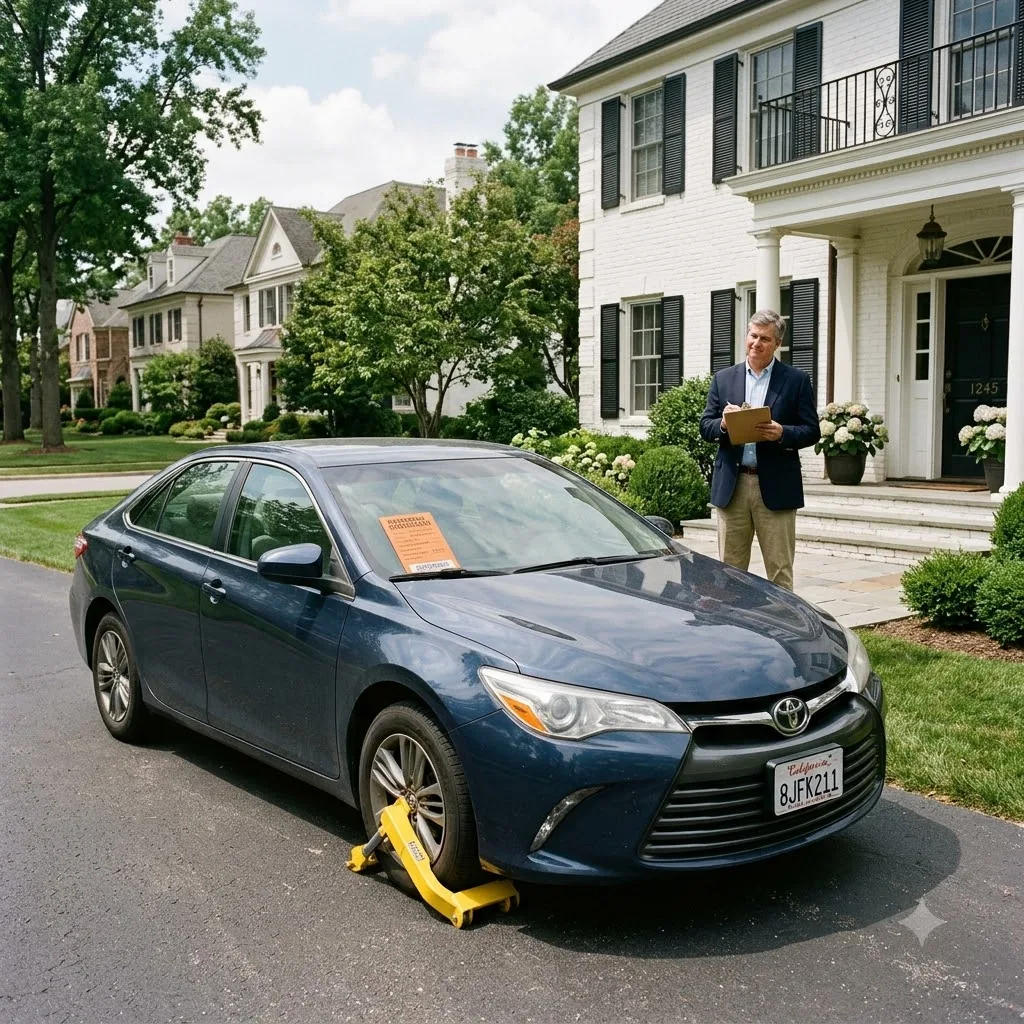
Marcus gripped the heavy-duty steel pry bar, the warm metal grounding him as his pulse hammered in his ears. The homeowner marched down the rotting wooden steps of the porch, his face flushed with manufactured outrage, holding his smartphone out like a weapon. The camera lens was aimed squarely at Marcus’s chest.
“Destruction of association property is a felony,” the homeowner warned, his voice loud, pitched specifically for the microphone recording the confrontation. “I have you on video preparing to vandalize a legally placed immobilization device.”
Marcus froze, calculating the sheer weight of the threat. The homeowner was absolutely right about the optics. If Marcus struck the yellow steel boot with the pry bar, it would cease to be a civil parking dispute. It would become a criminal matter. Vandalism, property damage, and aggressive behavior while on duty. The State Board of Real Estate Appraisers maintained a zero-tolerance policy for criminal citations. A police report would trigger an automatic, immediate suspension of his license pending a board review that could take upwards of a year to schedule.
Slowly, deliberately, Marcus lowered the pry bar. He crouched and placed the heavy steel tool flat on the sun-baked asphalt, sliding it a few inches away from his shoes with his toe. He raised both hands, keeping his palms open and visible to the phone’s camera.
“I am not damaging the device,” Marcus said, keeping his voice flat, professional, and devoid of the surging anger in his chest. “I retrieved a tool to inspect the undercarriage of my vehicle to ensure no damage had been done to the brake lines when this clamp was applied.”
The homeowner-whose name on the appraisal file was Arthur Peterson-smirked, clearly disappointed that Marcus hadn’t taken the bait and swung the bar. “Nice try. The citation is five hundred dollars, payable immediately. The grace period is expiring.”
Before Marcus could respond, the flashing amber lights of a white SUV cast an artificial glow over the driveway. The vehicle, marked with the bold green crest of the ‘Oakridge Community Patrol,’ swerved sharply to the curb, parking at an aggressive angle that entirely blocked Marcus’s sedan from moving forward.
A thick-necked security guard in a tight, sweat-stained polo shirt stepped out of the driver’s side. He adjusted a heavy nylon duty belt laden with zip-ties, a radio, and pepper spray, swaggering over to where Peterson stood.
“Problem here, Mr. Peterson?” the guard asked, hooking his thumbs into his belt.
“This contractor is refusing to pay the parking tariff, Hodges,” Peterson said smoothly, finally lowering his phone. “He’s making excuses. And he pulled that steel bar out of his trunk.”
Hodges looked down at the pry bar, then fixed a hard stare on Marcus. “Is that right? You want to add a threat charge to your parking violation, buddy? Because I can call county dispatch right now. Or you can pay the man his tariff.”
“I’m an authorized state appraiser,” Marcus said, holding his ground. “I was inside that property for forty-five minutes conducting a scheduled bank valuation. This vehicle is required for my profession.”
“Doesn’t matter if you’re the governor,” Hodges interrupted, stepping uncomfortably close. “HOA bylaws require a vendor permit for commercial parking. Section 4, Paragraph B. You don’t have one. The boot fee is five hundred. If you don’t pay it, I authorize the tow. In fact, the rig is already at the front gate.”
Marcus felt a cold drop of sweat slide down his spine despite the suffocating afternoon heat. He looked back at the neon-orange citation in his hand. “My state licensing board audits all commercial expenditures,” Marcus explained, trying to find a wedge of reason. “If I scan a random QR code and transfer five hundred dollars for a commercial loitering violation, I am officially admitting to breaking municipal zoning laws. It will flag my license.”
“Sounds like a personal compliance issue,” Peterson said, tapping his clipboard with his pen. “Better than losing your car.”
Marcus pulled out his own phone and opened his camera app, pointing it at the QR code on Peterson’s clipboard. A web link populated on his screen. He didn’t click it to pay, but he read the URL. It didn’t direct to an official HOA portal or a property management trust. It directed to a third-party payment processor linked to an LLC called ‘Oakridge Enforcement Solutions.’
A grift. A perfectly legal, hyper-localized grift.
Peterson and Hodges were running a private racket. They were waiting for contractors, appraisers, and inspectors to arrive at the neighborhood’s distressed properties, trapping their vehicles, and extorting them under the guise of obscure HOA bylaws. Because the amounts were under a thousand dollars, most working professionals simply paid the fee to avoid the catastrophic loss of their work vehicles and a day’s wages.
A loud, rhythmic hiss of air brakes shattered the quiet suburban block.
Marcus looked up. A heavy-duty, flatbed tow truck was turning the corner, its massive diesel engine rattling the windows of the neighboring houses. The truck was painted dull black, completely devoid of any company logos or DOT registration numbers on the side doors. It backed slowly down the street, its reverse alarm beeping with a piercing, methodical rhythm.
“Time’s up,” Hodges said, a cruel smile touching the corners of his mouth. “The flatbed fee is an extra eight hundred. Plus a daily impound rate. They hook up, you owe a grand just to get it off the truck.”
Marcus stared in horror as the truck angled its rear toward the front of his sedan. If they winched his car onto the steep incline of the flatbed while the front wheel was immobilized by the yellow steel boot, the heavy metal locking arm would tear directly through his wheel well, shredding his tire, bending his axle, and destroying the suspension. His car would be functionally totaled before it even reached the impound lot.
“Look, man to man,” Peterson said, dropping the formal neighbor routine and stepping closer. “Just scan the code and send the money. You write it off as a business expense. We take the boot off. You drive away. You don’t pay right now, you lose your car, your suspension gets wrecked, and I send this video to your state board anyway.”
The flatbed stopped ten feet from Marcus’s front bumper. The driver, a towering man in greasy overalls, hopped out of the cab and began unspooling a thick steel winch cable.
Marcus was entirely boxed in. He couldn’t pay the extortion fee without risking his career, and he couldn’t let them hook the cable without losing his car entirely. The heavy clanking of the metal tow hook dragging across the asphalt echoed loudly as the driver marched toward Marcus’s front axle, leaving Marcus with seconds to find a loophole in a trap designed to have none.