Story code: ST-000850
Part 1: The Appraisal Trap
Marcus documented the final visible crack in the load-bearing wall, sliding his laser measure back into his worn leather tool belt. The house was functionally ruined, a tragic display of neglected maintenance and severe structural failure. The air inside the living room hung heavy, thick with the unmistakable stench of black mold, damp drywall, and rotting floorboards. He pushed his weight against the warped front door, forcing it open with a loud, grating scrape against the uneven threshold. He stepped outside into the sweltering afternoon heat, deeply grateful for the blast of fresh, burning air on his face. All he needed to do now was sit in the air-conditioned sanctuary of his sedan, upload the final batch of grim photographs, and let the bank deal with the financial wreckage of the property.
He walked down the cracked concrete driveway, wiping a bead of sweat from his forehead, his eyes adjusting to the blinding glare bouncing off his silver car. He reached for the driver-side door handle before freezing in place. Something bulky and aggressively bright interrupted the sleek line of his front tire.
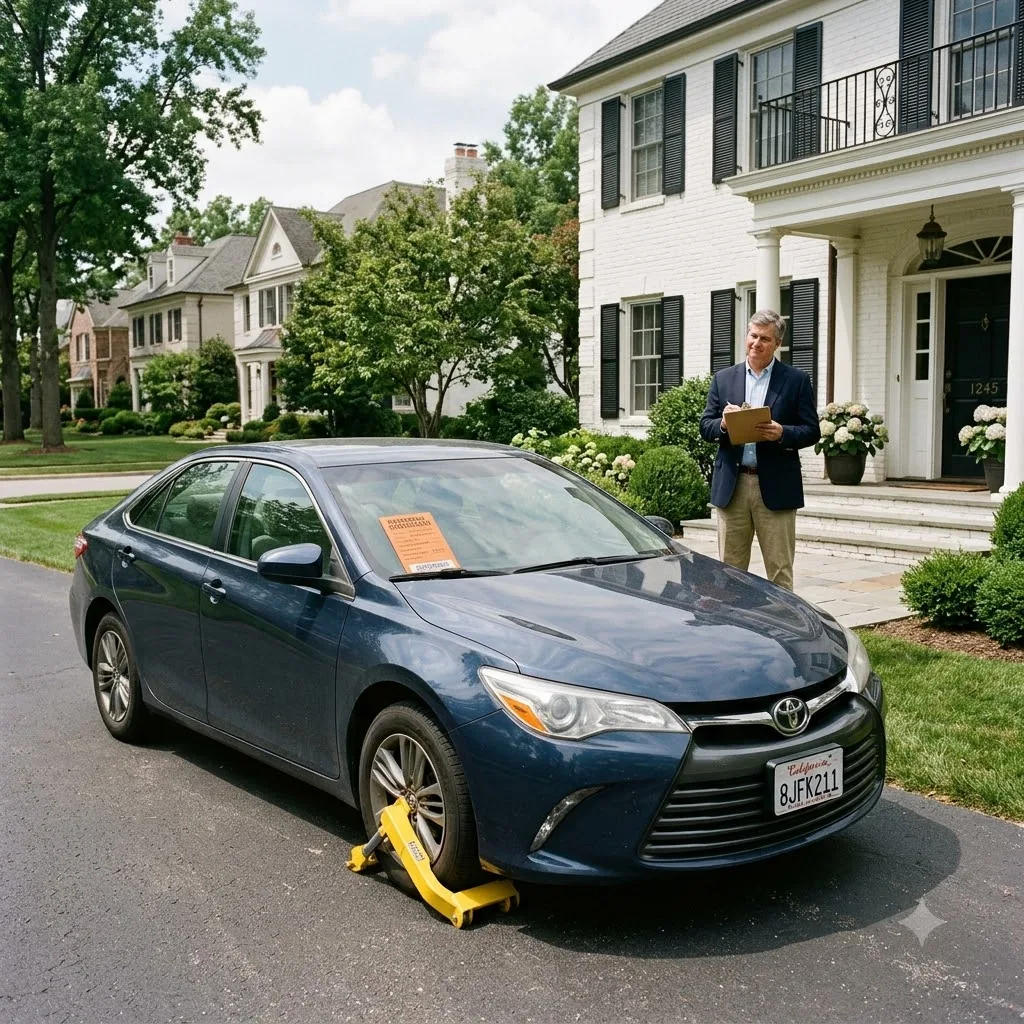
A massive, bright yellow steel parking boot clamped tightly around the rim and rubber, its heavy locking mechanism glowing like a warning beacon in the direct sunlight.
Marcus stared at the heavy metal apparatus, processing the absolute absurdity of the situation. He had parked on a completely empty suburban street for exactly forty-five minutes. Pinned firmly beneath the driver-side windshield wiper was a thick, neon-orange envelope. He snatched it from the hot glass, tearing the flap open to extract a stiff printed citation. Bold black letters dominated the page, declaring a five-hundred-dollar fine for ‘commercial loitering.’ The slip mandated immediate payment to the Oakridge Homeowners Association to release the vehicle.
The sharp scrape of a throat clearing broke the heavy suburban silence.
Marcus turned to look back at the ruined house. The homeowner, a man who had barely spoken a single word during the entire hour-long interior inspection, was now standing on the porch. He held a metal clipboard pressed against his chest, leaning casually against the rotted wooden railing. The man wore a smug, deeply practiced expression, tapping a silver ballpoint pen rhythmically against the metal clip.
Marcus looked from the heavy yellow steel boot to the ridiculous citation in his hand, piecing the timeline together. The homeowner had waited until Marcus was crawling through the cramped, spider-infested space beneath the kitchen to sneak outside and trap his vehicle.
Marcus walked slowly back up the driveway, holding the orange citation out like a white flag of truce. He stated firmly that he was on official bank business, an authorized state appraiser performing a scheduled, legally required valuation of the property. He demanded the immediate removal of the locking device so he could leave.
The man on the porch did not move. He merely smiled a thin, humorless smile and used his pen to point toward a small laminated sign hidden almost entirely behind an overgrown rosebush near the mailbox. The text cited a hyper-specific, obscure HOA bylaw prohibiting non-residential business vehicles from parking on the street for more than fifteen minutes without purchasing a pre-paid vendor permit. The fee for the boot removal, the man explained with a flat, rehearsed tone, was exactly five hundred dollars. He added that he accepted cash or an immediate digital transfer to the association’s enforcement account, making sure to hold up a printed QR code attached to his clipboard.
Marcus calculated his very limited options. Handing over five hundred dollars meant officially admitting to a commercial violation he had not committed. That digital paper trail would trigger an automated flag on his state appraiser license for unauthorized commercial activity in a restricted residential zone. An infraction like that could suspend his ability to work for six months or force a lengthy administrative hearing. Calling the local police would take hours, and dispatch rarely hurried for non-violent parking disputes on private, gated HOA streets.
The man on the porch casually checked a heavy gold wristwatch, noting aloud that the extortionate fee doubled after one hour. He added that a private tow truck was already on standby, waiting just outside the neighborhood gates to drag the unauthorized vehicle to an impound lot in the next county.
Marcus turned his back on the homeowner and walked slowly toward the driver’s side door, his mind racing through the strict compliance codes of his profession. He could not pay the fine, and he could not afford to lose his car. He crouched down next to the yellow steel boot, running his fingers over the industrial lock core. He recognized the specific brand immediately, a cheap imported model notoriously prone to jamming if bumped. He stood up, walking around to the rear of his vehicle. He popped the trunk, reaching past his usual appraisal equipment to grab a heavy-duty steel pry bar, just as the homeowner marched aggressively down the porch steps with his clipboard raised.
Marcus documented the final visible crack in the load-bearing wall, sliding his laser measure back into his worn leather tool belt. The house was functionally ruined, a tragic display of neglected maintenance and severe structural failure. The air inside the living room hung heavy, thick with the unmistakable stench of black mold, damp drywall, and rotting floorboards. He pushed his weight against the warped front door, forcing it open with a loud, grating scrape against the uneven threshold. He stepped outside into the sweltering afternoon heat, deeply grateful for the blast of fresh, burning air on his face. All he needed to do now was sit in the air-conditioned sanctuary of his sedan, upload the final batch of grim photographs, and let the bank deal with the financial wreckage of the property.
He walked down the cracked concrete driveway, wiping a bead of sweat from his forehead, his eyes adjusting to the blinding glare bouncing off his silver car. He reached for the driver-side door handle before freezing in place. Something bulky and aggressively bright interrupted the sleek line of his front tire.
A massive, bright yellow steel parking boot clamped tightly around the rim and rubber, its heavy locking mechanism glowing like a warning beacon in the direct sunlight.
Marcus stared at the heavy metal apparatus, processing the absolute absurdity of the situation. He had parked on a completely empty suburban street for exactly forty-five minutes. Pinned firmly beneath the driver-side windshield wiper was a thick, neon-orange envelope. He snatched it from the hot glass, tearing the flap open to extract a stiff printed citation. Bold black letters dominated the page, declaring a five-hundred-dollar fine for ‘commercial loitering.’ The slip mandated immediate payment to the Oakridge Homeowners Association to release the vehicle.
The sharp scrape of a throat clearing broke the heavy suburban silence.
Marcus turned to look back at the ruined house. The homeowner, a man who had barely spoken a single word during the entire hour-long interior inspection, was now standing on the porch. He held a metal clipboard pressed against his chest, leaning casually against the rotted wooden railing. The man wore a smug, deeply practiced expression, tapping a silver ballpoint pen rhythmically against the metal clip.
Marcus looked from the heavy yellow steel boot to the ridiculous citation in his hand, piecing the timeline together. The homeowner had waited until Marcus was crawling through the cramped, spider-infested space beneath the kitchen to sneak outside and trap his vehicle.
Marcus walked slowly back up the driveway, holding the orange citation out like a white flag of truce. He stated firmly that he was on official bank business, an authorized state appraiser performing a scheduled, legally required valuation of the property. He demanded the immediate removal of the locking device so he could leave.
The man on the porch did not move. He merely smiled a thin, humorless smile and used his pen to point toward a small laminated sign hidden almost entirely behind an overgrown rosebush near the mailbox. The text cited a hyper-specific, obscure HOA bylaw prohibiting non-residential business vehicles from parking on the street for more than fifteen minutes without purchasing a pre-paid vendor permit. The fee for the boot removal, the man explained with a flat, rehearsed tone, was exactly five hundred dollars. He added that he accepted cash or an immediate digital transfer to the association’s enforcement account, making sure to hold up a printed QR code attached to his clipboard.
Marcus calculated his very limited options. Handing over five hundred dollars meant officially admitting to a commercial violation he had not committed. That digital paper trail would trigger an automated flag on his state appraiser license for unauthorized commercial activity in a restricted residential zone. An infraction like that could suspend his ability to work for six months or force a lengthy administrative hearing. Calling the local police would take hours, and dispatch rarely hurried for non-violent parking disputes on private, gated HOA streets.
The man on the porch casually checked a heavy gold wristwatch, noting aloud that the extortionate fee doubled after one hour. He added that a private tow truck was already on standby, waiting just outside the neighborhood gates to drag the unauthorized vehicle to an impound lot in the next county.
Marcus turned his back on the homeowner and walked slowly toward the driver’s side door, his mind racing through the strict compliance codes of his profession. He could not pay the fine, and he could not afford to lose his car. He crouched down next to the yellow steel boot, running his fingers over the industrial lock core. He recognized the specific brand immediately, a cheap imported model notoriously prone to jamming if bumped. He stood up, walking around to the rear of his vehicle. He popped the trunk, reaching past his usual appraisal equipment to grab a heavy-duty steel pry bar, just as the homeowner marched aggressively down the porch steps with his clipboard raised.