Story code: ST-000853
Part 1: Visual Noise
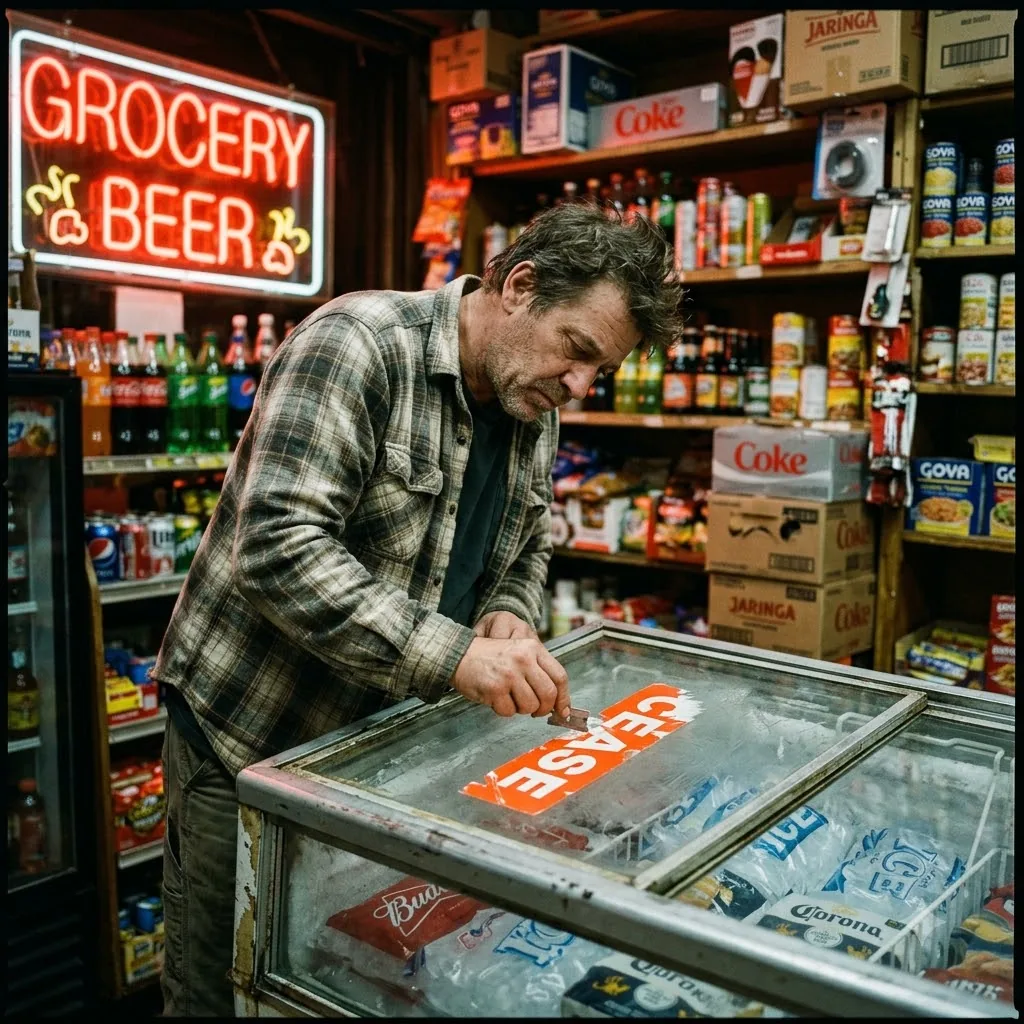
Mateo wedged the corner of a plastic scraper against the neon-orange adhesive clinging to the curved glass of his grandfather’s vintage ice freezer. The sticker spelled out the word “CEASE” in thick, aggressive block letters, slapped directly over the hand-painted *Helados* script that had survived thirty-two years of neighborhood kids leaning against it. He pressed harder, holding his breath, terrified the brittle glass would finally crack under the pressure.
On the scuffed linoleum counter next to his elbow sat the rest of the delivery that had been taped to his security gate at dawn. It was a formal municipal envelope, but the documentation inside read like a syllabus for a corporate wellness retreat. Mateo stared at the bolded penalty of eight hundred dollars stamped at the bottom of the second page. He rubbed his eyes, trying to make sense of the violation listed under a sub-code he had never encountered in his ten years running the family business. The bold text cited his storefront for “severe visual noise and non-compliant community integration.”
He turned his gaze toward the front window. The target of the complaint was the buzzing, red-and-blue neon *Bodega y Más* sign suspended by a pair of heavy chains. His father had paid a local glassbender to make it in 1994. It was the only light on the avenue that stayed illuminated past ten o’clock, serving as a reliable beacon for exhausted night-shift nurses and transit workers getting off the bus at the corner. Now, according to the densely typed printout, its hum and luminescence were causing a “sensory disruption to the evolving residential biome.”
Mateo dragged his thumb over the edge of the sticker again, peeling away a microscopic flake of orange paper. The fine was devastating. Eight hundred dollars was the entire profit margin for the week, erasing the money he had set aside to fix the compressor on the dairy case. The language of the citation felt deliberately designed to confuse, buried in layers of academic therapy-speak instead of the usual blunt code violations regarding clear aisles or proper trash disposal.
He set down the scraper and picked up the citation to examine the signature block one more time. The city usually dispatched inspectors from Code Enforcement, grizzled men in faded polo shirts carrying dented metal clipboards. This document lacked a standard inspector badge number or municipal seal in the signatory line. Instead, the complainant block featured a digital signature over a highly specific, typed title. It read *Harm Reduction & Wellness Liaison*.
Mateo recognized that exact phrasing immediately.
Just two weeks prior, the abandoned hardware store directly across the street had reopened as an industrial-chic craft brewery called The Forager’s Kettle. During their soft launch, a woman with a sleek silver tablet and a fixed, serene smile had walked into the bodega to introduce herself. She had handed Mateo a heavy, matte-finish business card bearing that identical job title. She had spoken at length about fostering an aligned neighborhood ecosystem and prioritizing holistic aesthetics, all while staring pointedly at his dusty wire rack of potato chips and the humming neon sign in the window.
He looked through the glass right now, past his neon sign, across the cracked asphalt of the avenue. The brewery’s floor-to-ceiling windows showcased a spotless, minimalist interior filled with hanging ferns. Patrons sat on raw wood benches, drinking hazy pale liquids from small glasses, bathed in natural light. The contrast with his own store was absolute. Mateo’s bodega smelled of overripe plantains, strong coffee, floor wax, and the warm exhaust of aging refrigeration units. It was a dense, cluttered, and loud space. It was exactly the kind of environment the new neighbors had deemed non-compliant with their vision of wellness.
A hot knot of anger tightened in his chest, radiating down his arms. He folded the heavy citation paper in half and shoved it deep into the front pocket of his canvas apron. He reached beneath the main counter and retrieved a yellow bottle of commercial adhesive remover, soaking a shop rag in the pungent chemicals. He scrubbed furiously at the orange sticker, his knuckles aching against the cold glass. The industrial glue merely smeared into a sticky, opaque paste, further obscuring his grandfather’s faded paintwork.
The mechanical bell above the front door jingled abruptly, cutting through the low hum of the refrigerators. Mateo turned around, wiping his chemical-soaked hands on a clean towel, expecting to see a regular customer coming in for their morning coffee.
Instead, the entryway was blocked by the silhouette of a woman holding a familiar silver tablet against her chest. The harsh glare of the morning sun at her back obscured her face, but her posture was rigid and expectant, her shadow stretching long and sharp across the linoleum floor as she took a slow, deliberate step toward the counter.
Mateo wedged the corner of a plastic scraper against the neon-orange adhesive clinging to the curved glass of his grandfather’s vintage ice freezer. The sticker spelled out the word “CEASE” in thick, aggressive block letters, slapped directly over the hand-painted *Helados* script that had survived thirty-two years of neighborhood kids leaning against it. He pressed harder, holding his breath, terrified the brittle glass would finally crack under the pressure.
On the scuffed linoleum counter next to his elbow sat the rest of the delivery that had been taped to his security gate at dawn. It was a formal municipal envelope, but the documentation inside read like a syllabus for a corporate wellness retreat. Mateo stared at the bolded penalty of eight hundred dollars stamped at the bottom of the second page. He rubbed his eyes, trying to make sense of the violation listed under a sub-code he had never encountered in his ten years running the family business. The bold text cited his storefront for “severe visual noise and non-compliant community integration.”
He turned his gaze toward the front window. The target of the complaint was the buzzing, red-and-blue neon *Bodega y Más* sign suspended by a pair of heavy chains. His father had paid a local glassbender to make it in 1994. It was the only light on the avenue that stayed illuminated past ten o’clock, serving as a reliable beacon for exhausted night-shift nurses and transit workers getting off the bus at the corner. Now, according to the densely typed printout, its hum and luminescence were causing a “sensory disruption to the evolving residential biome.”
Mateo dragged his thumb over the edge of the sticker again, peeling away a microscopic flake of orange paper. The fine was devastating. Eight hundred dollars was the entire profit margin for the week, erasing the money he had set aside to fix the compressor on the dairy case. The language of the citation felt deliberately designed to confuse, buried in layers of academic therapy-speak instead of the usual blunt code violations regarding clear aisles or proper trash disposal.
He set down the scraper and picked up the citation to examine the signature block one more time. The city usually dispatched inspectors from Code Enforcement, grizzled men in faded polo shirts carrying dented metal clipboards. This document lacked a standard inspector badge number or municipal seal in the signatory line. Instead, the complainant block featured a digital signature over a highly specific, typed title. It read *Harm Reduction & Wellness Liaison*.
Mateo recognized that exact phrasing immediately.
Just two weeks prior, the abandoned hardware store directly across the street had reopened as an industrial-chic craft brewery called The Forager’s Kettle. During their soft launch, a woman with a sleek silver tablet and a fixed, serene smile had walked into the bodega to introduce herself. She had handed Mateo a heavy, matte-finish business card bearing that identical job title. She had spoken at length about fostering an aligned neighborhood ecosystem and prioritizing holistic aesthetics, all while staring pointedly at his dusty wire rack of potato chips and the humming neon sign in the window.
He looked through the glass right now, past his neon sign, across the cracked asphalt of the avenue. The brewery’s floor-to-ceiling windows showcased a spotless, minimalist interior filled with hanging ferns. Patrons sat on raw wood benches, drinking hazy pale liquids from small glasses, bathed in natural light. The contrast with his own store was absolute. Mateo’s bodega smelled of overripe plantains, strong coffee, floor wax, and the warm exhaust of aging refrigeration units. It was a dense, cluttered, and loud space. It was exactly the kind of environment the new neighbors had deemed non-compliant with their vision of wellness.
A hot knot of anger tightened in his chest, radiating down his arms. He folded the heavy citation paper in half and shoved it deep into the front pocket of his canvas apron. He reached beneath the main counter and retrieved a yellow bottle of commercial adhesive remover, soaking a shop rag in the pungent chemicals. He scrubbed furiously at the orange sticker, his knuckles aching against the cold glass. The industrial glue merely smeared into a sticky, opaque paste, further obscuring his grandfather’s faded paintwork.
The mechanical bell above the front door jingled abruptly, cutting through the low hum of the refrigerators. Mateo turned around, wiping his chemical-soaked hands on a clean towel, expecting to see a regular customer coming in for their morning coffee.
Instead, the entryway was blocked by the silhouette of a woman holding a familiar silver tablet against her chest. The harsh glare of the morning sun at her back obscured her face, but her posture was rigid and expectant, her shadow stretching long and sharp across the linoleum floor as she took a slow, deliberate step toward the counter.