Story code: ST-000853
Part 2: The Wellness Coalition
The woman stepped out of the blinding glare of the entryway, allowing the heavy glass door to swing shut behind her. She wore a boxy, oatmeal-colored linen jumpsuit that looked simultaneously expensive and aggressively shapeless. Her blonde hair was pulled back into a severe, slicked-down bun that pulled the skin taut around her eyes. Mateo remembered her face, and her title, from the heavy matte business card she had handed him two weeks ago. Sloane.
“Good morning, Mateo,” she said. Her voice was pitched in a soothing, modulated tone, like a meditation app calmly reading a terms of service agreement.
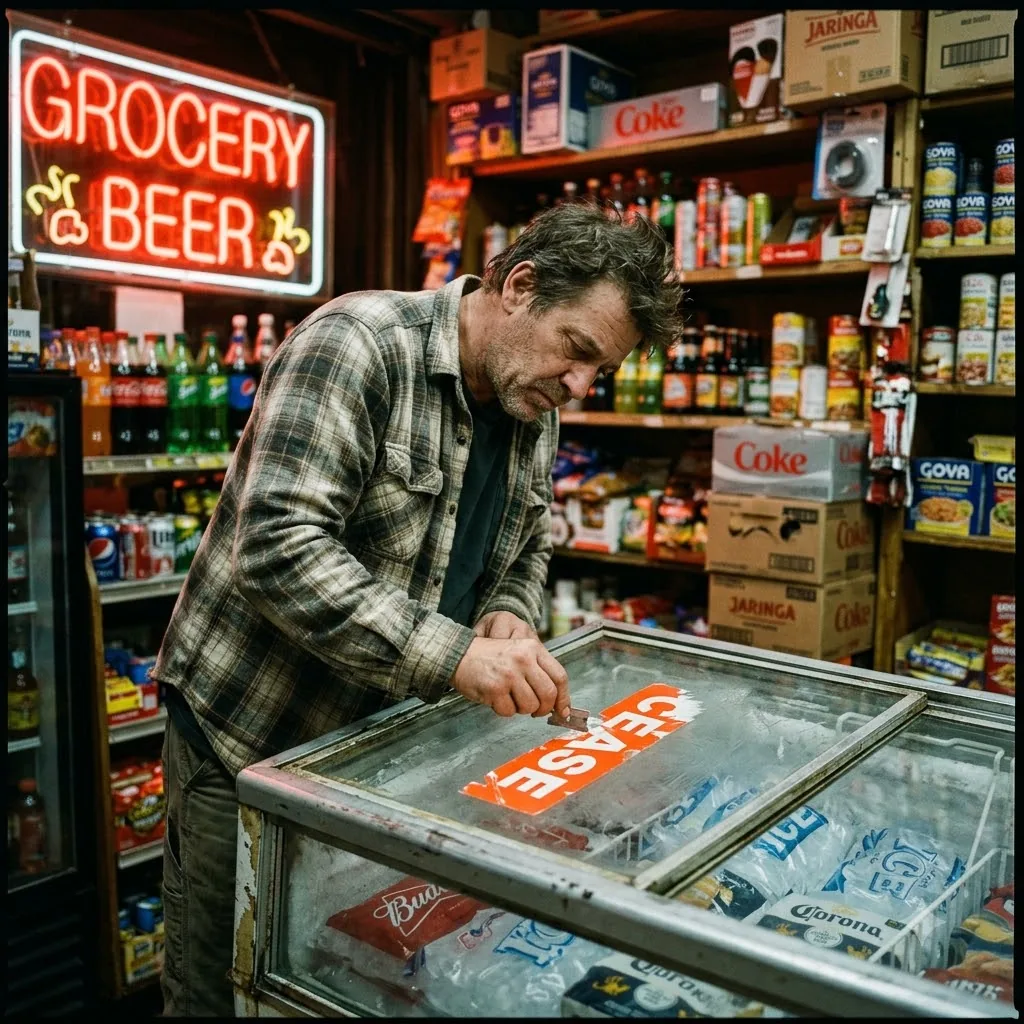
Mateo didn’t offer a greeting. He tossed the chemical-soaked rag onto the counter, the sharp scent of industrial solvent hanging between them. “You put a sticker on my freezer. An industrial adhesive sticker slapped directly over a vintage glass case.”
Sloane offered a sympathetic, tight-lipped smile, tilting her head as if listening to a child complain about a scraped knee. “I understand this feels sudden. Growth often does. But the physical notice was necessary to initiate the dialogue. We’re prioritizing proactive boundary-setting for the avenue.”
Mateo pulled the folded citation from his apron pocket, flattening it out on the scuffed linoleum counter. “You’re charging me eight hundred dollars for a neon sign that’s been in that window since before you learned to drive. You don’t work for the city. You work for the bar across the street. You have no authority to fine me.”
“We prefer the term *fermentation collective*,” Sloane corrected gently, tapping the screen of the silver tablet resting against her chest. “And while I am employed by The Forager’s Kettle, my role as Liaison represents the newly ratified Oak Avenue Wellness Coalition. The city council approved our charter last Tuesday.”
Mateo’s stomach dropped. A Business Improvement District. He’d heard rumors of them springing up in other gentrifying neighborhoods across the city-private boards formed by newer, wealthier business owners. Once approved by the city, these coalitions were granted municipal authority to collect dues, levy fines, and enforce hyper-local aesthetic codes to ‘beautify’ the area. He hadn’t received a single piece of mail about a vote.
“Nobody asked me to vote on a coalition,” Mateo said, gripping the edge of the counter until his knuckles turned white.
“The notifications were distributed digitally to the registered property holding companies,” Sloane explained, her tone dripping with rehearsed, weaponized patience. “Since your landlord opted into the coalition on behalf of the building, your storefront is bound by the new community aesthetic guidelines. We’re trying to cultivate a mindful, sensory-friendly biome for our patrons. Your sign-” She gestured vaguely toward the front window with her tablet. “-is highly stimulating. The humming frequency and the aggressive red light disrupt the parasympathetic nervous systems of our guests.”
“It’s a bodega,” Mateo snapped, his voice rising despite his effort to keep it steady. “It’s supposed to be bright. People get off the night bus at midnight and walk to my door because the light means it’s safe. It means I’m open. It means they can get a hot coffee before a twelve-hour shift.”
“And we honor your… legacy,” Sloane said, using the word *legacy* as if it meant *obsolete*. “But the late-night foot traffic introduces a chaotic energy flow to the corridor. We’re trying to elevate the street. To curate peace.”
Mateo stared at her, the sheer absurdity of her language clashing violently with the reality of the neighborhood. She wasn’t talking about peace. She was talking about total control. She wanted the street sterilized, an empty, frictionless backdrop for her patrons to sip twelve-dollar hazy IPAs without having to acknowledge the working class breathing the same air.
“Cancel the fine,” Mateo said, his voice dropping to a low, hard register. “I’ll scrape your sticker off, but I’m not paying you a dime, and I’m not turning off my sign.”
Sloane’s placid smile didn’t waver, but her eyes hardened into flat, gray stones. She swiped a manicured finger across her tablet. “The coalition’s bylaws don’t allow for arbitrary cancellations. In fact, visual noise violations are assessed weekly until compliance is achieved. So, next Monday, it will be another eight hundred dollars.”
The air in the bodega suddenly felt too thick to breathe. Sixteen hundred dollars by next week. Twenty-four hundred by the end of the month. He’d have to close. He would literally bleed out in fines before the summer began. Behind him, the compressor for the dairy case rattled violently, a mechanical death rattle he already couldn’t afford to silence.
Sloane watched him process the math, her posture softening into an eerie imitation of empathy. “We don’t want to see you burdened, Mateo. We really don’t. The Kettle believes in holistic integration. We have a grant program for legacy tenants who want to align with the new vision.”
She reached into her oversized linen tote bag and placed a thick, cream-colored folder on the counter next to his register.
“This is a community integration pledge,” Sloane said softly. “If you sign it, the coalition will waive the initial citation. We’ll even provide the contractors to help you transition.”
Mateo looked at the folder, then back up at her face. “Transition to what?”
“A quieter footprint,” she said seamlessly. “The pledge stipulates the removal of the neon signage, repainting your awning in a low-impact earth tone, and adjusting your operating hours to close at eight p.m. to minimize evening friction. In exchange, you become a preferred vendor for The Kettle. We’d love to stock your plantain chips, provided they meet our organic sourcing requirements.”
She was offering to gut his business from the inside out. Closing at eight meant abandoning the transit workers, the hospital staff, and the second-shift cleaners who relied on his store. It meant cutting his daily revenue by a third, all to appease a demographic that wanted his family’s livelihood to look like a prop in a minimalist lifestyle magazine.
“You’re trying to price me out, but you want to look like you’re saving me while you do it,” Mateo said. The isolation settled over him like a heavy, suffocating blanket. His landlord had already sold him out. The city had handed them the authority to do it legally.
“We are inviting you to evolve,” Sloane countered, completely immune to the insult. She tapped the cream folder. “Change is uncomfortable, but the biome is shifting. The coalition board is doing a walkthrough of the block tomorrow at noon with the city zoning supervisor. I highly suggest you have the pledge signed by then. If the neon sign is still on when they arrive, the next citation will include a mandate to inspect your interior refrigeration units for noise pollution.”
She didn’t wait for him to respond. Sloane turned on her heel, her linen jumpsuit rustling softly, and walked out into the blinding morning sun.
Mateo stood alone in the dense, warm air of his store. He looked down at the contract, then over his shoulder at the vintage ice freezer, where the smeared, sticky mess of the ‘CEASE’ sticker still obscured his grandfather’s hand-painted letters. The dairy compressor gave another loud, metallic shudder, echoing like a countdown clock through the empty aisles.