Story code: ST-000854
Part 1: The False Record
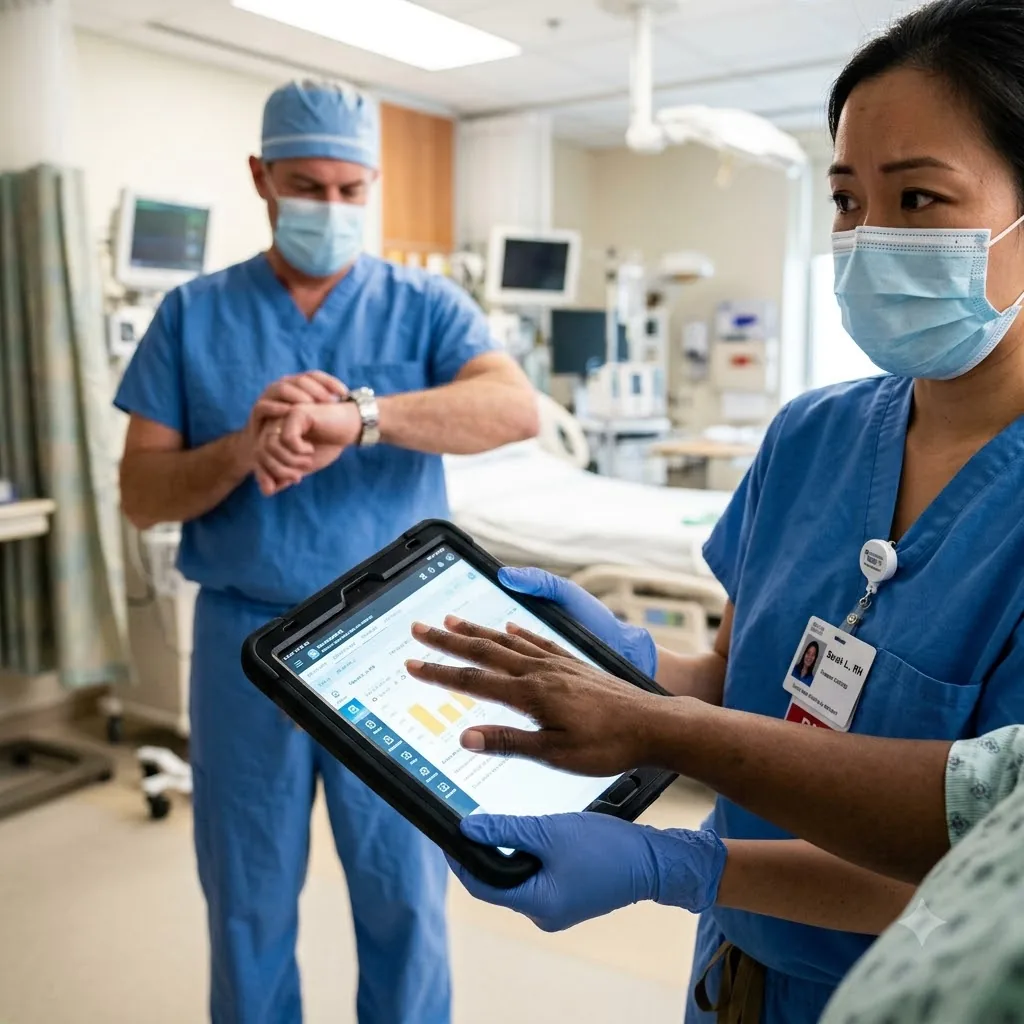
My palm slapped flat over the glowing screen of Nurse Gable’s iPad. My fingers covered the half-typed sentence in Chloe’s electronic chart, completely blocking the green submit button on the glass interface.
Gable froze, her digital stylus hovering a millimeter above my knuckles. She looked up at me from the wheeled charting station in the hallway, her expression instantly hardening into a familiar mask of bureaucratic irritation. I pressed my hand down harder, feeling the warmth of the battery radiating through the screen. She had been typing the phrase “patient resting comfortably between contractions, mild anxiety noted.”
I told her to delete the entry. I kept my voice low, intensely aware of the open door to Room 3 directly behind me.
Gable let out a long, heavy breath and leaned back in her rolling chair. She told me Chloe was experiencing standard first-time maternal panic, and that keeping the chart optimistic was protocol for keeping the maternity floor moving. She pointed the tip of her stylus at my wrist, silently demanding I move my hand so she could log the update.
I refused to budge. Inside Room 3, Chloe was not resting, and she was certainly not experiencing mild anxiety. The sounds coming from her bed were low, guttural, and deeply wrong. Every three minutes, her entire body went completely rigid. Her knuckles were bone-white where she gripped the side rails, her forearms trembling so violently the heavy plastic rattled against the metal frame. Her skin had taken on a pale, waxy sheen that caught the harsh fluorescent light of the ward. She had chewed her bottom lip until it bled, leaving a dark red smear stark against her chalky face.
This was not the normal rhythm of labor. There was a jagged, tearing quality to her pain, a physical tension that made the air in the room feel brittle. The scent of sterile alcohol wipes and stale coffee did nothing to mask the sour, sharp smell of her cold sweat. But the monitors just showed standard data, and the central desk was fixated on clearing beds. The hospital was running at maximum capacity tonight. Transport orderlies in blue scrubs were practically jogging down the halls with empty wheelchairs. The incessant, melodic chiming of the central station demanded rapid turnover, treating every occupied room like a logistical failure. Chloe was just another metric on the dry-erase whiteboard, a box they needed to check off quickly so they could wheel in the next admission.
Down the hall, the heavy wooden door of Room 4 clicked open. Dr. Lin strode out, stripping off his latex gloves and dropping them into a biohazard bin with a practiced flick of his wrist. He was the attending OBGYN on shift, and he wore a broad, relaxed smile. He stopped at the central desk, projecting his voice so the entire corridor could hear his approval. He loudly commended the patient in Room 4, praising her for being perfectly silent and uncomplaining during her assessment. He called her a textbook case of a cooperative patient.
The implication hung heavy in the hallway air. Good patients were quiet. Good patients made the doctors’ jobs easy. Good patients did not require extra chart notes, and they certainly did not disrupt the flow of the ward.
Gable tapped my knuckles sharply with her stylus. She told me Dr. Lin would be doing rounds in ten minutes and needed the baseline charts updated immediately. She insisted Chloe just needed to breathe through the discomfort, and that feeding into the panic would only slow down her progress.
I turned my head to look back into Room 3. Chloe was curled on her side, her knees pulled up tight against her chest. A fresh wave of agony hit her. She did not scream, because she was trying so desperately to be a good patient. Instead, her eyes went wide and utterly terrified. A high, thin whine escaped her throat, a sound of pure trapped distress. The muscles in her neck stood out like thick cords. Her breathing hitched, becoming erratic and shallow, failing to bring in enough oxygen to push back the encroaching grayness at the edges of her face.
Something was fundamentally misaligned. The monitor strapped to her abdomen thumped with a steady, mechanical rhythm, but the physical reality of the woman in the bed told a wildly different story. There was a specific tightness to her abdomen, a strange asymmetry in the way she held herself during the peaks of her pain. I had seen enough standard labors to know the difference between the exhausting work of birth and a body signaling a catastrophic internal failure. The machine was missing it. The nurses were ignoring it. Dr. Lin was actively praising behavior that masked it.
Gable pulled the iPad out from under my hand with a sharp, sideways jerk. She told me to step back and let the medical staff handle the floor. She aggressively jabbed the submit button. I watched the screen flash green as the false narrative of “mild anxiety” became official medical record. Once it was in the system, Dr. Lin would glance at it, pat Chloe on the shoulder, and walk away. He would miss the danger entirely.
I felt a cold, hard clarity settle into my chest. The hospital machinery was going to grind Chloe down, perfectly content to ignore her suffering as long as the paperwork looked clean. I stepped away from Gable’s charting station. I walked directly into Room 3 and pulled the privacy curtain shut with a sharp hiss of metal rings dragging across the ceiling track.
Chloe looked up at me, her chest heaving, a silent plea in her terrified eyes.
I reached past her trembling hands and grabbed the main data cable connecting her fetal monitor to the central hospital network. I wrapped the thick gray wire around my fist, gripped the plastic connector housing, and braced my boots against the heavy steel frame of the hospital bed.
My palm slapped flat over the glowing screen of Nurse Gable’s iPad. My fingers covered the half-typed sentence in Chloe’s electronic chart, completely blocking the green submit button on the glass interface.
Gable froze, her digital stylus hovering a millimeter above my knuckles. She looked up at me from the wheeled charting station in the hallway, her expression instantly hardening into a familiar mask of bureaucratic irritation. I pressed my hand down harder, feeling the warmth of the battery radiating through the screen. She had been typing the phrase “patient resting comfortably between contractions, mild anxiety noted.”
I told her to delete the entry. I kept my voice low, intensely aware of the open door to Room 3 directly behind me.
Gable let out a long, heavy breath and leaned back in her rolling chair. She told me Chloe was experiencing standard first-time maternal panic, and that keeping the chart optimistic was protocol for keeping the maternity floor moving. She pointed the tip of her stylus at my wrist, silently demanding I move my hand so she could log the update.
I refused to budge. Inside Room 3, Chloe was not resting, and she was certainly not experiencing mild anxiety. The sounds coming from her bed were low, guttural, and deeply wrong. Every three minutes, her entire body went completely rigid. Her knuckles were bone-white where she gripped the side rails, her forearms trembling so violently the heavy plastic rattled against the metal frame. Her skin had taken on a pale, waxy sheen that caught the harsh fluorescent light of the ward. She had chewed her bottom lip until it bled, leaving a dark red smear stark against her chalky face.
This was not the normal rhythm of labor. There was a jagged, tearing quality to her pain, a physical tension that made the air in the room feel brittle. The scent of sterile alcohol wipes and stale coffee did nothing to mask the sour, sharp smell of her cold sweat. But the monitors just showed standard data, and the central desk was fixated on clearing beds. The hospital was running at maximum capacity tonight. Transport orderlies in blue scrubs were practically jogging down the halls with empty wheelchairs. The incessant, melodic chiming of the central station demanded rapid turnover, treating every occupied room like a logistical failure. Chloe was just another metric on the dry-erase whiteboard, a box they needed to check off quickly so they could wheel in the next admission.
Down the hall, the heavy wooden door of Room 4 clicked open. Dr. Lin strode out, stripping off his latex gloves and dropping them into a biohazard bin with a practiced flick of his wrist. He was the attending OBGYN on shift, and he wore a broad, relaxed smile. He stopped at the central desk, projecting his voice so the entire corridor could hear his approval. He loudly commended the patient in Room 4, praising her for being perfectly silent and uncomplaining during her assessment. He called her a textbook case of a cooperative patient.
The implication hung heavy in the hallway air. Good patients were quiet. Good patients made the doctors’ jobs easy. Good patients did not require extra chart notes, and they certainly did not disrupt the flow of the ward.
Gable tapped my knuckles sharply with her stylus. She told me Dr. Lin would be doing rounds in ten minutes and needed the baseline charts updated immediately. She insisted Chloe just needed to breathe through the discomfort, and that feeding into the panic would only slow down her progress.
I turned my head to look back into Room 3. Chloe was curled on her side, her knees pulled up tight against her chest. A fresh wave of agony hit her. She did not scream, because she was trying so desperately to be a good patient. Instead, her eyes went wide and utterly terrified. A high, thin whine escaped her throat, a sound of pure trapped distress. The muscles in her neck stood out like thick cords. Her breathing hitched, becoming erratic and shallow, failing to bring in enough oxygen to push back the encroaching grayness at the edges of her face.
Something was fundamentally misaligned. The monitor strapped to her abdomen thumped with a steady, mechanical rhythm, but the physical reality of the woman in the bed told a wildly different story. There was a specific tightness to her abdomen, a strange asymmetry in the way she held herself during the peaks of her pain. I had seen enough standard labors to know the difference between the exhausting work of birth and a body signaling a catastrophic internal failure. The machine was missing it. The nurses were ignoring it. Dr. Lin was actively praising behavior that masked it.
Gable pulled the iPad out from under my hand with a sharp, sideways jerk. She told me to step back and let the medical staff handle the floor. She aggressively jabbed the submit button. I watched the screen flash green as the false narrative of “mild anxiety” became official medical record. Once it was in the system, Dr. Lin would glance at it, pat Chloe on the shoulder, and walk away. He would miss the danger entirely.
I felt a cold, hard clarity settle into my chest. The hospital machinery was going to grind Chloe down, perfectly content to ignore her suffering as long as the paperwork looked clean. I stepped away from Gable’s charting station. I walked directly into Room 3 and pulled the privacy curtain shut with a sharp hiss of metal rings dragging across the ceiling track.
Chloe looked up at me, her chest heaving, a silent plea in her terrified eyes.
I reached past her trembling hands and grabbed the main data cable connecting her fetal monitor to the central hospital network. I wrapped the thick gray wire around my fist, gripped the plastic connector housing, and braced my boots against the heavy steel frame of the hospital bed.