Story code: ST-000854
Part 4: The Pristine Record
The heavy double doors of the operating room corridor swung shut, cutting off the frantic shouts of the surgical team and the violent rattle of the crash cart’s wheels. The panicked energy that had just consumed the maternity ward vanished behind the sterile seal of the surgical suite, leaving behind a hollow, ringing silence in the hallway. I stood alone outside Room 3, staring at the dark scuff marks the stretcher had just burned into the polished linoleum. My shoulder throbbed with a deep, agonizing pulse where the security guard had pinned me against the plaster, and my fingers were still rigidly cramped from gripping the severed monitor cable.
The adrenaline that had kept me standing abruptly drained away, replaced by a crushing, leaden exhaustion that settled into the marrow of my bones. I slumped against the wall, sliding down until I hit the cold floor. I didn’t move for three hours.
When the surgical liaison finally came out to tell me Chloe had survived, I didn’t feel a surge of triumph. I just felt a hollow, rattling relief. They had delivered a severely premature but breathing baby boy, whisking him immediately to the Neonatal Intensive Care Unit in a plastic isolette. Chloe had been stabilized, her eclamptic seizures halted by a massive dose of intravenous magnesium, and transferred to the adult ICU.
I found her there an hour later. The intensive care unit was a completely different world from the maternity ward. There were no melodic chimes demanding rapid turnover, no dry-erase boards tracking patient flow. There was only the low, steady hum of life-support machinery and the dim, clinical twilight of the recovery bays.
Chloe was lying flat in the center of a massive mechanical bed, tethered to a wall of monitors by a dozen clear plastic lines. The waxy, terrifying pallor of her face had faded, replaced by the bruised, deep exhaustion of a body that had barely survived a war.
I walked into the bay and pulled a plastic chair to her bedside. She didn’t open her eyes, but she turned her head slightly toward the sound of the chair legs scraping the floor.
“Maya,” she whispered. Her voice was rough, entirely stripped of the polite, cooperative tone she had tried so desperately to maintain during her labor.
“I’m here,” I said, reaching out to gently touch the edge of her blanket, deliberately avoiding the dark bruises forming around the IVs in her hand.
She opened her eyes. The raw terror I had seen back in Room 3 was gone, but what replaced it was far worse. It was a cold, impenetrable glassiness. A young ICU nurse stepped into the bay to check the medication pump, moving with quiet, respectful efficiency. Chloe violently flinched. She physically shrank away from the nurse’s shadow, her jaw tightening as she stared blankly at the ceiling.
“They were going to let me die,” Chloe said softly, the words hanging in the sterile air long after the nurse hurried away. “I did everything they asked. I stayed quiet. I didn’t complain. And they were just going to let me bleed to death in that bed.”
I didn’t offer her hollow reassurances. I couldn’t tell her it was a misunderstanding, because we both knew it wasn’t. The hospital had demanded a compliant patient, and she had almost paid for it with two lives. Her trust in the white coats, in the machines, in the entire system that was supposed to protect her, was permanently, irreparably shattered.
I sat with her until the medication finally dragged her into a chemically assisted sleep. When I eventually walked out of the ICU, the sterile corridors felt suffocating.
I took the back elevator down to the main lobby, bypassing the labor floor entirely. But as the metal doors slid open on the ground level, I saw Dr. Lin standing at the central dictation station.
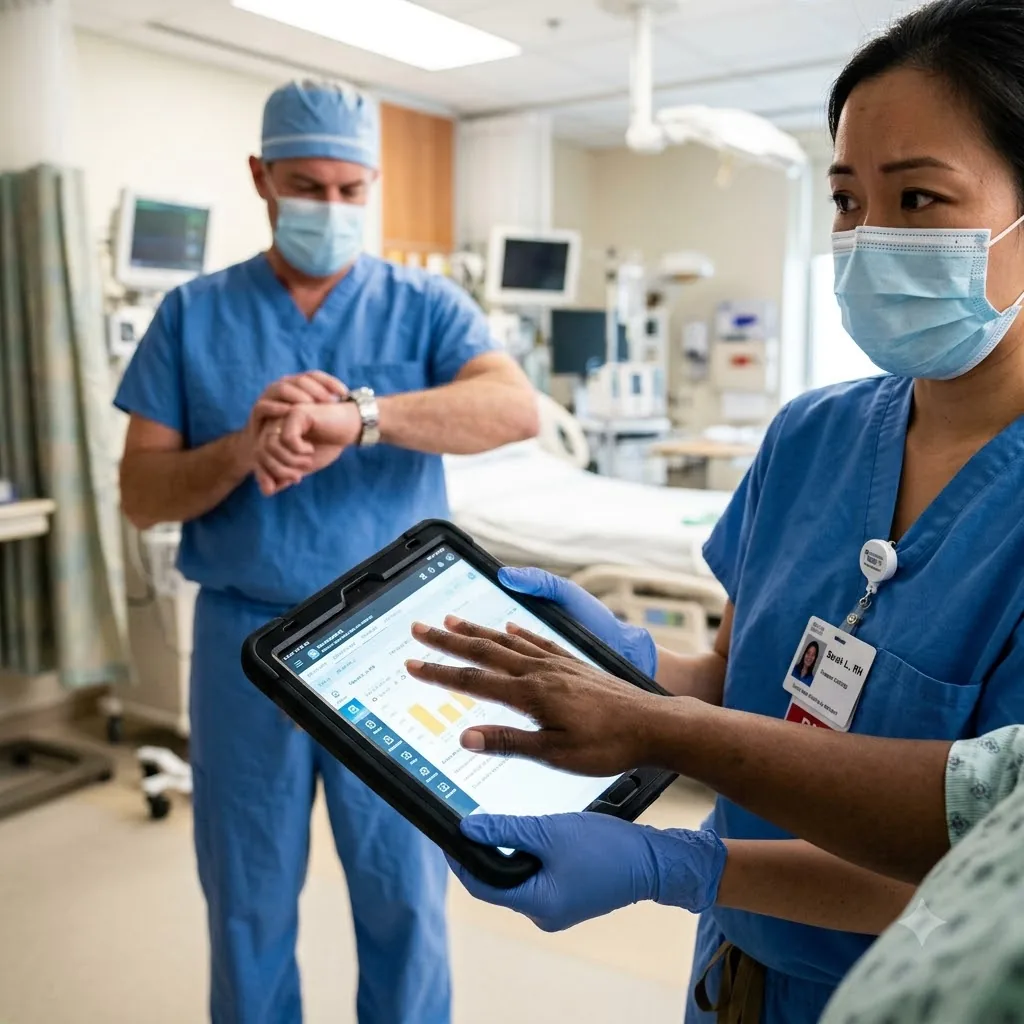
He was out of his blood-stained scrubs, dressed in a crisp, clean shirt and his signature white coat. He was holding an electronic tablet, dictating his post-op surgical notes into the hospital’s voice-recognition software. As I walked past, I heard fragments of his calm, measured voice. He was officially describing a “sudden, unpredictable onset of severe eclampsia” followed by his own “rapid, life-saving surgical intervention.”
The system was already correcting itself. The charting software wouldn’t record the hours he spent ignoring Chloe’s board-rigid abdomen. It wouldn’t log his attempt to have me thrown out by security for demanding he palpate her stomach. The hospital’s data would only show that when the crisis officially materialized on the backup monitor, Dr. Lin performed a flawless crash C-section. On paper, his record would remain pristine. He was the hero of the shift.
But as my boots clicked against the lobby tile, Dr. Lin stopped mid-sentence. He looked up from his tablet, and his eyes locked onto mine.
The broad, relaxed smile was completely gone. The arrogant certainty that usually carried him through these halls had evaporated. His face was drawn, the skin around his eyes gray and exhausted. His hand, gripping a paper coffee cup, was trembling so violently that dark liquid sloshed against the plastic lid, staining his knuckles.
He knew. The chart could say whatever he wanted it to say, but he knew exactly what he had done. He had looked a dying woman in the face, dismissed her silent agony as mild anxiety, and praised her for being quiet while she bled.
I didn’t say a word to him. I just kept walking, pushing through the heavy glass rotation doors and stepping out into the cold morning air. The hospital towered behind me, a massive, unfeeling machine operating exactly as it was designed to. I zipped my jacket up against the chill, bearing the heavy, silent exhaustion of knowing the truth in a place that only cared about the record.