Story code: ST-000862
Part 2: Emergency Remediation
The massive F-550 dump truck blocked the afternoon sun, casting a long, sharp shadow over the torn earth of Elias’s front yard. The air brakes exhaled a loud, piercing hiss, followed immediately by the heavy metallic slam of the driver’s door. Three men in neon yellow safety shirts climbed out, their heavy boots hitting the asphalt in unison. Before they could unlatch the rear trailer gate, a pristine, silver luxury sedan pulled in tight behind the truck, parking aggressively close to the curb.
The driver’s side door of the sedan swung open, and Richard Vance stepped out. Vance, the current president of the neighborhood association, wore a crisp, pale blue polo shirt tucked into khaki slacks that looked entirely unsuited for the ninety-degree heat. He held a thick, black plastic clipboard pressed against his chest like a shield.
Elias did not move from his position near the center berm. He felt the heavy, rhythmic thrum of the idling diesel engine traveling through the compacted soil, traveling straight up the thick rubber soles of his boots. He glanced down at the small receiver clipped to his leather belt. The vibration sensors buried along the perimeter of the river stones were already registering an alarming, erratic frequency.
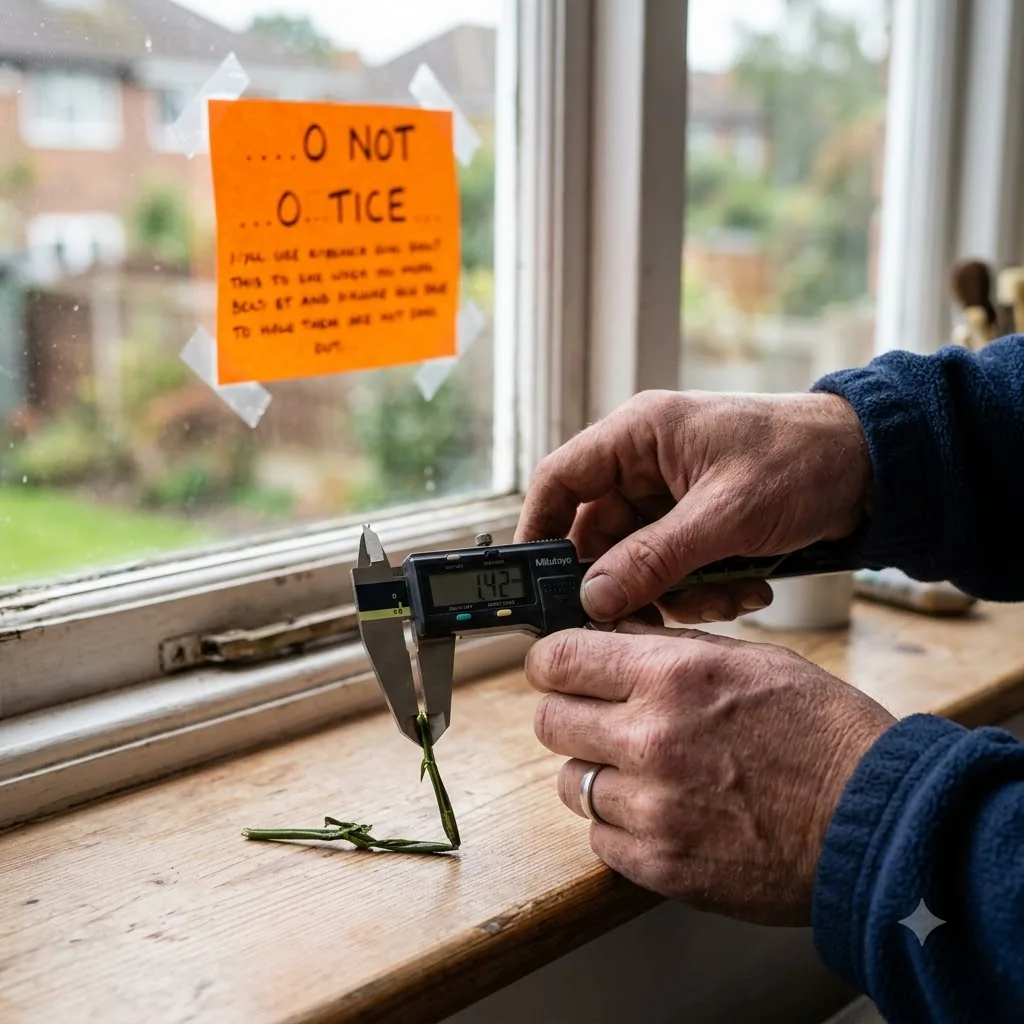
“I saw you peel the notice off the glass, Elias!” Vance shouted over the engine noise, marching up the driveway but stopping precisely at the edge of the property line. “That means you’ve been formally served. The grace period expired at noon today.”
Elias looked up, his face an unreadable mask, his hand still resting over his calipers. “The notice demanded remediation by the end of the week, Richard. It is Tuesday.”
“That was before you decided to build a mud fortress in the middle of a high-value residential zone,” Vance snapped, tapping a silver pen aggressively against the metal clip of his board. “The executive committee held an emergency session. Your property is actively depressing the market value of the entire cul-de-sac. We authorized immediate contractor intervention. That four thousand eight hundred dollars was just your punitive fine. You are also being billed eight thousand two hundred dollars for today’s sod, labor, and equipment. And if you interfere, we’re calling the sheriff to have you removed.”
Elias tracked the movements of the landscaping crew. Two of the men were unchaining a tracked mini-skid steer from the flatbed trailer. The machine was heavy, armored in scraped red paint, with a jagged, steel-toothed bucket resting on the wooden deck. If that three-thousand-pound machine touched the soil anywhere within a ten-foot radius of the berm, the sheer weight of the treads would compress the earth enough to collapse the fragile, subterranean pocket he had spent months stabilizing.
“You do not have the legal authority to run heavy machinery on my private property,” Elias said, keeping his voice entirely level. He took one step backward, placing his heels directly against the outer ring of smooth river stones, shielding the center with his body.
“Read your covenants, Elias,” Vance sneered, waving the clipboard toward the sky. “Article 4, Section 12. The association reserves the right of access to abate any severe, uncorrected aesthetic violations. This whole lot is a severe violation. Level it.”
Vance directed his last command at the crew foreman. The foreman, a burly man chewing on a plastic toothpick, hesitated for a fraction of a second, looking at Elias standing rigidly in the dirt. Then, he shrugged indifferently, turned to the operator on the trailer, and spun his finger in the air.
The diesel engine of the skid steer roared to life, a deafening, mechanical scream that sent a fresh wave of panic through Elias’s monitoring equipment. The digital readout on his belt flashed, the vibration metric jumping aggressively into the yellow zone. The operator backed the heavy machine down the steel ramps. The metal tracks slammed onto the concrete driveway with a violent crash, sending a sharp, devastating shockwave through the ground.
Elias flinched, his eyes darting to the dirt at his feet. A microscopic fissure, no wider than a single strand of hair, spiderwebbed across the dust just inside the rock perimeter. The structural tension of the soil roof was already compromising under the acoustic assault.
“Stop the machine,” Elias said. His voice was not loud, but it carried a cold, absolute edge that briefly cut through the mechanical noise.
Vance laughed, a short, breathy sound of pure condescension. “Don’t listen to him. Start with that ugly dirt mound in the middle. Grade it flat. We need a level base for the Bermuda grass pallets arriving at three o’clock.”
The skid steer pivoted on its tracks, the heavy steel treads grinding Elias’s driveway into a fine white powder. It lurched forward, crossing the property line, its massive bucket hovering just inches above the torn earth.
Elias did not step aside. He reached into his pocket and wrapped his bare hand around his calipers, squeezing the cold steel until his knuckles turned white. He calculated the distance. Ten feet. Eight feet. The operator stared at him through the metal cage of the cab, his hand resting on the joystick, waiting for the crazy homeowner to jump out of the way.
“I am telling you,” Elias said, locking eyes with the foreman. “If you drop that bucket, you will cause irreversible damage. Move it back to the street.”
“Last warning, Elias!” Vance yelled, pulling his cell phone from his khaki pocket. “Move, or I dial 911 right now. I am not playing games with you anymore. The turf goes down today.”
The skid steer crept closer. Six feet. The ground trembled violently beneath Elias’s boots. His belt monitor chirped-a sharp, piercing, repetitive beep. The internal temperature of the chamber was spiking. The intense vibrations were causing the carefully stratified layers of soil to rub together, generating friction, destroying the delicate oxygen exchange network he had engineered.
Elias knelt instantly, entirely ignoring the roaring machine bearing down on him. He placed his bare hands flat against the top of the berm. The soil was alarmingly warm against his palms. The microscopic fissure he had spotted earlier had widened into a jagged crack, exposing a millimeter of absolute darkness below.
The operator pulled a lever, and the heavy steel bucket dropped with a massive, metallic thud into the dirt just four feet away from Elias’s knees, biting aggressively into the topsoil to establish a grading angle.
A sharp, sickening crunch echoed from deep beneath the berm.