Story code: ST-000862
Part 4: The Dead Zone
The bailiff moved with blunt, practiced efficiency. A heavy hand locked onto Vance’s collar, violently peeling the HOA president off Elias’s canvas jacket. Vance hit the linoleum floor hard, the air driven from his lungs in a sharp, pathetic gasp. Handcuffs clicked with cold, metallic finality, echoing sharply across the municipal courtroom. Elias calmly smoothed the wrinkled lapels of his work coat, his breathing steady, watching as Vance was dragged backward through the heavy oak doors, still screaming about property values and neighborhood aesthetics until the latch clicked shut.
That was the exact moment the victory was sealed. The permanent federal injunction was unequivocally upheld by Judge Albright. The neighborhood association’s executive board, utterly terrified of federal felony charges and the immediate public relations nightmare of their president’s televised assault arrest, convened an emergency session that very evening. They ousted Vance, erased the retroactive fines, and legally neutralized the turf mandate for Elias’s lot.
But forty-two days later, Elias sat on the edge of his wooden front porch, staring at a legally protected wasteland.
Marcus Thorne’s meticulous, airtight legal defense had not been free. The final invoice had consumed exactly seven thousand, five hundred and forty dollars-every cent of Elias’s emergency savings, the entirety of his modest checking account, and the cash from liquidating his secondary environmental sensors. He had no money left for mortgage payments, let alone the expensive, specialized soil amendments required to maintain a delicate micro-ecosystem.
Worse was the heavy, cream-colored envelope resting open on his kitchen counter. The Department of the Interior had officially terminated his contract. The grueling, prolonged legal battle, the mandatory court appearances for Vance’s criminal assault trial, and the agonizing delays in filing his seasonal apiary reports had severely breached his federal service agreement. The government bureaucracy did not factor in municipal court delays or heroic stands against heavy machinery; they only recognized missed data deadlines. Without the federal grant money, he had lost his sole source of income and his official title.
Elias stood up, his knee joints aching with a deep, lingering exhaustion, and walked down the concrete driveway. The pristine silver sedan was permanently gone from the street, Vance’s house sitting quietly behind drawn blinds with a fresh “For Sale” sign jammed into the mandated ryegrass. The neighborhood was finally still. No landscapers. No neon orange stickers slapped violently onto his glass door.
He knelt by the center berm. The protective ring of smooth river stones remained exactly where he had meticulously placed them. No heavy diesel machinery had touched the soil in six weeks. The federal buffer zone was absolute and unquestioned.
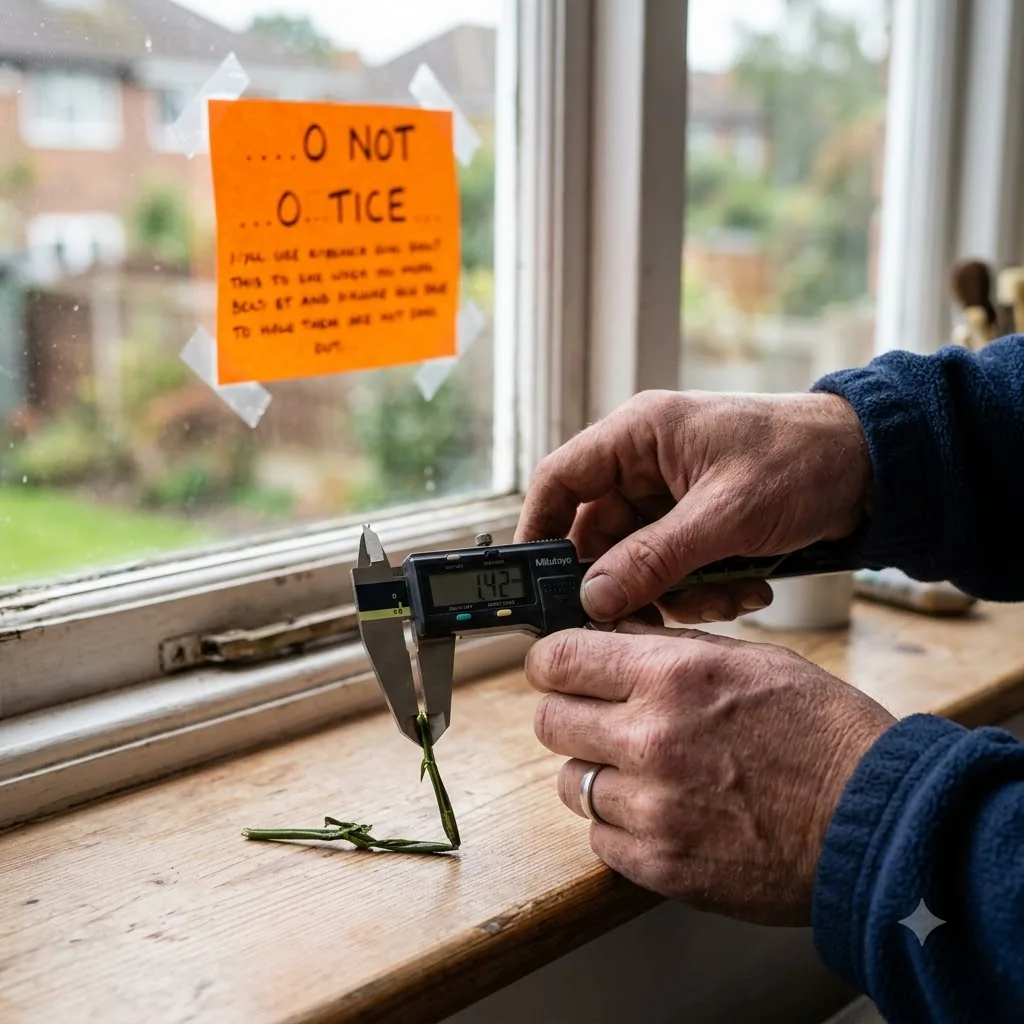
He pulled the heavy steel calipers from his leather tool belt. He did not turn on the digital display. There was no longer any need for microscopic precision.
The pale green stems of the *Monarda punctata*-the critical native host plants-were completely gone. In their place stood brittle, skeletal brown stalks. During the grueling weeks spent trapped in sterile legal offices, preparing affidavits, and enduring endless depositions under buzzing fluorescent lights, Elias had not been able to monitor the intricate moisture levels of the soil. He had missed his strict four-hour observation windows. He had missed the critical three-day span when the ambient humidity plummeted and a brutal, unseasonable heat wave baked the exposed topsoil.
He pinched a dead, withered leaf between his thumb and forefinger. It crumbled instantly into dry, gray dust, blowing away into nothingness on the faint afternoon breeze.
Without the deep, stabilizing shade of the host plants, the subterranean microclimate had fatally destabilized. He reached into his pocket and pulled out his primary digital soil thermometer. He pressed the metal probe deep into the center of the berm, pushing through the heavily compacted dirt, watching the LCD screen intently.
Eighty-six point four degrees.
The required hibernation envelope for *Bombus affinis* was precisely forty-eight degrees.
Elias slowly withdrew the metal probe. He picked up his soft-bristled brush, usually reserved for delicate, millimeter-level excavation, and gently swept away the top layer of dry, cracked earth. He worked in absolute silence, his movements heavy and automatic, the mechanical hum of a distant lawnmower echoing meaninglessly from three streets over.
Two inches down, he found the primary chamber. The intricate, wax-lined walls of the nest had melted and completely collapsed under the prolonged, unmitigated heat. The delicate structural integrity he had spent three years engineering was entirely ruined. The hibernating queens within the envelope, the critically endangered creatures he had sacrificed his livelihood and his savings to defend, had not survived the thermal spike. They had quietly died while he was sitting in a courtroom fighting to save them.
He sat back on his heels, the dry dust settling over the worn rubber toes of his work boots. The property was legally his. The boundaries were mathematically secure. No one would ever drive a commercial mower over his lot again. He had won the war against the neighborhood association, completely and permanently.
Elias closed his eyes, the heavy calipers resting uselessly in his open palm. He was completely alone in his perfectly protected, utterly lifeless yard.