Story code: ST-000862
Part 3: The Supremacy Clause
The fluorescent lights of Municipal Courtroom 4B hummed at an irritatingly inconsistent 59.8 hertz. Elias sat perfectly still at the heavy oak defense table, his hands resting flat on the thighs of his clean canvas work pants. He had aligned his weathered, leather-bound notebook precisely with the ninety-degree corner of the wood. The sterile, heavily conditioned air of the civic building smelled faintly of floor wax and ozone, a jarring contrast to the rich, complex scent of loam and crushed leaves he breathed every day.
Two tables away, Richard Vance sat at the plaintiff’s bench. Vance wore a tailored charcoal suit, his posture rigid and triumphant. His thick, black plastic clipboard rested beside his manicured hands like a trophy. Beside him, the neighborhood association’s retained litigator, a man with a booming, theatrical voice, was pacing in front of the judge’s elevated desk. The lawyer pointed an expensive pen at a large digital monitor displaying a bright, high-resolution photograph of Elias’s torn front yard, followed by a scanned invoice.
“Willful, malicious destruction of community property values, Your Honor,” the HOA attorney projected, ensuring his voice carried to the back of the empty gallery. “Mr. Elias deliberately maintained a nuisance dirt mound, actively defying Article 4, Section 12 of the community covenants. The association’s executive board executed its legal right to immediately remediate the blight. We ask the court to uphold the thirteen thousand and twenty-dollar lien placed on the property to cover the punitive fines, the heavy equipment rental, and the installation of the required Bermuda turf.”
The municipal judge, a stern woman named Albright with silver hair pulled into a tight bun, adjusted her reading glasses. She looked over the stack of HOA covenants and turned her attention to the defense table.
“Counsel?” Judge Albright asked, looking at Elias’s attorney. “Does your client dispute the presence of this non-compliant organic matter, or the measurements of the unapproved landscaping?”
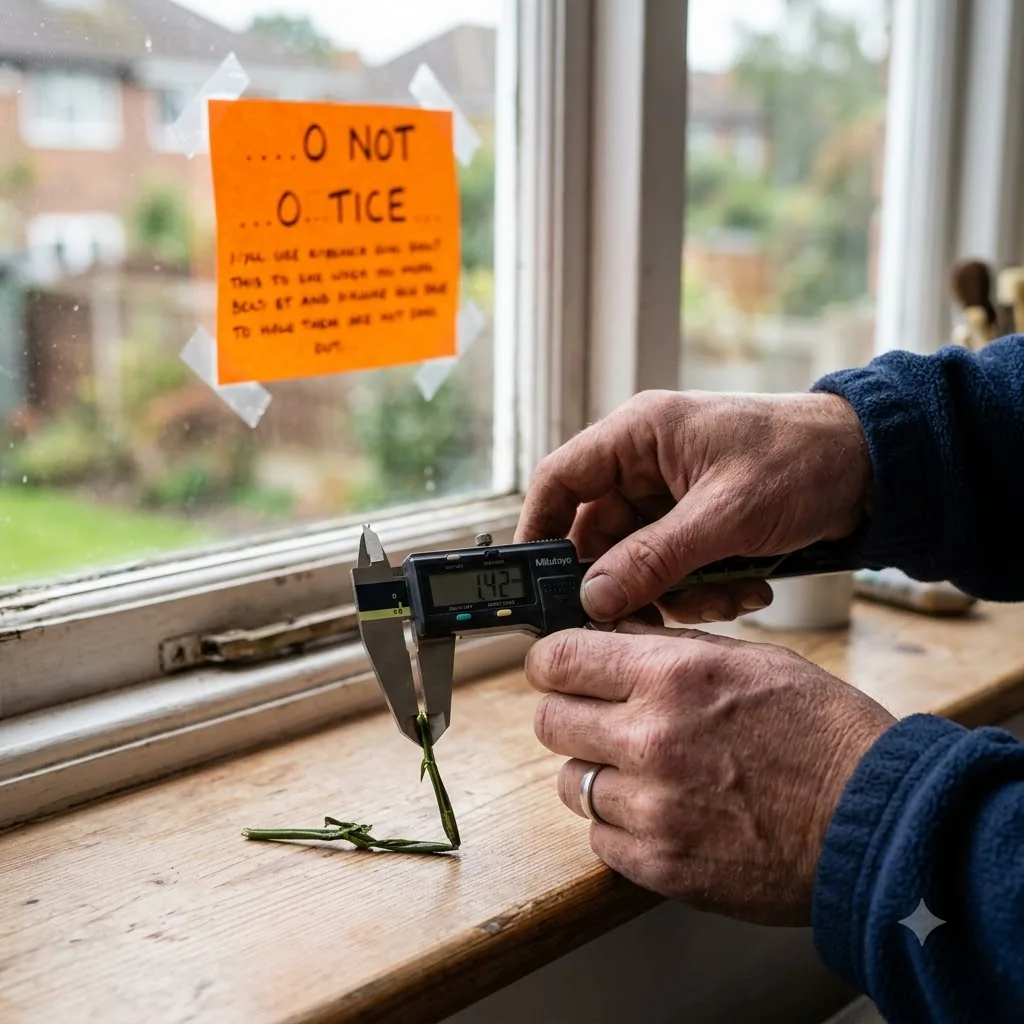
Marcus Thorne, Elias’s attorney, stood up slowly. He did not pace. He opened a single, incredibly thin manila folder. “We do not dispute the measurements, Your Honor. My client’s measurements are, in fact, relentlessly accurate down to the hundredth of a millimeter.”
Vance smirked, leaning back in his chair and whispering something smug to his litigator.
“We do, however,” Marcus continued, his voice devoid of any theatrics, “dispute the association’s legal jurisdiction over that specific twelve-square-inch grid of soil, and the subterranean structure beneath it.”
Marcus walked toward the bench, handing a single sheet of heavy, watermarked paper to the bailiff. Elias watched the paper change hands. He kept his breathing slow and measured. The sickening crunch of the soil roof from Tuesday afternoon still echoed in his memory. He had spent the last forty-eight hours on his stomach, using a pair of surgical tweezers and a soft camel-hair brush to carefully excavate the collapsed dirt from the ruined antechamber. He had meticulously verified that the primary hibernation envelope below it remained sealed. It had held. Barely.
“Your Honor,” Marcus said, projecting a new document onto the courtroom monitor. “What the neighborhood association describes as a ‘mud fortress’ and ‘non-compliant weeds’ is a registered, federally monitored incubation chamber for *Bombus affinis*-the Rusty Patched Bumble Bee.”
The hum of the HVAC suddenly seemed exceptionally loud as a heavy silence fell over the courtroom. Vance stopped whispering. His smirk instantly vanished.
“As of 2017, the species is classified as critically endangered by the United States Fish and Wildlife Service,” Marcus stated, pressing a button to advance the slide. A federal topographic overlay appeared on the screen. Elias’s exact property lines were highlighted in bold black, with a glowing red circle precisely covering the center berm. “My client is a specialized apiary entomologist contracted by the Department of the Interior. The specific green stems the HOA landscapers forcefully crushed were cultivated *Monarda punctata*, critical, endangered native host plants. The berm was a structural reinforcement for an active nesting site. Federal law mandates a fifty-foot absolute non-disturbance buffer zone around any known nest.”
Vance stood up abruptly, his wooden chair scraping violently against the linoleum floor. “That is ridiculous! It’s a dirt patch in a residential subdivision! Our covenants legally mandate seventy percent ryegrass or Bermuda! Everyone signed it!”
“Mr. Vance, sit down immediately,” Judge Albright warned, her eyes rapidly scanning the watermarked paper the bailiff had handed her.
“Your Honor, the covenants were signed by the homeowner upon purchase,” the HOA attorney interjected, though his booming voice had suddenly lost its confident edge. “Aesthetic regulations are legally binding civil agreements.”
“Not when they violate the Endangered Species Act, Counsel,” Judge Albright replied coldly. She looked up, fixing a severe gaze on the HOA’s table. “Under the Supremacy Clause, federal environmental protections unconditionally supersede municipal guidelines or civil neighborhood mandates. In fact, reviewing this Fish and Wildlife injunction, which was filed and approved six months before your landscaping crew arrived, Mr. Vance is incredibly fortunate that Mr. Elias physically placed himself in front of that machinery.”
Elias watched Vance’s face cycle from a deep, furious red to a sickly, bloodless white. The pristine, authoritarian image Vance had curated for the cul-de-sac was dissolving in real time under the fluorescent lights.
“Had that skid steer completely collapsed the primary subterranean chamber,” Judge Albright continued, her voice echoing sharply, “your neighborhood association would currently be facing federal felony charges and catastrophic EPA fines. Because the plaintiff possessed absolutely zero legal authority to alter a federally protected habitat, the property lien is entirely invalid. The retroactive fines are dismissed with prejudice.”
She brought her heavy wooden gavel down. The sharp *crack* snapped through the room like a gunshot.
“Case dismissed.”
Elias calmly reached forward and closed his leather-bound notebook, ensuring the edges aligned perfectly with the table.
The precise, methodical motion seemed to snap the absolute last remaining thread of Vance’s self-control.
“No!” Vance screamed. The sound was raw, stripped of all careful suburban decorum.
Before the HOA attorney could even raise a hand to stop him, Vance lunged across the center aisle. He vaulted clumsily over the low wooden divider separating the tables, the shoulder seam of his tailored charcoal suit jacket ripping violently. He slammed heavily into Elias’s defense table, scattering Marcus’s neat files and sending the heavy black clipboard flying across the room to shatter against the wall.
Elias didn’t flinch. He sat perfectly still as Vance grabbed the heavy canvas lapels of his work jacket, yanking him aggressively forward.
“You think you can ruin my neighborhood with your filthy bugs?!” Vance roared, his face mere inches from Elias’s, a spray of spittle hitting Elias’s cheek. Vance’s perfectly manicured fingers dug desperately into the tough fabric, shaking Elias with a chaotic, uncoordinated fury. “I’ll pave over your whole damn lot! I’ll pave it!”