Story code: ST-000891
Part 4: The Bare Studs
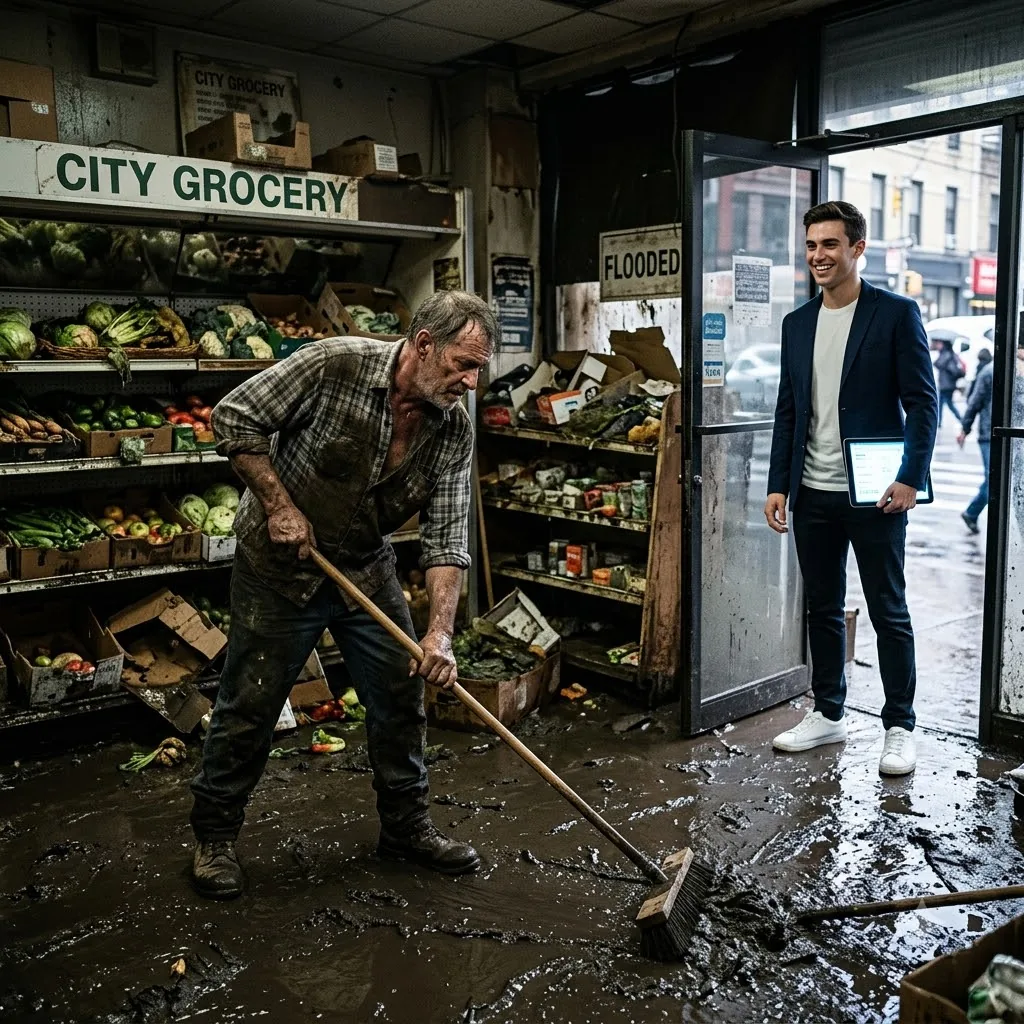
Mateo’s thumb slammed against the digital share icon in the top right corner of the tablet screen. Bryce lunged, his pristine white sneakers slipping on the slick, toxic mud coating the linoleum. Mateo sidestepped the grasping hands, pivoting his shoulder to shield the device.
“You little piece of trash,” Bryce hissed, losing his balance and slamming hard against the edge of a rusted, waterlogged deli rack. The impact sent a fresh wave of spoiled, stagnant water washing over his expensive chinos.
Mateo ignored him, his heart pounding a frantic rhythm against his ribs. He tapped the mail application, typing his own personal email address into the recipient line with trembling, mud-slicked fingers. He attached the insurance denial letter and the artisan wine bar business plan. He hit send. A tiny paper airplane swooshed across the screen, confirming the transfer just as Bryce recovered and snatched the silver tablet from Mateo’s grip.
“You think an email changes anything?” Bryce snarled, furiously wiping the screen against his sweater to check if the files were gone. His carefully manicured facade had completely shattered, revealing the panicked, vicious predator underneath. “That is stolen proprietary data. My lawyers will crush you before you even see the inside of a courtroom. And I am still freezing the state check.”
“Keep it,” Mateo said, his voice surprisingly steady. The heavy stone of panic that had weighed in his chest all morning was gone, replaced by a cold, hardened clarity. “Get out of my store.”
Bryce glared at him, his chest heaving. He looked down at his ruined clothes, then back at Mateo. “Tuesday, Mateo. When the city slaps a red tag on the door, don’t come begging.”
He turned and marched out, his ruined shoes squeaking against the wet tile.
Tuesday arrived with the oppressive, suffocating heat of late summer. The promised city health inspector did not come, but the neighborhood did.
Mateo stood near the shattered front entrance, tying a heavy-duty contractor bag shut. Beside him, Mr. Lin from the hardware store across the street tossed a ruined, swollen box of cereal into a rented commercial dumpster parked on the curb. Toward the back, Mrs. Vargas, who ran the local pharmacy, was using an industrial wet-vac to pull the last of the toxic river sludge from the warped floorboards. They had been working since dawn, forming a makeshift, unpaid crew to drag the biological hazard out of the bodega before the city could legally condemn the property.
Mateo wiped his sweating forehead with the back of a clean glove. His muscles screamed with exhaustion, but the paralyzing despair of the weekend had evaporated. The air in the store still smelled of damp earth and stale water, but the suffocating stench of rotting produce was finally gone.
He looked toward the bare, stripped-down walls. The community board meeting the night before had been a chaotic, shouting spectacle. Mateo had stood before the zoning committee, clutching a stack of printed emails and the wine bar prospectus. The moment the board members read the phrase “manufactured an artificial climate vulnerability,” the room had erupted. Bryce’s smooth, fast-track permitting process for the high-end artisan concept had hit an immediate, solid brick wall. The board unanimously voted to stall all demolition and zoning permits on the property pending a full municipal investigation into the deferred drainage citations.
Bryce was stuck. He couldn’t build his wine bar, he couldn’t legally gut the building, and his casualty clause was now the center of a massive, public fraud dispute.
But as Mateo surveyed the cavernous, empty room, the bitter reality of his victory settled over him like a heavy blanket. The board’s decision had stopped Bryce, but it hadn’t saved the bodega. The commercial refrigerators were still dead. The shelves were entirely bare, stripped down to their rusted metal frames. The joint disaster relief check was locked tight in an escrow account, just as Bryce had threatened, completely inaccessible while the lawyers prepared for a grinding, years-long civil war over the lease.
Mateo’s parents were still sleeping on military cots at the community center. The store had no insurance money, no inventory, and no immediate financial future. The abyss Bryce had promised was real, and Mateo was standing right on the edge of it, staring down into the dark.
“Mateo!” Mr. Lin called out, tossing a fresh pair of heavy leather work gloves across the room. “The dumpster is almost full. We need to start breaking down the drywall before the mold sets into the wooden studs.”
Mateo caught the gloves against his chest. He looked down at the rough leather, then back up at the empty space where the glass deli counter had stood for thirty years. Bryce had called it a blank canvas, assuming he could just wash away Mateo’s family and paint his own lucrative future over their ruins.
It was a blank canvas now, but not for a wine bar. It was a gutted, stripped-down battlefield. Mateo pulled the heavy gloves onto his blistered hands. He didn’t have the state money, and he didn’t have the insurance, but as he walked toward the back wall to join his neighbors, he knew he wasn’t going to just walk away. They were going to fight for every single inch.