Story code: ST-000894
Part 1: The Settlement
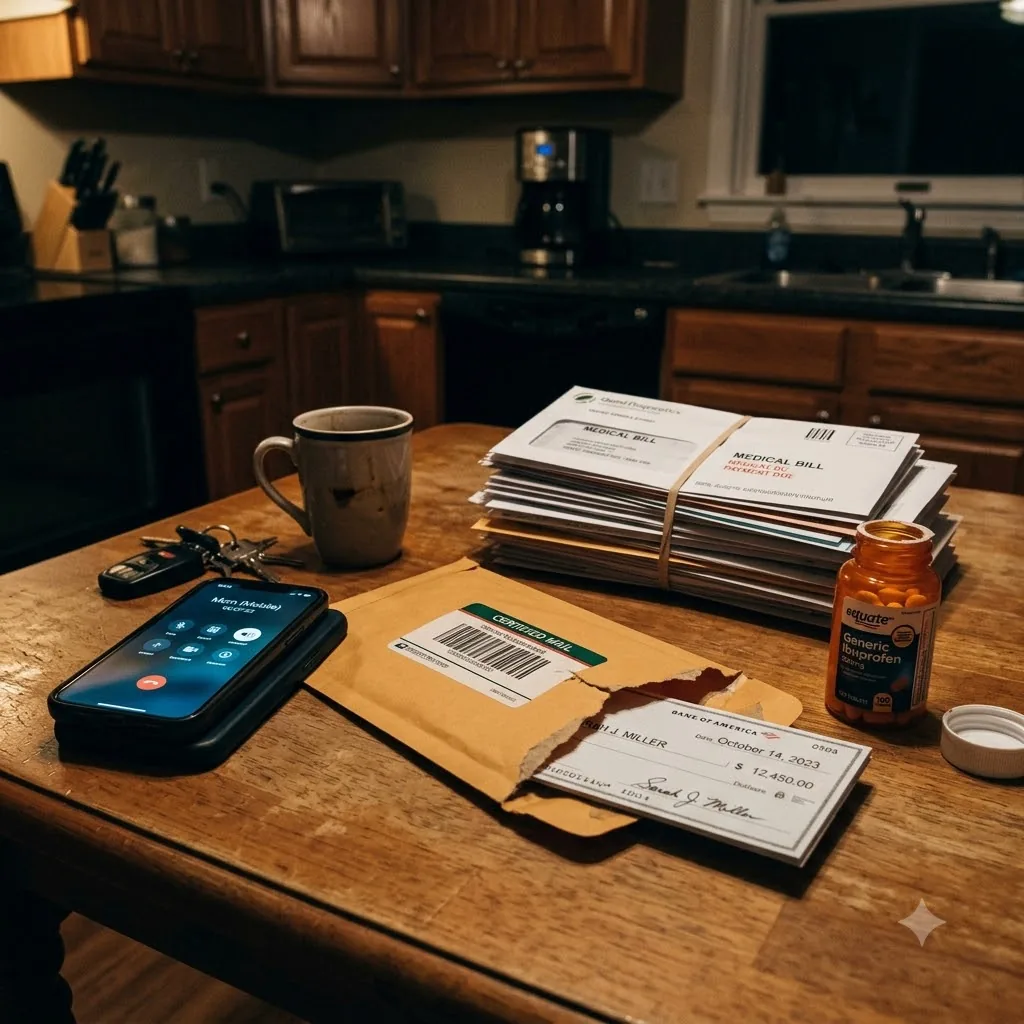
Marcus sat perfectly still at the scratched formica kitchen table, staring at a piece of heavy cream paper worth two point eight million dollars. It lay exactly equidistant between a towering, rubber-banded stack of final-notice medical bills and a bulk-sized bottle of generic ibuprofen. The speakerphone on his cracked Android lit up the dim room, playing the voicemail for the fourth consecutive time.
“We broke them, Marcus.” Attorney David Hirsch sounded breathless, his voice echoing with the ambient noise of a busy downtown street. “The corporate counsel just signed the final release. No more warehouse. No more algorithm dictating your bathroom breaks. You beat the machine, my friend. Deposit that today and enjoy the rest of your life.”
The recording clicked off, plunging the apartment back into the heavy, oppressive hum of the refrigerator. Marcus did not reach for the check. He kept his hands resting flat on his thighs, his eyes locked on the zeroes printed with laser precision across the bank draft. Six zeroes. A two and an eight proudly standing at the front.
He had spent four years fighting for this exact piece of paper. He had sat through grueling depositions in freezing conference rooms, listening to men in tailored suits argue that he was simply careless. They had presented spreadsheets and charts, claiming the fulfillment center’s robotic pace had nothing to do with the incident on aisle fourteen. They blamed his footwear, his posture, his hydration levels. They blamed everything except the proprietary software that demanded three hundred items picked per hour, a relentless digital whip that punished a single second of hesitation.
Now he had won. The corporation had folded, quietly settling with a non-disclosure agreement and a payout large enough to silence any further complaints. He was officially a millionaire. He would never have to scan a barcode again. He would never hear the high-pitched chirp of the wrist-monitor warning him that his efficiency rating had dropped below ninety-eight percent.
He knew he should be calling his mother. He knew he should be crying tears of joy, or booking a flight to a tropical beach, or at least smiling. Instead, a cold, heavy dread settled deep in his chest, wrapping around his ribs like a wet, freezing towel.
The check was a receipt. It was a finalized transaction. As long as the lawsuit was active, he had a purpose, a burning anger that got him out of bed every morning. The adrenaline of the fight had been his primary fuel for thirty-six months. Now, the battle was over. The enemy had paid up and walked away. There was nothing left but the reality of what he had sold them.
Marcus shifted his weight slightly in the wooden chair. A sharp, electric warning flared through his lower half, a brutal reminder of the exchange. He froze instantly, holding his breath until the invisible surge receded into a dull, throbbing ache. His right hand moved with slow, practiced caution toward the ibuprofen. He fumbled with the child-proof cap, the plastic rattling loudly in the quiet kitchen. Two white pills tumbled out onto the laminate, coming to rest near the bottom edge of the multimillion-dollar check.
He stared at the pills, then back at the massive sum of money. The lawyers had worked out a neat, mathematical equation. They had calculated the cost of a human being’s structural integrity, modeled it out through actuaries, and negotiated it down to a lump sum. They had priced out his entire future, discounted it for present value, and printed it on security paper with a watermark.
He needed a glass of water to swallow the pills. The kitchen sink was only six feet away. Six feet of faded, peeling linoleum separated the table from the faucet. Before his employment at the warehouse, he would have crossed that distance in two effortless strides. He would have turned on the tap, drank straight from his cupped hands, and walked out the door.
Now, those six feet represented a complex, terrifying physical calculus. He placed both hands flat on the edges of the table. The wood felt cold and unyielding against his palms. He took a long, deep breath, mentally mapping the sequence of muscle contractions required to elevate his center of gravity. He had to brace his core, lock his left hip, and rely entirely on his shoulders to pull his mass upward.
He pushed down on the table, committing to the upward motion. The celebration was officially over. He locked his elbows, shifting the burden entirely to his upper body as he forced himself vertical. The dread he had been feeling materialized into blinding, white-hot reality the moment his weight settled downward. His right leg refused to accept the load. The limb buckled inward at a horrifying, unnatural angle, collapsing like a severed puppet string and sending him crashing hard into the sharp edge of the kitchen counter.
Marcus sat perfectly still at the scratched formica kitchen table, staring at a piece of heavy cream paper worth two point eight million dollars. It lay exactly equidistant between a towering, rubber-banded stack of final-notice medical bills and a bulk-sized bottle of generic ibuprofen. The speakerphone on his cracked Android lit up the dim room, playing the voicemail for the fourth consecutive time.
“We broke them, Marcus.” Attorney David Hirsch sounded breathless, his voice echoing with the ambient noise of a busy downtown street. “The corporate counsel just signed the final release. No more warehouse. No more algorithm dictating your bathroom breaks. You beat the machine, my friend. Deposit that today and enjoy the rest of your life.”
The recording clicked off, plunging the apartment back into the heavy, oppressive hum of the refrigerator. Marcus did not reach for the check. He kept his hands resting flat on his thighs, his eyes locked on the zeroes printed with laser precision across the bank draft. Six zeroes. A two and an eight proudly standing at the front.
He had spent four years fighting for this exact piece of paper. He had sat through grueling depositions in freezing conference rooms, listening to men in tailored suits argue that he was simply careless. They had presented spreadsheets and charts, claiming the fulfillment center’s robotic pace had nothing to do with the incident on aisle fourteen. They blamed his footwear, his posture, his hydration levels. They blamed everything except the proprietary software that demanded three hundred items picked per hour, a relentless digital whip that punished a single second of hesitation.
Now he had won. The corporation had folded, quietly settling with a non-disclosure agreement and a payout large enough to silence any further complaints. He was officially a millionaire. He would never have to scan a barcode again. He would never hear the high-pitched chirp of the wrist-monitor warning him that his efficiency rating had dropped below ninety-eight percent.
He knew he should be calling his mother. He knew he should be crying tears of joy, or booking a flight to a tropical beach, or at least smiling. Instead, a cold, heavy dread settled deep in his chest, wrapping around his ribs like a wet, freezing towel.
The check was a receipt. It was a finalized transaction. As long as the lawsuit was active, he had a purpose, a burning anger that got him out of bed every morning. The adrenaline of the fight had been his primary fuel for thirty-six months. Now, the battle was over. The enemy had paid up and walked away. There was nothing left but the reality of what he had sold them.
Marcus shifted his weight slightly in the wooden chair. A sharp, electric warning flared through his lower half, a brutal reminder of the exchange. He froze instantly, holding his breath until the invisible surge receded into a dull, throbbing ache. His right hand moved with slow, practiced caution toward the ibuprofen. He fumbled with the child-proof cap, the plastic rattling loudly in the quiet kitchen. Two white pills tumbled out onto the laminate, coming to rest near the bottom edge of the multimillion-dollar check.
He stared at the pills, then back at the massive sum of money. The lawyers had worked out a neat, mathematical equation. They had calculated the cost of a human being’s structural integrity, modeled it out through actuaries, and negotiated it down to a lump sum. They had priced out his entire future, discounted it for present value, and printed it on security paper with a watermark.
He needed a glass of water to swallow the pills. The kitchen sink was only six feet away. Six feet of faded, peeling linoleum separated the table from the faucet. Before his employment at the warehouse, he would have crossed that distance in two effortless strides. He would have turned on the tap, drank straight from his cupped hands, and walked out the door.
Now, those six feet represented a complex, terrifying physical calculus. He placed both hands flat on the edges of the table. The wood felt cold and unyielding against his palms. He took a long, deep breath, mentally mapping the sequence of muscle contractions required to elevate his center of gravity. He had to brace his core, lock his left hip, and rely entirely on his shoulders to pull his mass upward.
He pushed down on the table, committing to the upward motion. The celebration was officially over. He locked his elbows, shifting the burden entirely to his upper body as he forced himself vertical. The dread he had been feeling materialized into blinding, white-hot reality the moment his weight settled downward. His right leg refused to accept the load. The limb buckled inward at a horrifying, unnatural angle, collapsing like a severed puppet string and sending him crashing hard into the sharp edge of the kitchen counter.