Story code: ST-000921
Part 1: The Friday Night Pivot
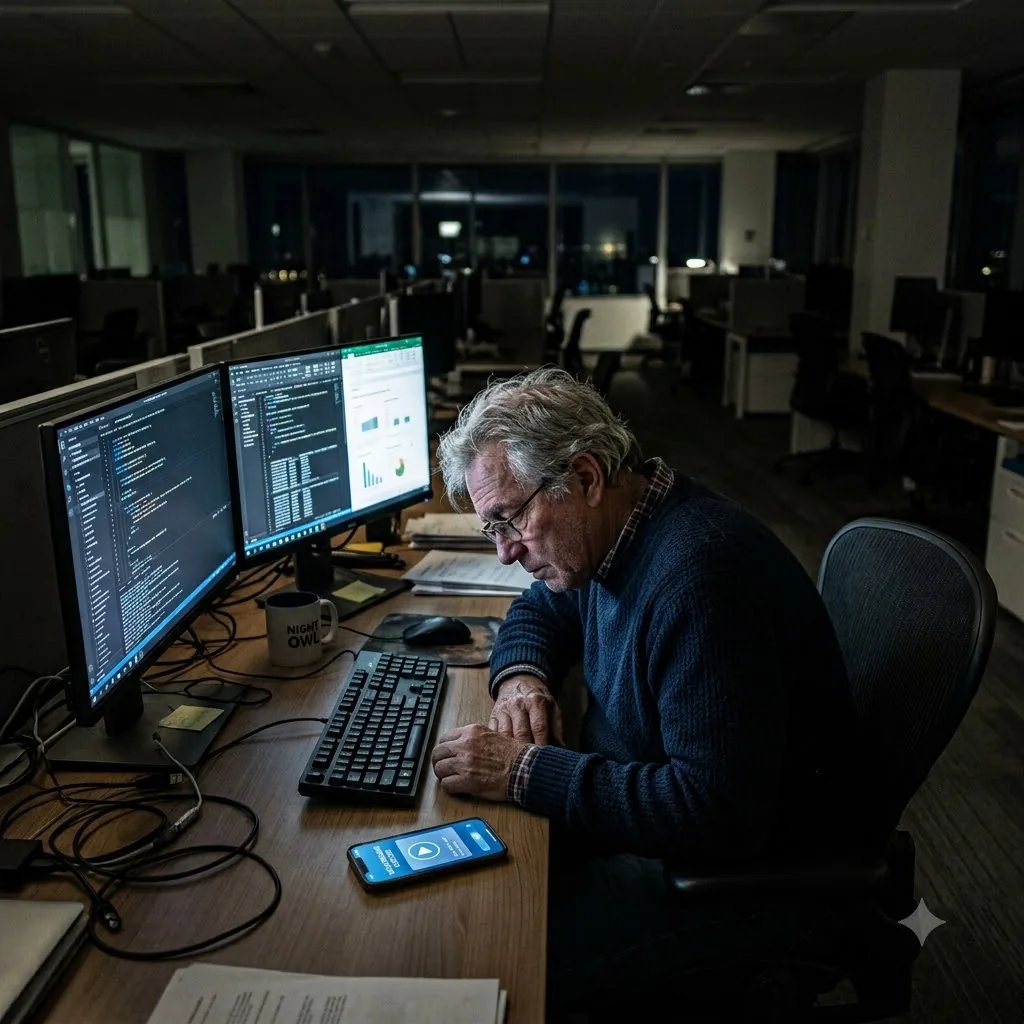
The harsh blue glow of a single ultrawide monitor painted deep shadows into the lines of Arthur’s fifty-nine-year-old face. He sat perfectly still in the center of the dark, cavernous open-plan office, watching his cell phone vibrate silently on the desk. The screen displayed a photo of his daughter, her name pulsing alongside the green and red buttons, until Arthur reached out with a stiff, arthritic index finger and pressed decline.
The screen went black for a fraction of a second before a new notification illuminated the glass. It was an audio message from Julian, the twenty-eight-year-old founder of the startup. The timestamp read eleven-fourteen on a Friday night. Arthur exhaled, a slow and ragged breath that sounded too loud in the empty room, and tapped the play icon.
Julian’s voice blasted through the phone’s tiny speaker, aggressively loud and startlingly upbeat. “Arthur, my guy, happy Friday. Listen, I just finished a ten-mile run while listening to the Silicon Prophets podcast, and we need to pivot. Hard.”
Arthur stared at his monitor. The screen displayed the final, elegant lines of the database migration script he had spent the last three weekends writing, a piece of engineering that finally stabilized the chaotic mess of a platform Julian had originally outsourced. He had missed his daughter’s college graduation dinner for this deployment. He had missed his own anniversary dinner before his eventual divorce for the beta launch.
“The relational database is a dinosaur, Arthur,” Julian’s recorded voice chirped, filled with the breathless enthusiasm of a man who had never debugged a memory leak. “The podcast laid it all out. We are shifting to a hyper-fluid, AI-driven graph structure. Synergy, agility, absolute disruption. I need you to tear down the backend architecture immediately. Scrap the current repo. We go live with the new paradigm on Monday morning. I know you love coding on the weekends, so this is right up your alley. Let us synergize this pivot.”
The audio message ended with a synthetic little pop. Arthur sat in the ergonomic chair he had purchased with his own money, surrounded by beanbag chairs and neon signs that read “Hustle Harder” in electric pink tubing. The silence of the abandoned floor pressed in on him. His knuckles throbbed. The coffee in his mug had turned into a cold, bitter sludge hours ago.
Arthur slowly turned his head to look at the framed photograph sitting next to his keyboard. It was the only personal item on the long slab of reclaimed wood that served as his desk. The photo showed his daughter standing in front of her high school, a lifetime ago. He had declined her call tonight because he had promised her, just yesterday, that he would be on a flight to visit her by six o’clock this evening. His suitcase was still sitting beneath his desk, packed and useless. He had canceled the flight to ensure the server migration ran smoothly. Now, Julian wanted to delete the very foundation of that migration based on a thirty-minute podcast.
He picked up the phone again. He opened the messaging app. He stared at Julian’s contact profile, which featured a professional headshot of the young founder standing with his arms crossed, wearing a custom-tailored t-shirt. There was no malice in Julian’s voice note. That was the most devastating part. Julian simply did not factor in Arthur’s need for sleep, his family, or his humanity. To Julian, Arthur was a script-executing machine, a fleshy peripheral attached to the company’s infrastructure, expected to process buzzwords and output working platforms over the span of forty-eight hours. The demand to destroy six months of grueling, relationship-ending labor was delivered with the casual tone of someone ordering a side of fries.
Arthur closed the messaging app on his phone. He placed the device face down on the desk, right next to the picture of his daughter. The IDE on his primary monitor displayed the intricate, beautiful logic he had bled for. It was a masterpiece of efficiency, designed to keep the company’s fragile ecosystem from collapsing under its own weight. On his secondary monitor, the server dashboard showed green lights across the board. The system was stable.
He reached out and wrapped his right hand around the mouse, feeling the familiar contours of the plastic against his palm. His left hand settled onto the mechanical keyboard. The tactile click of the keys echoed like tiny gunshots in the vast, empty room. Arthur minimized the code editor. He opened a fresh, black terminal window. The blinking cursor waited patiently at the root directory prompt. His reflection stared back at him in the dark background of the terminal application, a ghost of a man trapped behind the glass. He flexed his aching fingers one last time. He began to type.
The keystrokes were deliberate and steady. He bypassed the standard development environment. He authenticated directly into the core production servers. The system prompted him for his master credentials, the keys to the kingdom that only he possessed. He entered his long, complex password. The terminal granted him absolute access.
He typed the first part of a command line directive. It was a syntax that would execute recursively, targeting the root structure of the entire platform. He stared at the string of characters, his thumb resting heavily on the spacebar. He added the final flag to the command string, ensuring the operation would run silently and forcefully, overriding all safety protocols. Arthur took one deep breath of the stale office air and pressed the enter key.
The harsh blue glow of a single ultrawide monitor painted deep shadows into the lines of Arthur’s fifty-nine-year-old face. He sat perfectly still in the center of the dark, cavernous open-plan office, watching his cell phone vibrate silently on the desk. The screen displayed a photo of his daughter, her name pulsing alongside the green and red buttons, until Arthur reached out with a stiff, arthritic index finger and pressed decline.
The screen went black for a fraction of a second before a new notification illuminated the glass. It was an audio message from Julian, the twenty-eight-year-old founder of the startup. The timestamp read eleven-fourteen on a Friday night. Arthur exhaled, a slow and ragged breath that sounded too loud in the empty room, and tapped the play icon.
Julian’s voice blasted through the phone’s tiny speaker, aggressively loud and startlingly upbeat. “Arthur, my guy, happy Friday. Listen, I just finished a ten-mile run while listening to the Silicon Prophets podcast, and we need to pivot. Hard.”
Arthur stared at his monitor. The screen displayed the final, elegant lines of the database migration script he had spent the last three weekends writing, a piece of engineering that finally stabilized the chaotic mess of a platform Julian had originally outsourced. He had missed his daughter’s college graduation dinner for this deployment. He had missed his own anniversary dinner before his eventual divorce for the beta launch.
“The relational database is a dinosaur, Arthur,” Julian’s recorded voice chirped, filled with the breathless enthusiasm of a man who had never debugged a memory leak. “The podcast laid it all out. We are shifting to a hyper-fluid, AI-driven graph structure. Synergy, agility, absolute disruption. I need you to tear down the backend architecture immediately. Scrap the current repo. We go live with the new paradigm on Monday morning. I know you love coding on the weekends, so this is right up your alley. Let us synergize this pivot.”
The audio message ended with a synthetic little pop. Arthur sat in the ergonomic chair he had purchased with his own money, surrounded by beanbag chairs and neon signs that read “Hustle Harder” in electric pink tubing. The silence of the abandoned floor pressed in on him. His knuckles throbbed. The coffee in his mug had turned into a cold, bitter sludge hours ago.
Arthur slowly turned his head to look at the framed photograph sitting next to his keyboard. It was the only personal item on the long slab of reclaimed wood that served as his desk. The photo showed his daughter standing in front of her high school, a lifetime ago. He had declined her call tonight because he had promised her, just yesterday, that he would be on a flight to visit her by six o’clock this evening. His suitcase was still sitting beneath his desk, packed and useless. He had canceled the flight to ensure the server migration ran smoothly. Now, Julian wanted to delete the very foundation of that migration based on a thirty-minute podcast.
He picked up the phone again. He opened the messaging app. He stared at Julian’s contact profile, which featured a professional headshot of the young founder standing with his arms crossed, wearing a custom-tailored t-shirt. There was no malice in Julian’s voice note. That was the most devastating part. Julian simply did not factor in Arthur’s need for sleep, his family, or his humanity. To Julian, Arthur was a script-executing machine, a fleshy peripheral attached to the company’s infrastructure, expected to process buzzwords and output working platforms over the span of forty-eight hours. The demand to destroy six months of grueling, relationship-ending labor was delivered with the casual tone of someone ordering a side of fries.
Arthur closed the messaging app on his phone. He placed the device face down on the desk, right next to the picture of his daughter. The IDE on his primary monitor displayed the intricate, beautiful logic he had bled for. It was a masterpiece of efficiency, designed to keep the company’s fragile ecosystem from collapsing under its own weight. On his secondary monitor, the server dashboard showed green lights across the board. The system was stable.
He reached out and wrapped his right hand around the mouse, feeling the familiar contours of the plastic against his palm. His left hand settled onto the mechanical keyboard. The tactile click of the keys echoed like tiny gunshots in the vast, empty room. Arthur minimized the code editor. He opened a fresh, black terminal window. The blinking cursor waited patiently at the root directory prompt. His reflection stared back at him in the dark background of the terminal application, a ghost of a man trapped behind the glass. He flexed his aching fingers one last time. He began to type.
The keystrokes were deliberate and steady. He bypassed the standard development environment. He authenticated directly into the core production servers. The system prompted him for his master credentials, the keys to the kingdom that only he possessed. He entered his long, complex password. The terminal granted him absolute access.
He typed the first part of a command line directive. It was a syntax that would execute recursively, targeting the root structure of the entire platform. He stared at the string of characters, his thumb resting heavily on the spacebar. He added the final flag to the command string, ensuring the operation would run silently and forcefully, overriding all safety protocols. Arthur took one deep breath of the stale office air and pressed the enter key.