Story code: ST-001046
Part 2: The Multiplier
Marcus didn’t resist. The tablet slid from his rigid fingers with a faint scrape of heavy plastic against plastic. He felt a phantom weight lingering in his hands, the sudden emptiness leaving him entirely unmoored.
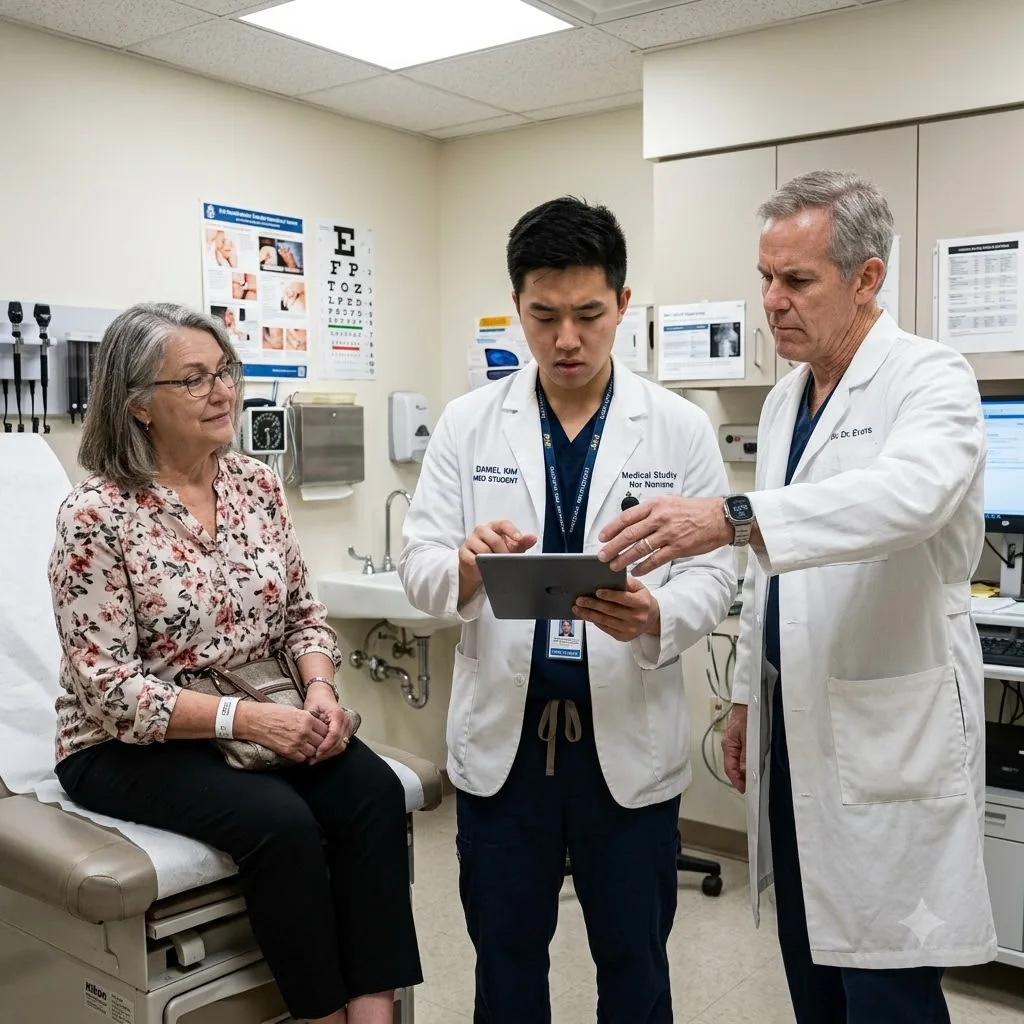
Dr. Chen didn’t look at Marcus. He stared down at the high-definition screen, balancing the device effortlessly in his left palm. With his right index finger, he bypassed the stylus entirely and brought his hand down toward the glass.
A quiet, cheerful chime emanated from the tablet’s tiny speaker. It sounded obscenely bright in the suffocating silence of Exam Room 4. The software had accepted the input. The demographic modifier was applied.
Marcus watched the screen reflexively, though he already knew the math. The raw clinical data-Mr. Hayes’s escalating blood pressure, his deteriorating lab results, his family history of early mortality-had yielded a borderline risk score. A score high enough to definitively warrant the advanced biologic intervention. But the final box, the demographic toggle, carried a negative multiplier. It was a mathematical subtraction based entirely on the color of Mr. Hayes’s skin, an archaic adjustment built into the very foundation of the hospital’s diagnostic software.
“Alright, Mr. Hayes,” Dr. Chen said, his posture shifting. His voice instantly reverted to the warm, professional tone of a seasoned, empathetic healer. He looked up from the tablet, offering the older man a reassuring, confident nod. “The final adjusted score is a 42.”
Mr. Hayes blinked heavily, rubbing his calloused palms against his bare knees. The paper gown crinkled loudly. “Is that… good? Forty-two?”
“It means you are below the threshold for the targeted biologic therapy,” Dr. Chen explained smoothly, slipping the tablet under his arm. “The algorithm adjusts for baseline demographics. Your modified score places you in the standard monitoring tier. We’ll stick with the current generic prescription, adjust your diuretics slightly, and see you back here in six months.”
Marcus felt a sickening drop in his stomach, as if the floor had simply dissolved beneath his rubber-soled shoes. The raw score without the modifier would have been a 55. The threshold for the biologic was 50. The standard prescription had already failed to halt the progression of the man’s symptoms for an entire year.
“Oh,” Mr. Hayes said. His shoulders slumped a fraction of an inch. The polite, accommodating smile returned to his weathered face, though it looked deeply strained at the corners. “I see. If the computer says so. I just… I get so tired, Dr. Chen. Walking from the bus stop to the mailbox feels like running a marathon lately. My ankles are swelling up again.”
“Standard progression for this stage,” Dr. Chen said, reaching out to pat the man’s shoulder with practiced warmth. “We’ll keep a close eye on it. My residents will wrap up your discharge paperwork at the front desk.”
Dr. Chen turned away from the examination table. The warmth vanished from his dark eyes the absolute instant his gaze met Marcus’s. He didn’t speak. He simply tilted his head toward the heavy oak door in a silent, undeniable command.
Marcus followed him out into the bright, bustling corridor. Sarah and David hurried out a moment later, keeping their heads down. They immediately retreated toward the nurses’ station under the pretense of finding an open terminal, desperate to avoid the blast radius of whatever was about to happen.
The hallway smelled strongly of industrial bleach, fresh linens, and stale institutional coffee. Medical alarms chirped in a discordant symphony from the surrounding bays. Dr. Chen stopped beside a row of brushed-steel supply carts, effectively cornering Marcus against a cork bulletin board overflowing with mandatory compliance notices.
“What exactly was that performance?” Dr. Chen kept his voice low, a deadly, controlled volume that forced Marcus to lean in to hear him over the noise of the ward.
“The multiplier,” Marcus said. His heart hammered wildly against his ribs, making his scrub top flutter with each beat. “The demographic adjustment in the formula. It’s built on a flawed premise from a 1999 observational study that didn’t even control for income or access to preventative care. It artificially depresses the risk score.”
Dr. Chen stared at him, his expression entirely devoid of sympathy. “It is the approved clinical pathway.”
“It just denied him the biologic,” Marcus said, his voice rising a fraction of an inch despite his terror. “He desperately needs that medication. His raw score qualified him. The only reason it dropped below the threshold is because the formula assumes his kidneys are inherently different based on his race.”
“I know exactly what the formula assumes,” Dr. Chen interrupted, his tone snapping like a dry twig underfoot. He stepped half a pace closer, invading Marcus’s personal space. “Do you think you are the first medical student to discover systemic inequalities? Do you genuinely believe you have suddenly unearthed some great moral truth that the rest of us simply missed?”
“Then why did we use it?” Marcus asked, his throat tight.
“Because we practice evidence-based medicine within an approved institutional framework,” Dr. Chen whispered fiercely. “We do not practice rogue, single-variable vigilantism on an iPad.”
“The framework is broken,” Marcus argued, his hands shaking so violently he had to shove them deep into the pockets of his white coat. “It’s objectively bad science. It’s actively harming him.”
Dr. Chen’s jaw tightened. A muscle leaped in his cheek. “Listen to me very carefully, Marcus. I am the son of a man who swept the floors of a hospital very much like this one. I am an Asian-American physician who spent twenty years navigating structural barriers, fighting for every dime of funding, and proving my baseline competence to people who looked exactly like you, just to become the Chief of this department.”
Marcus froze, the air leaving his lungs.
Dr. Chen tapped a stiff, unyielding finger against his own chest, right over his embroidered title. “Do not stand there in your pristine, legacy-admission white coat and attempt to lecture me on medical equity. Do not presume to use a sick patient’s chart as your personal soapbox to demonstrate to the world how progressive you are.”
Marcus felt his face flush a deep, burning red. The reprimand was flawlessly constructed. It was an impenetrable shield woven from Dr. Chen’s own undeniable, lived experiences with prejudice. It completely neutralized the clinical argument by framing Marcus’s hesitation as nothing more than arrogant, performative rebellion from a privileged student.
“I’m not trying to be a savior,” Marcus said, though his voice wavered pitifully under the crushing weight of the attending’s authority. “The math is just wrong. Mr. Hayes is going to get worse.”
“Mr. Hayes will receive the standard of care,” Dr. Chen corrected sharply. “Which is considerably more than he would receive if this clinic lost its accreditation because our residents arbitrarily refused to follow standardized diagnostic criteria.”
A rapid series of chimes echoed from the pager clipped to Dr. Chen’s belt. He glanced down at the digital display, then back up at Marcus, his face a mask of absolute authority.
“We have six more patients on this morning rotation,” Dr. Chen said, his voice dropping back to that terrifying, professional calm. “Three of them require the exact same risk assessment. You will pull up the next chart. You will conduct the physical exam. And you will execute the formula exactly as it is written in the hospital guidelines.”
Marcus looked past Dr. Chen’s shoulder. Through the narrow glass window of Exam Room 4, he could see Mr. Hayes slowly buttoning his faded flannel shirt, moving with the sluggish, agonizing exhaustion of a man whose body was quietly failing him.
“And if I can’t?” Marcus whispered, unable to tear his eyes away from the patient.
Dr. Chen didn’t blink. “Then I will pull you from the clinical floor immediately for gross insubordination, and I will personally recommend to the Dean that you be removed from the medical program before lunch. You have three minutes to compose yourself before we enter Room 5.”
Without waiting for a response, Dr. Chen turned and walked down the hall, the crisp white fabric of his coat snapping sharply behind him.