Story code: ST-001046
Part 1: The Assessment
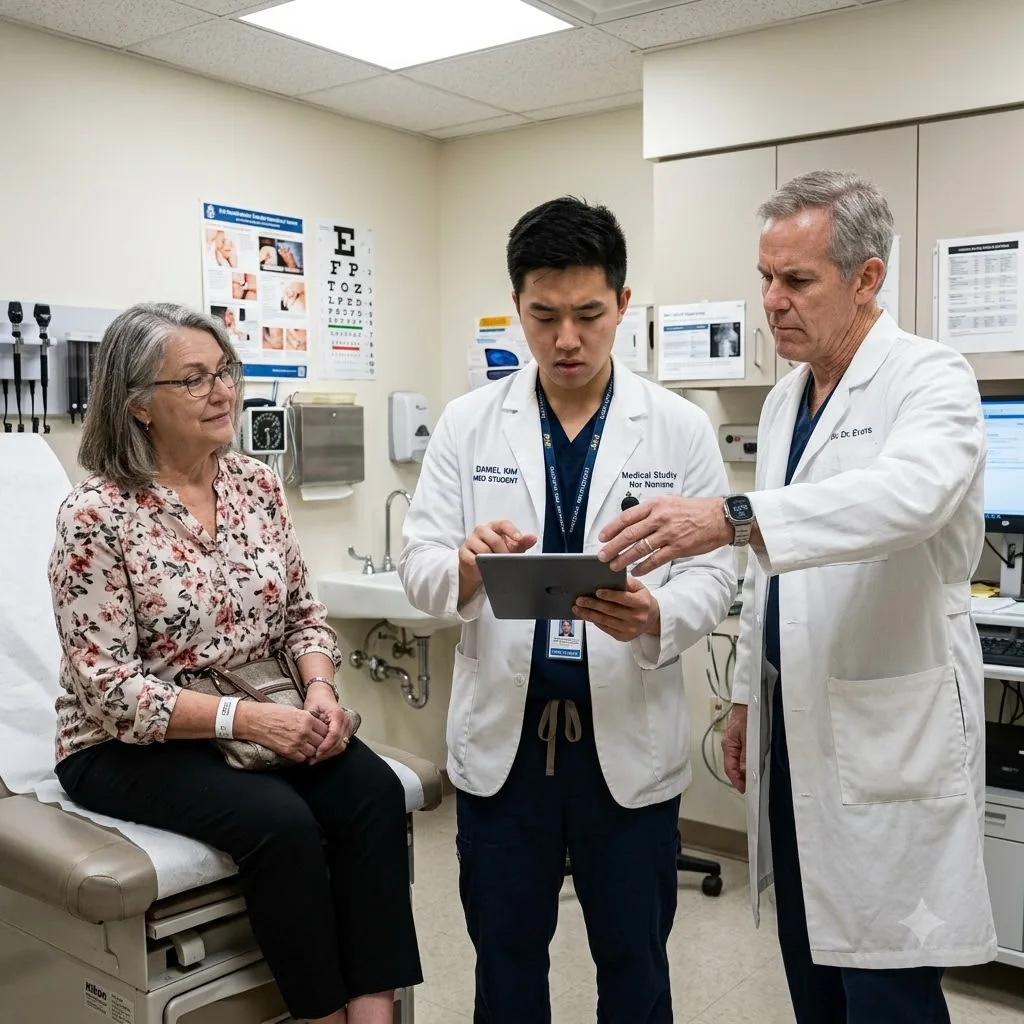
The stylus hovered exactly two millimeters above the glowing surface of the tablet, shaking just enough to blur the clinical text on the screen. Marcus stared at the single unchecked box at the absolute bottom of the diagnostic form, his thumb locked rigidly against the heavy plastic casing of the device. Behind him, three other medical students abruptly stopped breathing. The only sound in Exam Room 4 was the steady, rhythmic hiss of the overhead ventilation grate and the dry crinkle of sanitary paper as the patient shifted his weight.
“Just the final variable, Marcus.” Dr. Chen stood beside the examination table, his voice carrying the smooth, practiced patience of an attending physician deeply accustomed to terrified third-year students. His tailored white coat hung perfectly still, completely devoid of wrinkles.
Marcus did not move. He kept his eyes anchored to the high-contrast display. The standardized calculation required one more input to generate the risk score. It was a simple binary toggle. Tap the empty square, let the software apply the algorithmic multiplier, and generate the vital number that would determine the man’s entire treatment plan. The protocol was universal. Every medical student in the country memorized it during their first year.
The man sitting on the examination table, a retired transit worker named Mr. Hayes, looked mildly apologetic. He adjusted the thin edge of his paper gown over his knees and offered a faint, accommodating smile to the silent room. His expression suggested he thought the young doctor in training was simply nervous, perhaps struggling to recall a complex pharmacological term. From his vantage point on the table, there was no way to see that the delay was a deliberate, agonizing refusal to comply with a basic medical directive.
A drop of sweat traced a cold, slow path down the center of Marcus’s spine. His grip on the medical tablet tightened until his knuckles turned a bloodless, waxy white. The prompt on the screen blinked with relentless rhythm. A tiny, pulsing cursor waited for the final physical confirmation.
Sarah, standing immediately to Marcus’s left, shuffled her thick rubber clogs on the waxed linoleum floor. The squeak echoed like a gunshot in the sterile environment. She subtly leaned away, shifting her weight to put an extra inch of distance between herself and the blast radius of a failing colleague. David, on the right, had gone entirely still. He stared intently at a wall-mounted box of latex gloves, desperate to avoid making eye contact with anyone in the room.
Ten seconds passed. The polite fiction of a technical software glitch or a brief moment of stage fright evaporated completely.
Dr. Chen tilted his head slightly to the left. His benevolent, teaching-moment smile tightened into a flat, assessing line. He slowly folded his arms across his chest. The embroidered blue letters of his name and department chief title caught the harsh fluorescent light pouring from the ceiling panels. He was a physician who demanded excellence, precision, and absolute, unquestioning adherence to established clinical protocols. The protocol dictated that Marcus check the box.
“Is the screen frozen.” Dr. Chen stated this flatly. It was a statement of fact rather than an inquiry, offering a convenient out, a final, graceful chance to save face and proceed with the rounds.
Marcus swallowed hard. His throat felt completely full of sand. He could end the agony immediately by simply dropping the tip of the stylus onto the glass. The hospital software would instantly spit out the adjusted integer. Mr. Hayes would receive his prescription. The rotation group would file out into the hallway and move on to the next patient. All it required was compliance.
“The screen is fine,” Marcus said. His voice came out hollow and thin, barely louder than the mechanical hum of the specimen refrigerator in the corner.
Mr. Hayes looked directly at Dr. Chen, his polite smile faltering into genuine, uncomfortable confusion. He rubbed his weathered hands together, the dry skin rasping loudly in the heavy silence. He shrank back slightly, clearly feeling responsible for the sudden, suffocating tension, even though he had done absolutely nothing but sit there and wait for his digital chart to be updated.
“Then complete the assessment,” Dr. Chen said. The temperature in his tone plummeted to freezing. The last remaining trace of pedagogical patience vanished entirely, replaced by the rigid, unyielding authority of a senior physician managing an insubordinate resident in front of a vulnerable patient.
Marcus stared blindly at the pixelated outline of the square. His hand trembled violently now, making the tablet rattle faintly against his clipboard. He could feel the wide, panicked eyes of his peers burning into the side of his neck. They were undoubtedly calculating the catastrophic damage to his medical career, watching him throw away years of grueling, sleep-deprived effort over a single, standard data entry point. The silence in the small room stretched until it became a dense physical weight, pressing against his ribs, making it impossible to draw a full breath.
He lowered the stylus by one single millimeter. The capacitive screen registered the proximity, highlighting the empty box in a pale blue aura, ready to accept the input.
He stopped. He could not bridge the final, tiny gap. His thumb remained utterly paralyzed above the glass.
Dr. Chen exhaled sharply through his nose. He stepped away from the metal frame of the examination table, closing the distance between them in two long, silent strides. The crisp fabric of his coat brushed aggressively against Marcus’s arm as he reached out, his hand wrapping firmly around the heavy edge of the tablet to pull it directly from Marcus’s frozen grip.
The stylus hovered exactly two millimeters above the glowing surface of the tablet, shaking just enough to blur the clinical text on the screen. Marcus stared at the single unchecked box at the absolute bottom of the diagnostic form, his thumb locked rigidly against the heavy plastic casing of the device. Behind him, three other medical students abruptly stopped breathing. The only sound in Exam Room 4 was the steady, rhythmic hiss of the overhead ventilation grate and the dry crinkle of sanitary paper as the patient shifted his weight.
“Just the final variable, Marcus.” Dr. Chen stood beside the examination table, his voice carrying the smooth, practiced patience of an attending physician deeply accustomed to terrified third-year students. His tailored white coat hung perfectly still, completely devoid of wrinkles.
Marcus did not move. He kept his eyes anchored to the high-contrast display. The standardized calculation required one more input to generate the risk score. It was a simple binary toggle. Tap the empty square, let the software apply the algorithmic multiplier, and generate the vital number that would determine the man’s entire treatment plan. The protocol was universal. Every medical student in the country memorized it during their first year.
The man sitting on the examination table, a retired transit worker named Mr. Hayes, looked mildly apologetic. He adjusted the thin edge of his paper gown over his knees and offered a faint, accommodating smile to the silent room. His expression suggested he thought the young doctor in training was simply nervous, perhaps struggling to recall a complex pharmacological term. From his vantage point on the table, there was no way to see that the delay was a deliberate, agonizing refusal to comply with a basic medical directive.
A drop of sweat traced a cold, slow path down the center of Marcus’s spine. His grip on the medical tablet tightened until his knuckles turned a bloodless, waxy white. The prompt on the screen blinked with relentless rhythm. A tiny, pulsing cursor waited for the final physical confirmation.
Sarah, standing immediately to Marcus’s left, shuffled her thick rubber clogs on the waxed linoleum floor. The squeak echoed like a gunshot in the sterile environment. She subtly leaned away, shifting her weight to put an extra inch of distance between herself and the blast radius of a failing colleague. David, on the right, had gone entirely still. He stared intently at a wall-mounted box of latex gloves, desperate to avoid making eye contact with anyone in the room.
Ten seconds passed. The polite fiction of a technical software glitch or a brief moment of stage fright evaporated completely.
Dr. Chen tilted his head slightly to the left. His benevolent, teaching-moment smile tightened into a flat, assessing line. He slowly folded his arms across his chest. The embroidered blue letters of his name and department chief title caught the harsh fluorescent light pouring from the ceiling panels. He was a physician who demanded excellence, precision, and absolute, unquestioning adherence to established clinical protocols. The protocol dictated that Marcus check the box.
“Is the screen frozen.” Dr. Chen stated this flatly. It was a statement of fact rather than an inquiry, offering a convenient out, a final, graceful chance to save face and proceed with the rounds.
Marcus swallowed hard. His throat felt completely full of sand. He could end the agony immediately by simply dropping the tip of the stylus onto the glass. The hospital software would instantly spit out the adjusted integer. Mr. Hayes would receive his prescription. The rotation group would file out into the hallway and move on to the next patient. All it required was compliance.
“The screen is fine,” Marcus said. His voice came out hollow and thin, barely louder than the mechanical hum of the specimen refrigerator in the corner.
Mr. Hayes looked directly at Dr. Chen, his polite smile faltering into genuine, uncomfortable confusion. He rubbed his weathered hands together, the dry skin rasping loudly in the heavy silence. He shrank back slightly, clearly feeling responsible for the sudden, suffocating tension, even though he had done absolutely nothing but sit there and wait for his digital chart to be updated.
“Then complete the assessment,” Dr. Chen said. The temperature in his tone plummeted to freezing. The last remaining trace of pedagogical patience vanished entirely, replaced by the rigid, unyielding authority of a senior physician managing an insubordinate resident in front of a vulnerable patient.
Marcus stared blindly at the pixelated outline of the square. His hand trembled violently now, making the tablet rattle faintly against his clipboard. He could feel the wide, panicked eyes of his peers burning into the side of his neck. They were undoubtedly calculating the catastrophic damage to his medical career, watching him throw away years of grueling, sleep-deprived effort over a single, standard data entry point. The silence in the small room stretched until it became a dense physical weight, pressing against his ribs, making it impossible to draw a full breath.
He lowered the stylus by one single millimeter. The capacitive screen registered the proximity, highlighting the empty box in a pale blue aura, ready to accept the input.
He stopped. He could not bridge the final, tiny gap. His thumb remained utterly paralyzed above the glass.
Dr. Chen exhaled sharply through his nose. He stepped away from the metal frame of the examination table, closing the distance between them in two long, silent strides. The crisp fabric of his coat brushed aggressively against Marcus’s arm as he reached out, his hand wrapping firmly around the heavy edge of the tablet to pull it directly from Marcus’s frozen grip.