Story code: ST-001051
Part 1: The Denial Letter
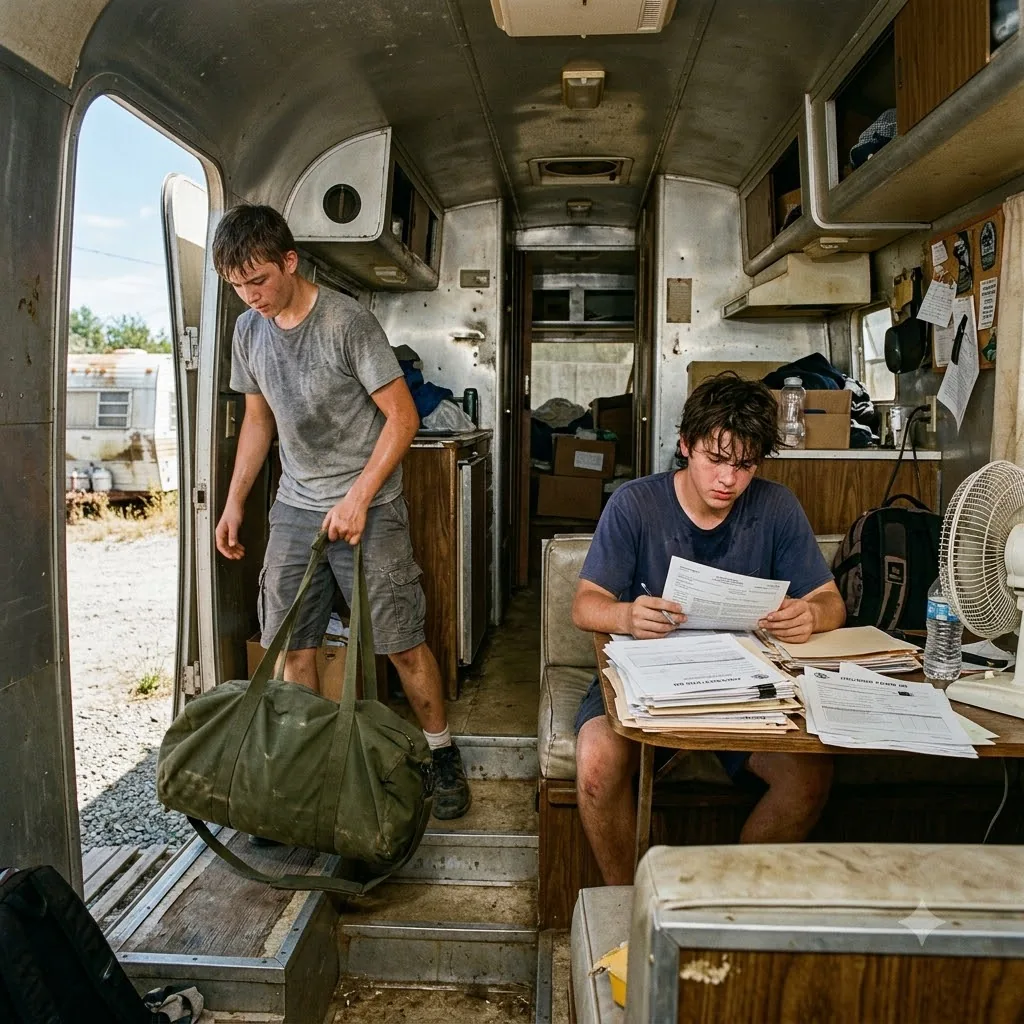
Sweat dripped from Leo’s chin, splashing against the dense, bureaucratic paragraphs of page thirty-seven. The cramped FEMA trailer baked in the brutal afternoon sun, trapping him in a suffocating oven that smelled of cheap fiberglass, hot glue, and dead grass. He dragged a damp sleeve across his forehead and stared at the corporate letterhead, forcing his exhausted eyes to track the dense legalese that dismissed his entire life as a pre-existing structural vulnerability. Forty pages of automated corporate rejection lay scattered across the flimsy laminate dining table. His neighborhood was gone, reduced to a grid of white ash in the mega-fire, and the system he had trusted to rebuild his life had just stamped a massive, indifferent denial over his future.
He gripped his blue ballpoint pen, his knuckles white, determined to find the appeals clause hidden in the margins. There had to be a process. There was always a proper channel, a bureaucratic ladder to climb, a human being sitting in an air-conditioned office who would see the obvious clerical error and authorize the payout. He just needed to draft the exact right response, cite the correct statutes, and prove he was a rational citizen acting in good faith. He highlighted a convoluted sentence about secondary review deadlines, fighting the oppressive heat that made every thought feel like wading through setting concrete. The walls of the temporary shelter seemed to close in by the minute, the thin aluminum siding radiating the outside heat directly into his spine.
A sharp rap on the hollow metal door shattered his concentration.
Before he could push himself up from the sagging, synthetic-leather bench seat, the door jerked open. Maya stood at the top of the metal steps. The blinding glare of the scorched landscape silhouetted her thin frame, framing her against a sky hazy with lingering smoke. She did not bother with a greeting or an apology for the intrusion. She simply hauled a massive, olive-drab canvas duffel bag over the threshold, her shoulders straining visibly under the enormous weight.
She dropped it onto the thin linoleum floor. It landed with a dense, metallic clank that vibrated through the floorboards, shook the flimsy walls, and rattled the cheap plastic blinds against the small window.
Leo flinched at the impact. He looked from the heavy bag to Maya, taking in the deep soot stains permanently ground into the knees of her jeans and the tight, rigid set of her jaw. They had not spoken since the evacuation center, since the chaotic night the fire crowned over the ridge, a night of sheer terror they had implicitly agreed never to discuss. He tried to offer a welcoming, reassuring smile, pointing down at the scattered forty-page denial packet to explain his current misery. He started to outline his immediate plan to file an expedited administrative review with the state insurance board, talking fast to fill the tense air.
Maya ignored the paperwork entirely. She kicked the door shut with the heel of her boot, sealing them inside the stifling box. The metallic sound of the bag hitting the floor echoed in his ears, heavy and distinctly unyielding. It did not sound like donated winter clothes or standard-issue survival rations. It sounded sharp, dense, and entirely out of place in a relief camp.
She stepped directly over the canvas bag, her boots tracking pale gray ash onto the pristine, factory-new floor. The heat inside the trailer was absolute, pushing well past ninety degrees, but she still wore a heavy, fire-retardant denim jacket zipped all the way to her collar. She stared at the scattered insurance documents, her eyes tracking over the bold red stamp on the top summary page. Her expression remained completely flat, drained of any shock or disappointment. She did not offer a word of sympathy. She did not tell him the company would eventually do the right thing.
Leo tapped his pen against the laminate table, his voice rising as he desperately tried to maintain his optimism. He explained the obscure loophole he had just found on page twenty-two, the regulatory oversight he could leverage against the regional adjuster, the certified forms he intended to overnight to the capital by five o’clock. The system was currently broken, he insisted, overwhelmed by the scale of the disaster, but it could absolutely be forced to work if they just applied the right legal and procedural pressure. He told her they just needed to play by the rules one last time, to document every single loss, to show the authorities they were ready to cooperate.
Maya reached down and grabbed the thick webbing handles of the canvas duffel bag. She hauled it up with a harsh grunt of exertion, her boots slipping slightly on the ash-dusted linoleum.
She swung the heavy bag onto the tiny dining table, sweeping his meticulously organized insurance papers completely out of the way. The remaining thirty-nine pages of his appeal strategy fluttered to the floor like dead leaves. The canvas hit the laminate surface with that same terrifying, heavy clink, bowing the cheap table legs inward under the mass. Leo froze, his pen hovering uselessly in the air. He stared at the stained green canvas, watching the bulk of the contents pressing sharp, rigid angles against the taut fabric.
Maya planted both hands firmly on the edge of the table and leaned over the duffel. She gripped the oversized brass zipper. With one violent, fluid motion, she ripped the zipper open.
Sweat dripped from Leo’s chin, splashing against the dense, bureaucratic paragraphs of page thirty-seven. The cramped FEMA trailer baked in the brutal afternoon sun, trapping him in a suffocating oven that smelled of cheap fiberglass, hot glue, and dead grass. He dragged a damp sleeve across his forehead and stared at the corporate letterhead, forcing his exhausted eyes to track the dense legalese that dismissed his entire life as a pre-existing structural vulnerability. Forty pages of automated corporate rejection lay scattered across the flimsy laminate dining table. His neighborhood was gone, reduced to a grid of white ash in the mega-fire, and the system he had trusted to rebuild his life had just stamped a massive, indifferent denial over his future.
He gripped his blue ballpoint pen, his knuckles white, determined to find the appeals clause hidden in the margins. There had to be a process. There was always a proper channel, a bureaucratic ladder to climb, a human being sitting in an air-conditioned office who would see the obvious clerical error and authorize the payout. He just needed to draft the exact right response, cite the correct statutes, and prove he was a rational citizen acting in good faith. He highlighted a convoluted sentence about secondary review deadlines, fighting the oppressive heat that made every thought feel like wading through setting concrete. The walls of the temporary shelter seemed to close in by the minute, the thin aluminum siding radiating the outside heat directly into his spine.
A sharp rap on the hollow metal door shattered his concentration.
Before he could push himself up from the sagging, synthetic-leather bench seat, the door jerked open. Maya stood at the top of the metal steps. The blinding glare of the scorched landscape silhouetted her thin frame, framing her against a sky hazy with lingering smoke. She did not bother with a greeting or an apology for the intrusion. She simply hauled a massive, olive-drab canvas duffel bag over the threshold, her shoulders straining visibly under the enormous weight.
She dropped it onto the thin linoleum floor. It landed with a dense, metallic clank that vibrated through the floorboards, shook the flimsy walls, and rattled the cheap plastic blinds against the small window.
Leo flinched at the impact. He looked from the heavy bag to Maya, taking in the deep soot stains permanently ground into the knees of her jeans and the tight, rigid set of her jaw. They had not spoken since the evacuation center, since the chaotic night the fire crowned over the ridge, a night of sheer terror they had implicitly agreed never to discuss. He tried to offer a welcoming, reassuring smile, pointing down at the scattered forty-page denial packet to explain his current misery. He started to outline his immediate plan to file an expedited administrative review with the state insurance board, talking fast to fill the tense air.
Maya ignored the paperwork entirely. She kicked the door shut with the heel of her boot, sealing them inside the stifling box. The metallic sound of the bag hitting the floor echoed in his ears, heavy and distinctly unyielding. It did not sound like donated winter clothes or standard-issue survival rations. It sounded sharp, dense, and entirely out of place in a relief camp.
She stepped directly over the canvas bag, her boots tracking pale gray ash onto the pristine, factory-new floor. The heat inside the trailer was absolute, pushing well past ninety degrees, but she still wore a heavy, fire-retardant denim jacket zipped all the way to her collar. She stared at the scattered insurance documents, her eyes tracking over the bold red stamp on the top summary page. Her expression remained completely flat, drained of any shock or disappointment. She did not offer a word of sympathy. She did not tell him the company would eventually do the right thing.
Leo tapped his pen against the laminate table, his voice rising as he desperately tried to maintain his optimism. He explained the obscure loophole he had just found on page twenty-two, the regulatory oversight he could leverage against the regional adjuster, the certified forms he intended to overnight to the capital by five o’clock. The system was currently broken, he insisted, overwhelmed by the scale of the disaster, but it could absolutely be forced to work if they just applied the right legal and procedural pressure. He told her they just needed to play by the rules one last time, to document every single loss, to show the authorities they were ready to cooperate.
Maya reached down and grabbed the thick webbing handles of the canvas duffel bag. She hauled it up with a harsh grunt of exertion, her boots slipping slightly on the ash-dusted linoleum.
She swung the heavy bag onto the tiny dining table, sweeping his meticulously organized insurance papers completely out of the way. The remaining thirty-nine pages of his appeal strategy fluttered to the floor like dead leaves. The canvas hit the laminate surface with that same terrifying, heavy clink, bowing the cheap table legs inward under the mass. Leo froze, his pen hovering uselessly in the air. He stared at the stained green canvas, watching the bulk of the contents pressing sharp, rigid angles against the taut fabric.
Maya planted both hands firmly on the edge of the table and leaned over the duffel. She gripped the oversized brass zipper. With one violent, fluid motion, she ripped the zipper open.