Story code: ST-001050
Part 4: The Next Manifest
The flashbulbs strobed in a blinding, silent wave, catching the microscopic mist in the damp morning air and turning the pristine courtyard into a fragmented series of freeze-frames. Elias did not flinch or move from the podium. He felt the heavy grips of the private security contractors loosen on his shoulders, their institutional mandate evaporating the exact moment Mayor Vance’s polished veneer cracked. They were paid to protect the facility’s physical assets and its meticulously crafted public image. Right now, the greatest threat to both was standing at the microphone, sobbing over a stolen ledger.
The corporate representative moved with the ruthless, practiced efficiency of an emergency crisis management protocol. He signaled a frantic audiovisual technician, and the main audio feed died with a sharp, echoing pop, instantly suffocating Vance’s televised grief. Two handlers in tailored charcoal suits materialized from the VIP seating area, flanking the broken mayor. They gripped Vance tightly by the elbows, lifting him away from the podium with forceful, manufactured sympathy, shielding his face from the local news cameras.
Elias watched the representative step smoothly into the sudden vacuum. The man grabbed the dead microphone and began shouting over the murmuring, chaotic crowd without amplification. He deployed the sterile vocabulary of elite damage control, citing the mayor’s acute exhaustion, unresolved personal trauma, and a tragic, temporary lapse in medical judgment. He assured the stunned investors and journalists that Vance would be receiving the best possible psychiatric care, emphasizing that the mayor’s breakdown was entirely detached from the facility’s revolutionary operational rollout.
Elias recognized the tactic instantly. The machine was already re-calibrating. It was systematically isolating Vance, reclassifying his public collapse as a localized biological glitch rather than a systemic failure. The New Horizon Recovery Center would not close its doors. The massive state funding subsidies had already cleared the municipal escrow accounts. The predictive algorithm would simply receive a discreet software patch to better obscure the exported mortality data in the future.
No one attempted to stop Elias as he reached out and collected his damp, warped manila folder from the wooden podium. He walked down the portable aluminum steps, moving directly against the tide of confused journalists and anxious local politicians. The velvet VIP rope had been trampled into the mud. The catered breakfast buffet remained perfectly aligned on the pristine linen tables, the imported pastries completely untouched.
He crossed the parking lot and unlocked his rusted sedan. The interior smelled faintly of old coffee and damp wool. Elias slid into the driver’s seat and pulled the heavy door shut, instantly cutting off the ambient noise of the fracturing press event. He slotted his key into the ignition, the engine turning over with its familiar, uneven rumble.
Through the rain-streaked windshield, Elias watched the fleet of white transport vans idling near the loading docks of the massive glass building. The contract drivers were still in their seats, waiting for their next operational manifest. Tomorrow, or perhaps the next day, they would simply resume the purge. They would load the town’s most vulnerable toxic assets into the back and drive them beyond the county line. The institutional calculus had survived the morning.
Elias looked down at his encrypted burner phone resting in the center cup holder. He opened the primitive logistics dashboard he had coded himself. It displayed the cold architecture of his gray-market supply chain: active nodes, inventory thresholds, regional drop points, and acceptable loss margins. It was the exact same mathematical framework the rehab center used, just inverted. He had spent three years fighting a predictive model with another predictive model.
He reached across the center console and opened the glove compartment, retrieving a cheap, plastic ballpoint pen. He opened the manila folder on his steering wheel. The pages were dense with spreadsheets, intake timestamps, and demographic probabilities. It was a meticulously formatted ledger of optimized death.
Elias looked at the top row. *Marcus Thorne. Projected mortality risk: 87%. Operational liability. Discharged.*
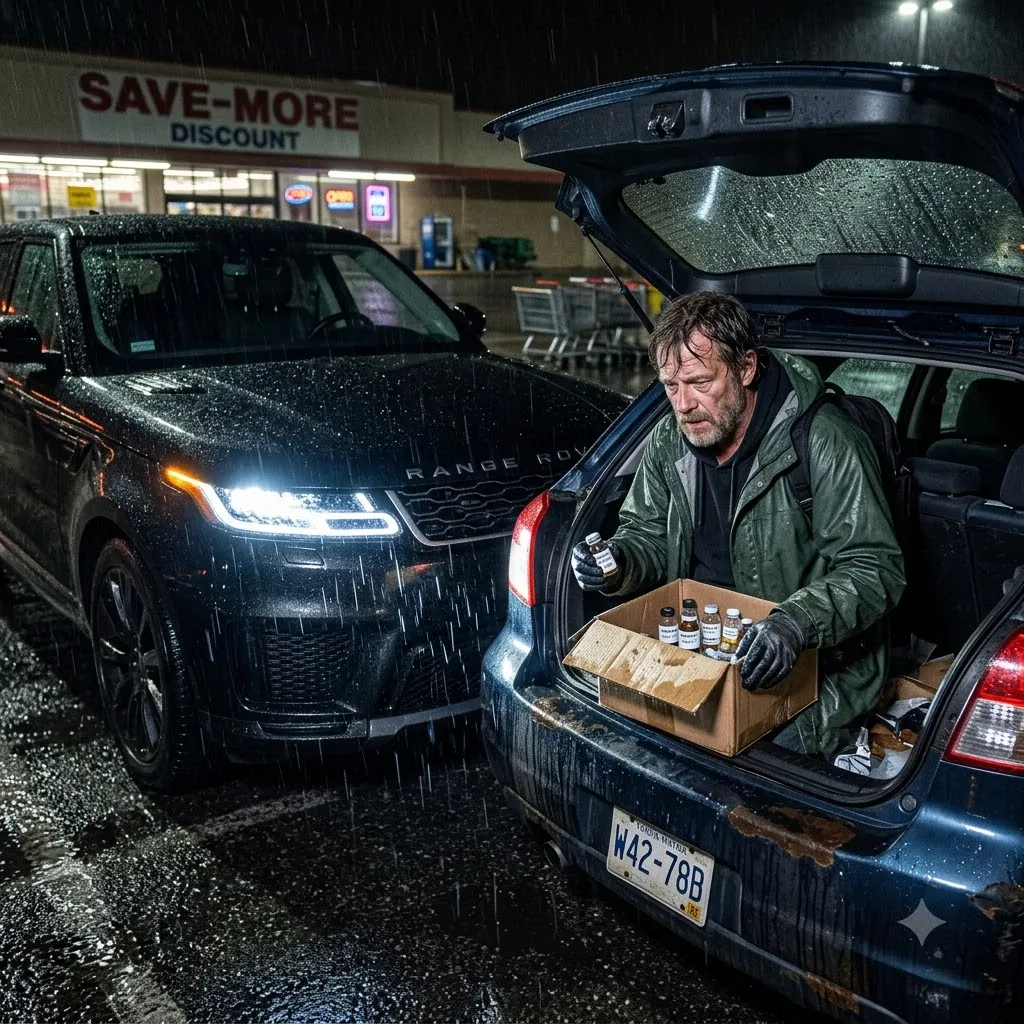
Since his corporate termination, Elias had operated under the strict belief that saving lives required absolute emotional detachment. He had treated the desperate streets like a volatile commodities market, distributing his unbranded vials of naloxone to mitigate the statistical spikes. But a spreadsheet had never successfully revived a suffocating patient. A supply chain matrix had never pulled a shivering, terrified man from a concrete storm drain.
Elias pressed the tip of the pen against the back of an old, faded toll receipt he found in the visor. He did not write down a distribution node coordinate. He did not calculate a replenishment quota for the coming week. He carefully traced the letters of a single human name.
*Marcus Thorne.*
He wrote it not as a data point, but as a permanent record. A physical anchor against the relentless tide of institutional erasure.
The burner phone vibrated against the plastic cup holder, flashing a priority alert. Elias picked it up. It was a text from Toby. *Found two boxes in a basement stash. Thirty vials total. Heading to the South Street transit hub. Scanner says emergency dispatch is stalling again.*
Elias didn’t text back a logistics directive. He didn’t ask Toby for the expiration dates or the ambient moisture levels of the basement. He simply replied that he was on his way.
He placed the receipt with Marcus Thorne’s name onto the dashboard, right above the speedometer, where the defroster vent would keep it dry. He closed the inventory dashboard on his phone, deleting the application from the device’s active memory. The digital map of nodes and margins vanished, leaving only a blank screen.
Elias shifted the transmission into drive. The tires found their grip on the wet asphalt, carrying him away from the sterile glass of the recovery center and back toward the unquantifiable streets.