Story code: ST-001070
Part 1: The Silent Cafeteria
The silence hit Councilwoman Vargas the moment she pushed through the heavy double doors of Oak Creek Elementary. She had braced herself for the standard Tuesday morning wall of noise, the shriek of rubber soles on linoleum and the chaotic roar of four hundred children fighting over cereal boxes. Instead, her sensible heels clicked against the floorboards of an absolute ghost town. The drop-off lane outside had been her first warning, completely barren of idling minivans and the crossing guard’s neon vest. Inside, the cafeteria sat frozen in time.
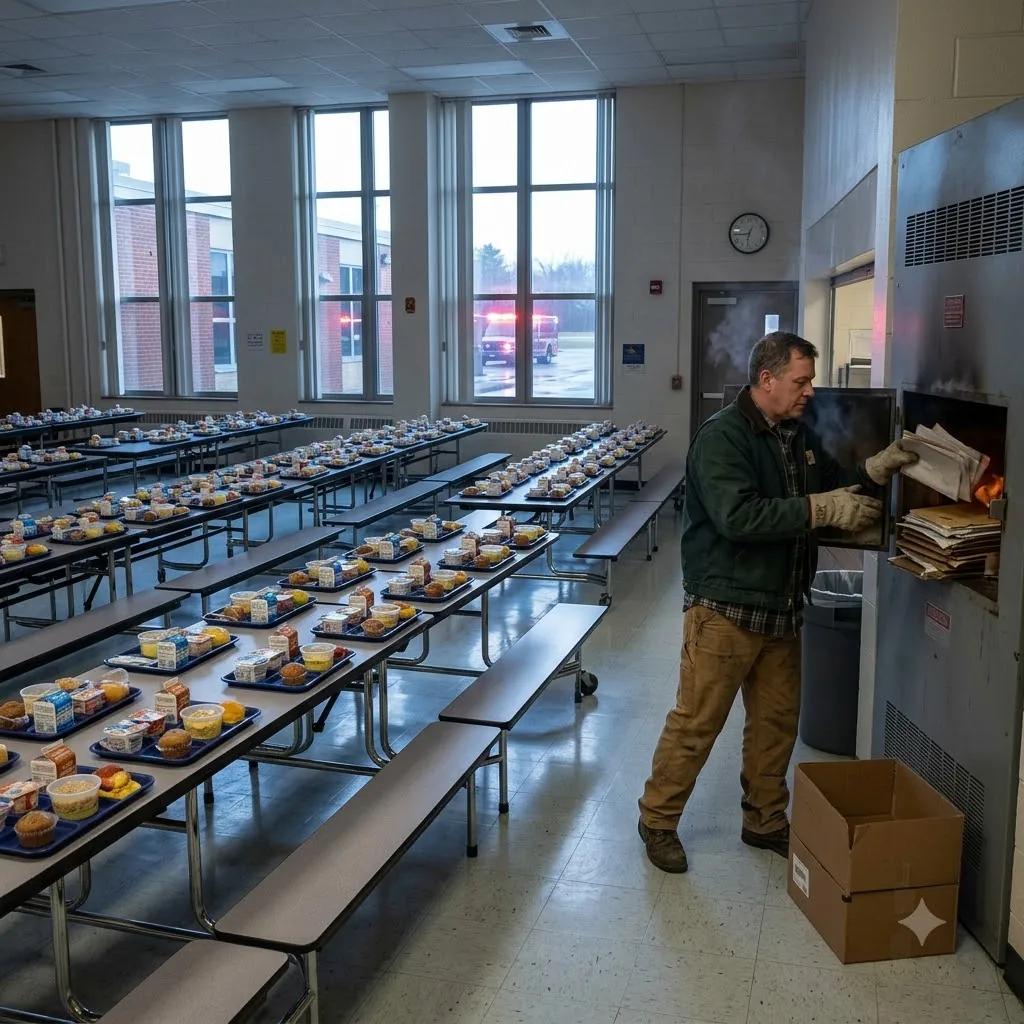
Four hundred styrofoam trays rested in perfect, rigid rows on the long folding tables. Vargas walked down the center aisle, trailing her hand along the edge of a bench. Half-pint cartons of chocolate milk were already sweating under the harsh glare of the fluorescent lights. Plastic wrappers on the breakfast sandwiches remained completely sealed, gathering a thin film of condensation. There were no abandoned backpacks slumped against the walls, no forgotten winter coats draped over chairs. It was not a fire drill. A fire drill meant flashing strobes, blaring alarms, and the lingering scent of a rushed exit. This was a premeditated, unnatural absence.
She checked her phone screen, noting the time and date. It was precisely seven-forty in the morning on a scheduled instructional day. The district calendar demanded a building full of life. Vargas walked past the serving line, where the stainless steel warming trays hummed a low, vibrating drone. A single plastic serving spoon rested on a spotless metal counter. She pushed open the swinging door to the kitchen, expecting to find the cafeteria manager wiping down a prep station or hauling boxes from the pantry. The kitchen was just as abandoned. The commercial ovens were dark and cold. The massive walk-in freezer door was shut tight, its exterior temperature dial holding steady at freezing. The quiet felt physically heavy, pressing against her eardrums like deep water.
Vargas turned back toward the main hallway, her mind cycling through every emergency protocol she had helped draft for the city council. None fit this scenario. No mass alert had triggered on her phone. No emails flashed from the superintendent. She stepped into the main corridor, where the overhead lights buzzed faintly, casting pale shadows on endless rows of blue metal lockers. A paper bulletin board fluttered slightly from the draft of the ceiling air vents. Student artwork hung perfectly straight, completely undisturbed by the usual shoulder-checking chaos of the morning rush.
Her footsteps echoed entirely too loudly as she moved toward the front office. The glass partition of the reception desk was dark. The principal’s door stood open, revealing a tidy desk and a powered-down computer monitor. The silence was no longer just unusual. It was structural, as if the entire population of the surrounding neighborhood had simply evaporated before sunrise. Every classroom door she passed was locked, the lights out, the chairs stacked neatly on the desks just as the night crew had left them.
Then she heard the whistling.
It was a sharp, cheerful tune, echoing from the utility corridor near the rear loading dock. Vargas moved toward the sound, her grip tightening on the thick leather strap of her tote bag. She rounded the corner past the janitor’s closet, her steps slow and deliberate. The heavy metal doors of the school’s central mechanical room were propped open with a wooden doorstop. Inside, a man in gray work coveralls stood over an industrial metal trash basin. A stitched patch on his shoulder read Apex HVAC Solutions.
He was feeding thick stacks of heavy-stock paper into a portable industrial shredder balanced on a workbench. The machine snarled and whined, chewing viciously through the documents, but the man just kept whistling his upbeat melody over the noise. Vargas stepped closer, staying hidden in the shadow of the doorframe. The concrete floor around the man’s steel-toed boots was littered with missed scraps.
She recognized the distinct light blue watermark of the school district’s payroll department on the fallen fragments. They were uncashed paychecks and laminated staff timecards, the very records she had come to audit. The man finished the thick stack in his left hand, letting the shredder grind down to a halt. He picked up the plastic collection bin, detached it from the motor, and dumped the mountain of shredded paper into the deep metal trash basin. He then pulled a yellow bottle of lighter fluid from his canvas tool belt, squirted a generous, soaking loop over the ribbons of paper, and tossed in a lit match.
A sudden flare of orange illuminated the cramped mechanical room, casting tall, dancing shadows against the overhead ductwork. The contractor rubbed his hands together, warming them over the flash-fire of district records. He checked his heavy diver’s watch, tapping the glass face twice with his index finger as he muttered the exact time under his breath. He reached into his deep pocket and pulled out another thick, rubber-banded stack of uncashed checks. Vargas stepped fully into the light of the doorway, her voice echoing off the cinderblock walls as she ordered him to step away from the bin. The contractor did not flinch or drop the papers, simply smiling as he pulled a heavily redacted, official-looking manifest from his breast pocket and held it out directly over the open flames.
The silence hit Councilwoman Vargas the moment she pushed through the heavy double doors of Oak Creek Elementary. She had braced herself for the standard Tuesday morning wall of noise, the shriek of rubber soles on linoleum and the chaotic roar of four hundred children fighting over cereal boxes. Instead, her sensible heels clicked against the floorboards of an absolute ghost town. The drop-off lane outside had been her first warning, completely barren of idling minivans and the crossing guard’s neon vest. Inside, the cafeteria sat frozen in time.
Four hundred styrofoam trays rested in perfect, rigid rows on the long folding tables. Vargas walked down the center aisle, trailing her hand along the edge of a bench. Half-pint cartons of chocolate milk were already sweating under the harsh glare of the fluorescent lights. Plastic wrappers on the breakfast sandwiches remained completely sealed, gathering a thin film of condensation. There were no abandoned backpacks slumped against the walls, no forgotten winter coats draped over chairs. It was not a fire drill. A fire drill meant flashing strobes, blaring alarms, and the lingering scent of a rushed exit. This was a premeditated, unnatural absence.
She checked her phone screen, noting the time and date. It was precisely seven-forty in the morning on a scheduled instructional day. The district calendar demanded a building full of life. Vargas walked past the serving line, where the stainless steel warming trays hummed a low, vibrating drone. A single plastic serving spoon rested on a spotless metal counter. She pushed open the swinging door to the kitchen, expecting to find the cafeteria manager wiping down a prep station or hauling boxes from the pantry. The kitchen was just as abandoned. The commercial ovens were dark and cold. The massive walk-in freezer door was shut tight, its exterior temperature dial holding steady at freezing. The quiet felt physically heavy, pressing against her eardrums like deep water.
Vargas turned back toward the main hallway, her mind cycling through every emergency protocol she had helped draft for the city council. None fit this scenario. No mass alert had triggered on her phone. No emails flashed from the superintendent. She stepped into the main corridor, where the overhead lights buzzed faintly, casting pale shadows on endless rows of blue metal lockers. A paper bulletin board fluttered slightly from the draft of the ceiling air vents. Student artwork hung perfectly straight, completely undisturbed by the usual shoulder-checking chaos of the morning rush.
Her footsteps echoed entirely too loudly as she moved toward the front office. The glass partition of the reception desk was dark. The principal’s door stood open, revealing a tidy desk and a powered-down computer monitor. The silence was no longer just unusual. It was structural, as if the entire population of the surrounding neighborhood had simply evaporated before sunrise. Every classroom door she passed was locked, the lights out, the chairs stacked neatly on the desks just as the night crew had left them.
Then she heard the whistling.
It was a sharp, cheerful tune, echoing from the utility corridor near the rear loading dock. Vargas moved toward the sound, her grip tightening on the thick leather strap of her tote bag. She rounded the corner past the janitor’s closet, her steps slow and deliberate. The heavy metal doors of the school’s central mechanical room were propped open with a wooden doorstop. Inside, a man in gray work coveralls stood over an industrial metal trash basin. A stitched patch on his shoulder read Apex HVAC Solutions.
He was feeding thick stacks of heavy-stock paper into a portable industrial shredder balanced on a workbench. The machine snarled and whined, chewing viciously through the documents, but the man just kept whistling his upbeat melody over the noise. Vargas stepped closer, staying hidden in the shadow of the doorframe. The concrete floor around the man’s steel-toed boots was littered with missed scraps.
She recognized the distinct light blue watermark of the school district’s payroll department on the fallen fragments. They were uncashed paychecks and laminated staff timecards, the very records she had come to audit. The man finished the thick stack in his left hand, letting the shredder grind down to a halt. He picked up the plastic collection bin, detached it from the motor, and dumped the mountain of shredded paper into the deep metal trash basin. He then pulled a yellow bottle of lighter fluid from his canvas tool belt, squirted a generous, soaking loop over the ribbons of paper, and tossed in a lit match.
A sudden flare of orange illuminated the cramped mechanical room, casting tall, dancing shadows against the overhead ductwork. The contractor rubbed his hands together, warming them over the flash-fire of district records. He checked his heavy diver’s watch, tapping the glass face twice with his index finger as he muttered the exact time under his breath. He reached into his deep pocket and pulled out another thick, rubber-banded stack of uncashed checks. Vargas stepped fully into the light of the doorway, her voice echoing off the cinderblock walls as she ordered him to step away from the bin. The contractor did not flinch or drop the papers, simply smiling as he pulled a heavily redacted, official-looking manifest from his breast pocket and held it out directly over the open flames.