Story code: ST-001071
Part 2: The Hazard Clause
Earl braced his weight against the edge of the sink, his knuckles turning white as a fresh spasm of fire twisted through his lower lumbar. Outside, the camera clicked again, a brief mechanical flash glaring against the midday sun. He could have stayed in the kitchen. He could have hidden behind the faded floral curtains and let the polished woman in her silver SUV document his ruin in peace. Instead, he reached for the aluminum cane hooked over the back of a dining chair.
Every step to the front door was a calculated negotiation with gravity and nerve damage. He twisted the brass deadbolt, the loud clack echoing in the small entryway, and pushed the heavy wooden door open. The humid afternoon heat hit him instantly, thick and suffocating, a stark contrast to the rattling window unit cooling his living room.
He stepped onto the unapproved modification.
The pressure-treated pine felt solid and unyielding beneath his worn orthopedic shoes. He gripped the wooden handrail-sanded smooth by his union brothers so he wouldn’t catch a splinter-and began the slow, agonizing descent down the shallow incline.
At the base of the ramp, the silver SUV sat idling, its engine a low, expensive purr that barely disturbed the quiet street. The tinted driver’s side window hummed down another few inches. A blast of heavily air-conditioned, lavender-scented air spilled out into the muggy yard.
Patricia sat behind the leather-wrapped steering wheel, her posture perfectly rigid. She wore a crisp, white linen blouse and oversized designer sunglasses that hid her eyes, reflecting only the distorted image of Earl standing heavily on his cane. She didn’t bother to turn off the engine or step out onto the cracked asphalt of his driveway.
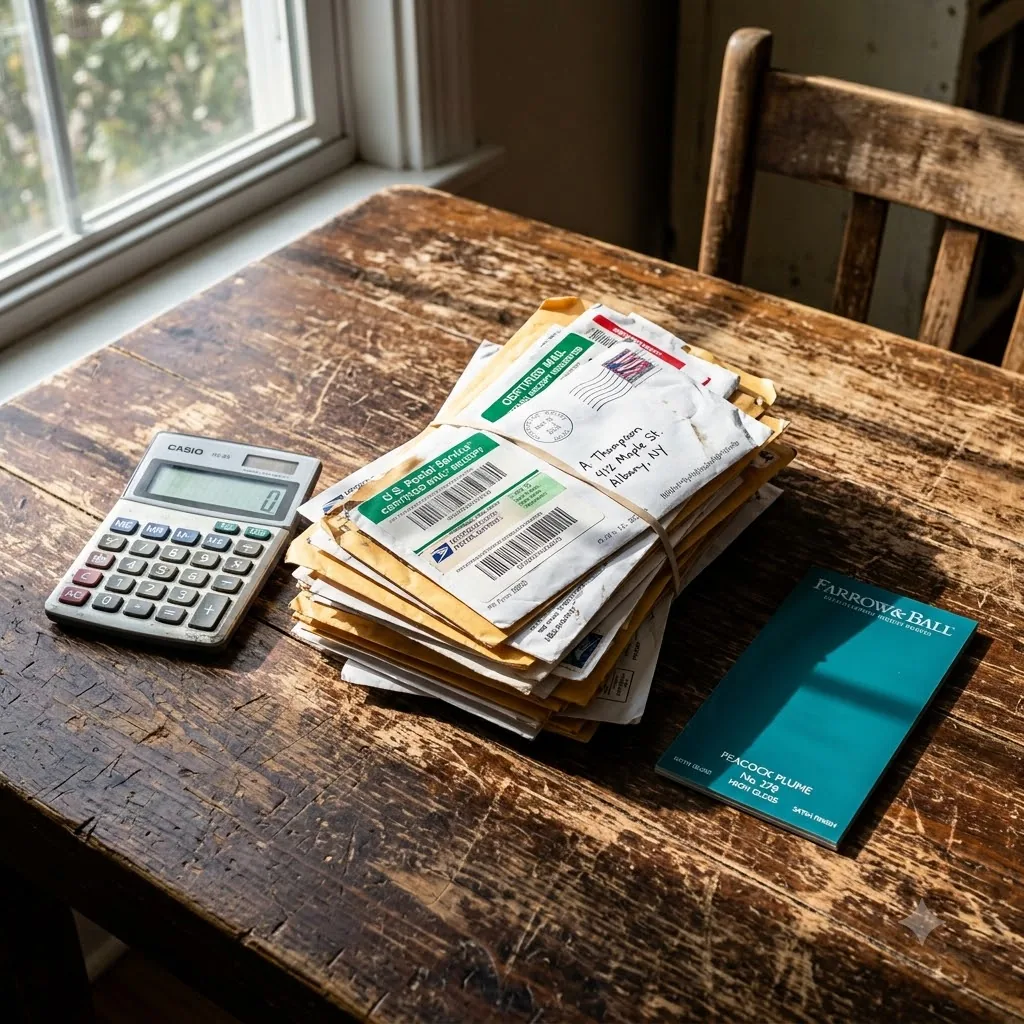
“Mr. Miller,” Patricia said. Her voice was perfectly modulated, carrying the practiced, customer-service pleasantry of a debt collector. “I was hoping you’d received the association’s certified parcel.”
“I received it,” Earl said, his voice raspy from disuse. He stopped near the bottom of the ramp, refusing to step off the wood and onto the driveway. He needed the elevation just to look her somewhat in the eye through the window. “It’s a wheelchair ramp, Patricia. It’s for my back. I can’t navigate the concrete stairs anymore.”
Patricia sighed, a tiny, performative exhale of disappointment. She tapped a French-manicured fingernail against the silver bezel of her tablet. “What it is, Mr. Miller, is an unpermitted structural hazard constructed of non-compliant materials. Section four, paragraph nine of the community bylaws clearly states that any exterior additions must utilize approved composite materials and be color-matched to the community palette. Raw pine is explicitly forbidden. It looks like a construction site.”
“It looks like a way for me to get to my own mailbox,” Earl countered, shifting his weight. The pain was beginning to pool deeply in his left hip. “The boys from the local built it to code. It’s safe. It’s sturdy.”
“It is unauthorized,” Patricia corrected, her smile remaining fixed and utterly devoid of warmth. “And frankly, we are receiving complaints. The Davis family across the street feels it severely impacts the neighborhood aesthetic. We are trying to elevate Oakmont, Mr. Miller. We are trying to protect everyone’s property values. A sprawling, unfinished wooden barricade in your front yard is not conducive to that goal.”
“I’ve lived here for thirty-two years. The Davises moved in four months ago,” Earl said, his grip tightening on the aluminum cane. “And I don’t have four thousand dollars to pay your fine. I don’t have eighty-five dollars a gallon to paint this ramp some fancy green color.”
“Coastal Sage,” Patricia corrected effortlessly. “And the fines are standard administrative penalties for ignoring the initial warnings.”
“I didn’t ignore them. I called the HOA number. I left three voicemails explaining my medical situation.”
Patricia reached over to her passenger seat and lifted a manila folder, resting it on the edge of her open window. “Verbal messages do not constitute a formal architectural variance request, Mr. Miller. Medical accommodations require Form 11-B, submitted in triplicate with a certified physician’s letter, ninety days prior to the commencement of any construction. You bypassed the entire review board.”
She pulled a single sheet of paper from the folder and held it out through the window. Earl stared at it, his chest tightening, but he did not reach for it. If he let go of the railing, he wasn’t sure he could keep his balance. Seeing his hesitation, Patricia simply dropped the paper onto the surface of his wooden ramp, letting it slide down the gentle slope until it stopped against the toe of his shoe.
“Since you are refusing to bring the hazard into compliance,” Patricia said, checking her gold wristwatch, “the board held an emergency session this morning. The fourteen-day window in your previous notice was solely to remit the accumulated fines.”
Earl looked down at the paper. The bold red letters at the top swam in his vision. ORDER OF ABATEMENT AND REMOVAL.
“Because this structure was built without city permits, it represents a liability to the association,” Patricia continued, her tone brisk and final. “We are invoking the emergency hazard clause. If this structure is not removed or painted to exact specifications by five o’clock this Friday, the association will dispatch our contracted landscaping crew to demolish it.”
Earl felt a cold sweat break out across his forehead, chilling him despite the afternoon heat. “You can’t do that. You can’t just tear down my property. It’s the only way I can get out of my house.”
“We have a legal fiduciary duty to maintain the community standards,” Patricia said, tapping a button on her door panel. The tinted window began to glide upward. “The demolition cost will be an additional two thousand, two hundred dollars, which will be added directly to your outstanding property lien. I highly suggest you make arrangements, Mr. Miller. Good afternoon.”
The window sealed shut with a soft thud, cutting off the rush of air conditioning. The silver SUV shifted into gear and glided away from the curb, merging seamlessly into the center of the pristine street.
Earl stood alone in the suffocating heat, the vibrations of the departing engine still humming in the asphalt. He looked down at his orthopedic shoe, pinning the bright white demolition notice against the raw pine. Today was Wednesday. He had less than forty-eight hours before they came with sledgehammers to trap him inside his own home, permanently attaching the cost of his own imprisonment to his deed.