Story code: ST-001086
Part 1: The Override
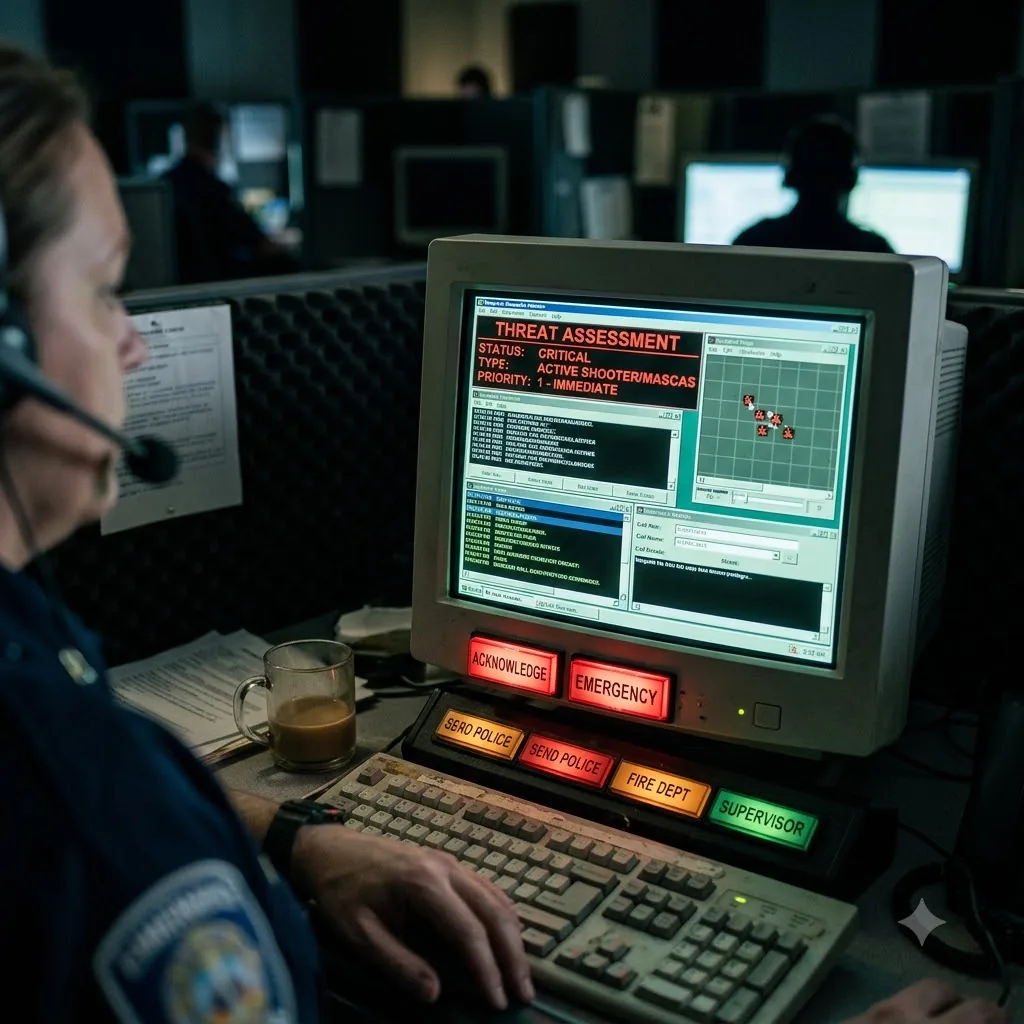
The heavy headset clamped over Maya’s ears delivered a sharp burst of static followed by a man screaming about smoke and a hostile mob taking over the south grove. She dragged her exhausted wrists across her burning eyes and forced her focus onto the glowing terminal that dominated her desk. Her screen demanded a primary incident categorization, the cursor blinking with rigid impatience.
“State the exact location and nature of the emergency,” Maya said, keeping her voice entirely flat.
“Centennial Park, the south pavilion,” the man yelled over a chaotic background track of thumping bass and overlapping voices. “They are burning things. There are dozens of them, blocking all the footpaths. Send the police right now. It is a total takeover.”
Maya’s fingers hovered over the mechanical keyboard. She was eleven hours into a mandatory twelve-hour shift, her spine aching against the cheap mesh chair. The dispatch center hummed with the low, oppressive drone of cooling servers and the muted voices of thirty other operators handling the city’s Friday night chaos.
She typed the location coordinates. The dispatch software instantly pulled up the park grid.
“Describe the fire to me,” Maya instructed.
“It is massive. The smoke is everywhere. They brought in heavy metal drums and giant metal tanks of fuel. They are just setting fires right out in the open.”
Maya struck the keys to log ‘unauthorized fire’ and ‘fuel tanks present’. The software interface immediately shifted from a neutral blue background to a caution yellow.
“Tell me about the crowd,” Maya commanded.
“It is a gang, they are taking over the whole area. They have vehicles parked on the grass and they are blasting their noise. They are completely hostile. I tried to walk through the public path and they blocked me. They are wielding huge knives, just hacking at things on the tables.”
Maya felt a cold spike of adrenaline punch through her exhaustion. She typed ‘hostile mob’, ‘blocking thoroughfare’, and ‘edged weapons’.
The moment she hit the enter key, the Computer-Aided Dispatch system executed its rigid logic protocol. The entire screen flashed a brilliant, violent red. A blaring alert popped up in the center of her monitor.
CODE 10-33. MASS CASUALTY THREAT. ARMED TACTICAL RESPONSE REQUIRED.
The system automatically linked the nearest SWAT units and two fire engines. A sixty-second countdown timer appeared in the top right corner. When it hit zero, the dispatch would go out automatically over the priority radio channels, sending armored vehicles and heavily armed officers swarming into a crowded public park.
“Confirm the vehicles are on the way,” the caller demanded. “They are laughing and shouting. It is absolute anarchy down here.”
Maya stared at the pulsing red numbers. Fifty seconds.
Something felt wrong in the cadence of the background noise. She pressed her headset tighter against her left ear to isolate the audio feed. Through the caller’s heavy, panicked breathing, she could hear the bass-heavy music. She heard the shouting, but the pitch lacked the sharp, frantic edge of a riot. It sounded rhythmic, almost synchronized.
“Specify the type of fuel tanks they brought into the park,” Maya said.
“I do not know, metal ones. Cylinders. They have giant drums cut in half, billowing smoke everywhere. Send the tactical teams.”
Forty seconds.
The automated system allowed no nuance. It operated on a strict matrix of keywords. Fire plus weapons plus hostile crowd equaled a militarized response. In the last six months, two dispatchers had been fired and brought up on criminal negligence charges for attempting to manually downgrade system-flagged armed responses. The department policy was absolute. You do not override the algorithm. You let the officers sort it out on the scene.
Thirty seconds.
If she let the timer run out, she was safe. The system would own the decision. Her career would remain perfectly intact. But she pictured heavily armed tactical officers rolling out with rifles raised, storming into a smoke-filled pavilion based on the frantic interpretation of a single, unseen caller.
“I need you to describe exactly what they are doing with the knives,” Maya said, her voice dropping to a harsh whisper.
“They are hacking things apart on the picnic tables. Slicing things up. They are preparing for a war.”
Twenty seconds.
Her shift supervisor, a stern man named Miller, was pacing two rows down. He was glancing at his tablet, which mirrored the priority alerts of the entire floor. If he saw her stalling a Code 10-33, he would immediately take over her station and terminate her employment on the spot.
Maya moved her mouse cursor over the abort button. It was a tiny, gray icon hidden in the corner of the interface, designed to be used only if a caller explicitly confirmed the emergency was a false alarm.
“Listen to me carefully,” Maya commanded. “Do not speak over me. Tell me exactly what the people with the knives are wearing.”
“I do not care what they are wearing, you need to send the police before they burn the whole park down.”
Ten seconds.
Miller stopped pacing. He looked down at his tablet, his brow furrowing. He turned his head, scanning the rows of dispatchers until his eyes locked onto Maya’s desk. The red glow from her monitor was painting her face in a harsh, unforgiving light.
“Operator, explain the delay on this dispatch,” Miller shouted across the room, already walking briskly toward her station.
Maya kept her eyes locked on the screen, her finger trembling against the left mouse button, her cursor hovering directly over the final override command.
The heavy headset clamped over Maya’s ears delivered a sharp burst of static followed by a man screaming about smoke and a hostile mob taking over the south grove. She dragged her exhausted wrists across her burning eyes and forced her focus onto the glowing terminal that dominated her desk. Her screen demanded a primary incident categorization, the cursor blinking with rigid impatience.
“State the exact location and nature of the emergency,” Maya said, keeping her voice entirely flat.
“Centennial Park, the south pavilion,” the man yelled over a chaotic background track of thumping bass and overlapping voices. “They are burning things. There are dozens of them, blocking all the footpaths. Send the police right now. It is a total takeover.”
Maya’s fingers hovered over the mechanical keyboard. She was eleven hours into a mandatory twelve-hour shift, her spine aching against the cheap mesh chair. The dispatch center hummed with the low, oppressive drone of cooling servers and the muted voices of thirty other operators handling the city’s Friday night chaos.
She typed the location coordinates. The dispatch software instantly pulled up the park grid.
“Describe the fire to me,” Maya instructed.
“It is massive. The smoke is everywhere. They brought in heavy metal drums and giant metal tanks of fuel. They are just setting fires right out in the open.”
Maya struck the keys to log ‘unauthorized fire’ and ‘fuel tanks present’. The software interface immediately shifted from a neutral blue background to a caution yellow.
“Tell me about the crowd,” Maya commanded.
“It is a gang, they are taking over the whole area. They have vehicles parked on the grass and they are blasting their noise. They are completely hostile. I tried to walk through the public path and they blocked me. They are wielding huge knives, just hacking at things on the tables.”
Maya felt a cold spike of adrenaline punch through her exhaustion. She typed ‘hostile mob’, ‘blocking thoroughfare’, and ‘edged weapons’.
The moment she hit the enter key, the Computer-Aided Dispatch system executed its rigid logic protocol. The entire screen flashed a brilliant, violent red. A blaring alert popped up in the center of her monitor.
CODE 10-33. MASS CASUALTY THREAT. ARMED TACTICAL RESPONSE REQUIRED.
The system automatically linked the nearest SWAT units and two fire engines. A sixty-second countdown timer appeared in the top right corner. When it hit zero, the dispatch would go out automatically over the priority radio channels, sending armored vehicles and heavily armed officers swarming into a crowded public park.
“Confirm the vehicles are on the way,” the caller demanded. “They are laughing and shouting. It is absolute anarchy down here.”
Maya stared at the pulsing red numbers. Fifty seconds.
Something felt wrong in the cadence of the background noise. She pressed her headset tighter against her left ear to isolate the audio feed. Through the caller’s heavy, panicked breathing, she could hear the bass-heavy music. She heard the shouting, but the pitch lacked the sharp, frantic edge of a riot. It sounded rhythmic, almost synchronized.
“Specify the type of fuel tanks they brought into the park,” Maya said.
“I do not know, metal ones. Cylinders. They have giant drums cut in half, billowing smoke everywhere. Send the tactical teams.”
Forty seconds.
The automated system allowed no nuance. It operated on a strict matrix of keywords. Fire plus weapons plus hostile crowd equaled a militarized response. In the last six months, two dispatchers had been fired and brought up on criminal negligence charges for attempting to manually downgrade system-flagged armed responses. The department policy was absolute. You do not override the algorithm. You let the officers sort it out on the scene.
Thirty seconds.
If she let the timer run out, she was safe. The system would own the decision. Her career would remain perfectly intact. But she pictured heavily armed tactical officers rolling out with rifles raised, storming into a smoke-filled pavilion based on the frantic interpretation of a single, unseen caller.
“I need you to describe exactly what they are doing with the knives,” Maya said, her voice dropping to a harsh whisper.
“They are hacking things apart on the picnic tables. Slicing things up. They are preparing for a war.”
Twenty seconds.
Her shift supervisor, a stern man named Miller, was pacing two rows down. He was glancing at his tablet, which mirrored the priority alerts of the entire floor. If he saw her stalling a Code 10-33, he would immediately take over her station and terminate her employment on the spot.
Maya moved her mouse cursor over the abort button. It was a tiny, gray icon hidden in the corner of the interface, designed to be used only if a caller explicitly confirmed the emergency was a false alarm.
“Listen to me carefully,” Maya commanded. “Do not speak over me. Tell me exactly what the people with the knives are wearing.”
“I do not care what they are wearing, you need to send the police before they burn the whole park down.”
Ten seconds.
Miller stopped pacing. He looked down at his tablet, his brow furrowing. He turned his head, scanning the rows of dispatchers until his eyes locked onto Maya’s desk. The red glow from her monitor was painting her face in a harsh, unforgiving light.
“Operator, explain the delay on this dispatch,” Miller shouted across the room, already walking briskly toward her station.
Maya kept her eyes locked on the screen, her finger trembling against the left mouse button, her cursor hovering directly over the final override command.