Story code: ST-001086
Part 4: The Cost of the Override
The manila envelope from the law firm of Davis & Vance sat in the center of the chipped formica table, thick with the weight of thirty-six months of depositions, administrative hearings, and bureaucratic warfare. Maya stared at it, listening to the rattling hum of her ancient refrigerator. It was a poor substitute for the low, oppressive drone of the dispatch center’s cooling servers, but it was the loudest thing in her cramped, ground-floor apartment.
She reached out, her fingers trembling slightly, and broke the seal.
Three items slid out onto the scratched surface. The first was a letter of closing from her attorney. The second was a certified cashier’s check issued by the city comptroller’s office.
Maya looked at the numbers printed across the heavy stock paper. Four hundred and twelve thousand dollars. The settlement for her wrongful termination lawsuit. It was more money than she would have made in eight years at the dispatch console.
The third item was a bound copy of a newly ratified city ordinance, heavily highlighted in yellow by her lawyer. Maya turned the pages, her eyes tracing the dense legal text until she found the relevant section. *Directive 88-B: Human Oversight and Manual Override Authorization Protocol.* The algorithm was no longer absolute. As of this morning, 911 dispatchers in the state were legally protected from disciplinary action if they manually suspended a Computer-Aided Dispatch to verify an automated mass-casualty flag.
They had finally changed the rules. They had codified exactly what she did on that Friday night.
She pressed the heel of her hand against her chest. Her heart was beating a heavy, erratic rhythm against her ribs, a physical echo that had never truly stopped since the moment Miller yanked the black cord from her console.
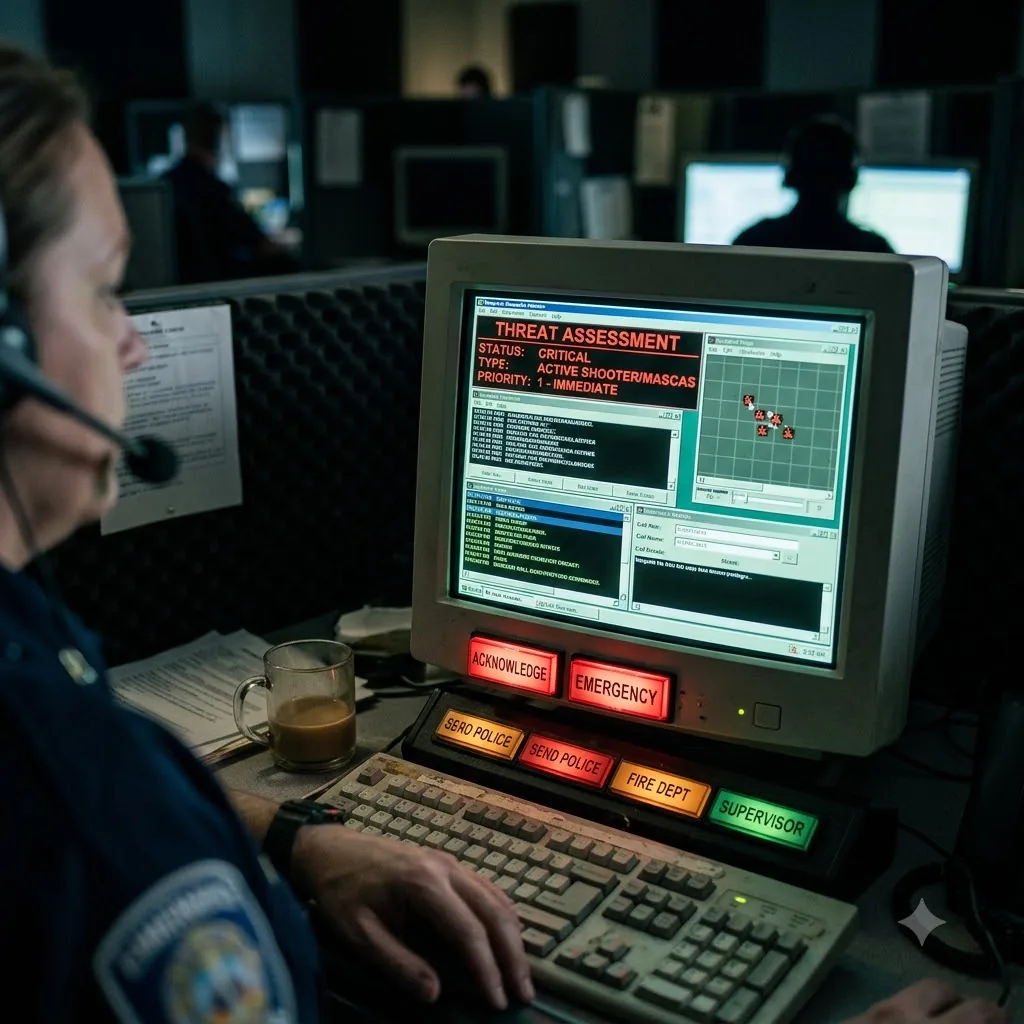
In the two minutes and forty seconds after her supervisor had silenced her terminal, Maya had sat paralyzed, watching the countdown timer hit zero. She hadn’t been able to warn the inbound SWAT teams that the active shooter was the original caller. But she had managed to type one final note into the CAD system before Miller locked her out: *Target is solitary white male, concealed firearm, verbally threatening permitted crowd.*
When the armored vehicles breached Centennial Park, the tactical officers hadn’t found a hostile mob of gang members preparing for war. They found a hundred terrified family members diving under picnic tables, and one furious, sweating man standing in the center of the pavilion with a drawn Glock.
Nobody died. The caller was disarmed and arrested. But the city had still fired Maya the very next morning. They cited gross insubordination, violation of automated protocols, and the physical assault of a supervisor. Miller had demanded her immediate termination to cover his own panic.
It took three years to prove him wrong. Three years of Miller lying under oath, claiming Maya had endangered the public, until her lawyers finally forced the state to unseal the unalterable evidentiary server. The Permanent Audio Lock Maya had engaged couldn’t be deleted by local administrators. When the courtroom heard the caller’s unhinged, racist tirade and Maya’s calm, absolute recitation of the law, the city’s defense instantly evaporated. The settlement had been offered the next day.
Maya picked up the check, her thumb rubbing over the raised ink. She had won. She had saved those families at the park, she had exposed a massive flaw in the emergency response system, and she had forced the city to pay for their cowardice. She held undeniable proof of her vindication.
An alarm beeped from the kitchen counter.
Maya flinched, a cold spike of adrenaline punching through her chest. Her breath hitched, her eyes darting toward the sound. It wasn’t the harsh, electronic chime of a Code 10-33. It was just a cheap plastic cooking timer, bought at a dollar store.
She set the check down and walked slowly into the narrow kitchenette. She silenced the timer and picked up the small, amber pill bottle sitting next to the sink.
*Propranolol. 40mg. Take twice daily for hypertension.*
Maya had never needed medication before Centennial Park. Her blood pressure had always been perfect. Now, her resting heart rate hovered in the nineties on a quiet day. If a car backfired outside her window, or if someone yelled too loudly in the hallway of her complex, she felt the phantom weight of the heavy headset clamping over her ears. She would lose her breath for minutes at a time, trapped back in that mesh chair, watching a red countdown timer ticking down to a massacre.
She popped the plastic cap off the bottle and shook a small, white tablet into her palm. She filled a cracked glass with tap water, placed the pill on her tongue, and swallowed.
She leaned heavily against the sink, waiting for the medication to slow the pounding in her chest. Through the thin walls of her cheap apartment, she could hear the distant, muffled wail of a police siren moving through the city.
Maya closed her eyes, the massive settlement check sitting just a few feet away on the table. She had fought for three years to prove she was right, to drag a broken system into the light. She had secured justice. But as she listened to the siren fade into the distance, her hands still shaking against the porcelain sink, Maya finally understood that she would never get her peace back.